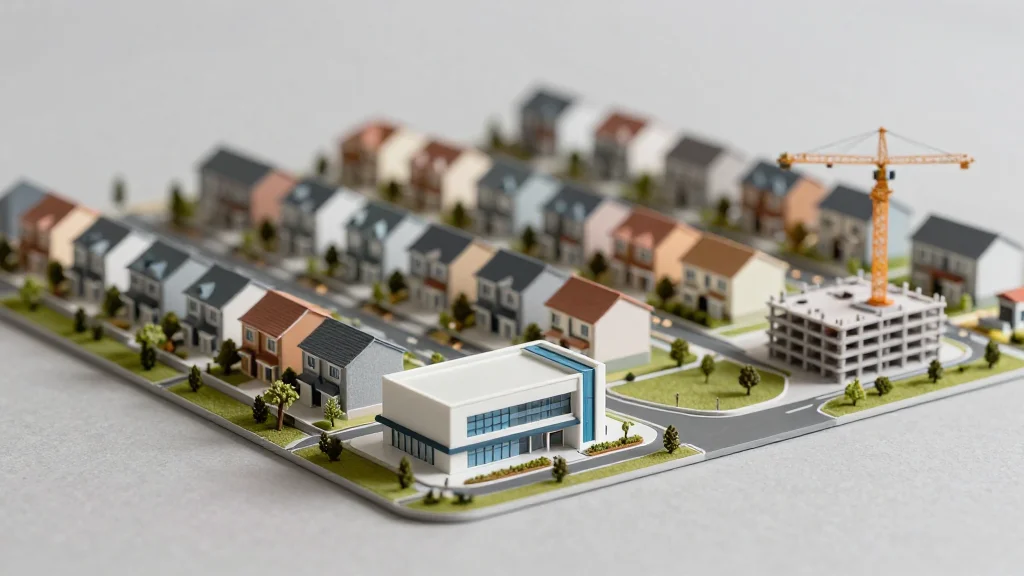
Signorelli Breaks Ground on New Caney Planned Community
Why It Matters
The district’s healthcare‑centric commercial mix promises stable, long‑term lease revenue while meeting rising local demand for medical services. Its scale and location position it as a catalyst for suburban growth and a lucrative asset for investors.
Key Takeaways
- •Azalea District spans 328 acres along U.S. 59/I‑69 corridor
- •125 acres dedicated to commercial, primarily healthcare services
- •Valley Ranch Town Center attracts 12 million visitors annually
- •Montgomery County population projected near 600,000 within 12 miles by 2030
Pulse Analysis
The Signorelli Company’s groundbreaking of the Azalea District marks the latest expansion of Houston’s master‑planned community model. Covering 328 acres along the rapidly developing U.S. 59 and I‑69 corridor, the project taps a corridor that has attracted both residential and commercial investment in recent years. Montgomery County’s population is expected to swell to nearly 600,000 within a 12‑mile radius of Valley Ranch by 2030, creating strong demand for mixed‑use environments. By integrating housing, retail, dining and hospitality, the district aims to become a self‑contained urban village.
The Azalea District reserves 125 acres for commercial development, with healthcare positioned as the anchor tenant. This focus reflects a national trend where developers embed medical facilities to meet aging demographics and rising wellness spending. Proximity to the Valley Ranch Town Center—a 1.5‑million‑square‑foot retail hub that draws roughly 12 million visitors each year—provides built‑in foot traffic for ancillary services, from pharmacies to boutique fitness studios. The adjacent Marketplace district’s 20‑acre Village Green lifestyle hub, currently in lease‑up, further diversifies the area’s amenity mix.
From an investment perspective, the Azalea District enhances Signorelli’s portfolio by adding a high‑density, mixed‑use asset in a growth corridor. Developers and institutional investors are increasingly drawn to projects that combine residential units with revenue‑generating commercial space, especially when anchored by healthcare providers that offer stable, long‑term leases. As Houston’s suburbs continue to outpace the city core in population growth, master‑planned communities like Azalea become critical nodes for infrastructure, job creation, and tax revenue. The project’s success could spur additional large‑scale developments along the U.S. 59/I‑69 axis.
Signorelli Breaks Ground on New Caney Planned Community
Comments
Want to join the conversation?
Loading comments...