Single-Family Permits Continue to Decline Through April as Multifamily Activity Strengthens
Why It Matters
The divergent permit trends signal a reallocation of builder focus from detached homes to multifamily projects, reshaping housing supply dynamics and influencing regional price pressures.
Key Takeaways
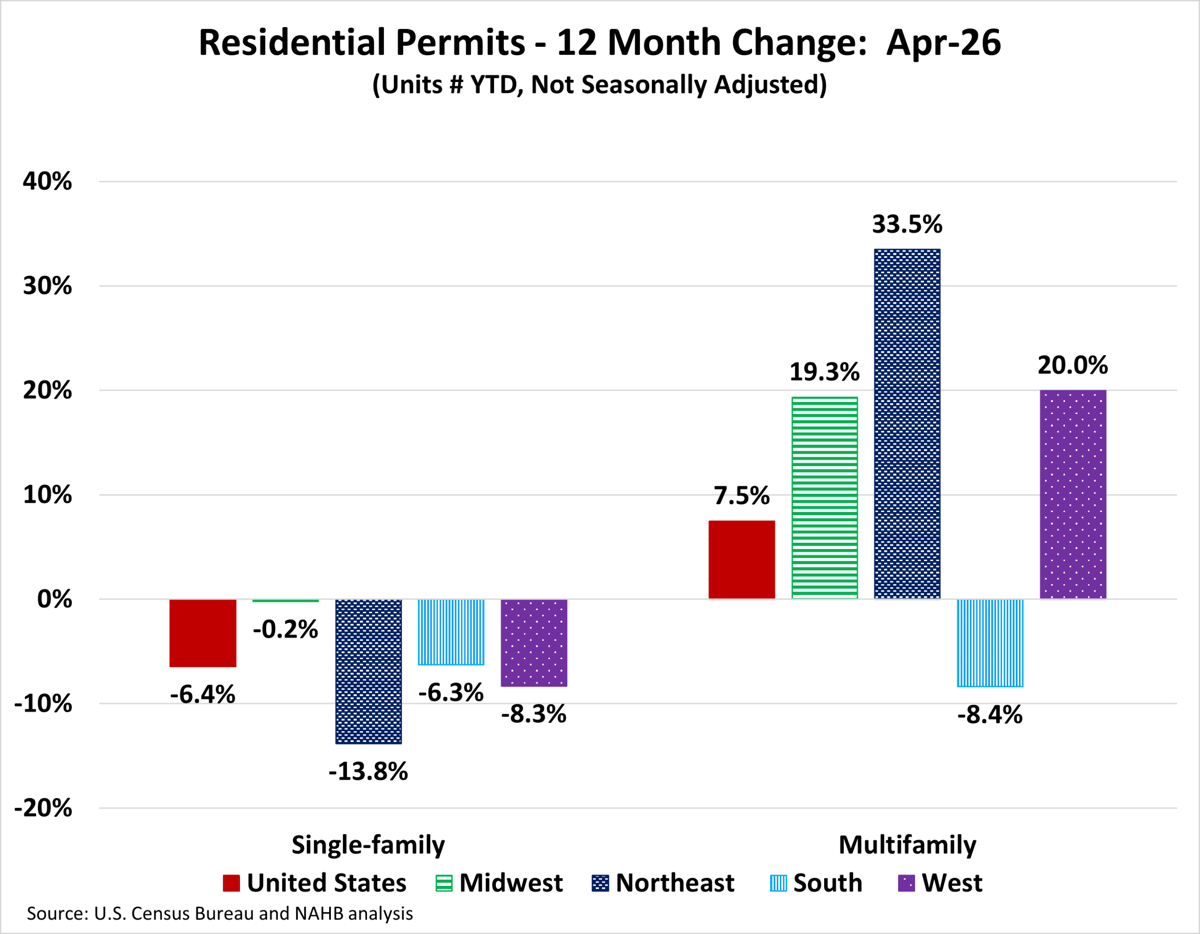
- •Single-family permits fell 6.4% YoY to 299,642 units.
- •Multifamily permits rose 7.5% YoY to 166,252 units.
- •Northeast multifamily permits surged 33.5%, strongest regional gain.
- •Texas led single-family permits (48,328) but declined 8.2% YoY.
- •Rhode Island multifamily permits jumped 250.6% YoY to 596 units.
Pulse Analysis
The latest permit data highlight how elevated mortgage rates and stagnant wages are throttling demand for new single‑family homes. Builders face tighter financing conditions, prompting many to pause or scale back detached‑home projects. This slowdown is most pronounced in the South and West, where affordability gaps have widened, and it contributes to the overall 6.4% decline in single‑family permits. By contrast, multifamily construction benefits from economies of scale and the ability to serve a broader income spectrum, allowing developers to offset the softening single‑family market.
Regionally, the Northeast stands out as a multifamily growth engine, posting a 33.5% year‑over‑year increase. The surge reflects strong rental demand in dense urban corridors and a policy environment that favors higher‑density zoning. Meanwhile, the South’s multifamily market slipped 8.4% as large metros grapple with inventory oversupply and shifting migration patterns. Texas, while still the nation’s largest single‑family permit issuer, recorded an 8.2% decline, signaling that even high‑volume markets are feeling the credit squeeze. Florida’s mixed results—single‑family permits down 6.3% and multifamily down 41.3%—illustrate the volatility in markets heavily dependent on seasonal and retiree migration.
Looking ahead, the construction sector may see a continued pivot toward multifamily and mixed‑use projects, especially in regions where zoning reforms encourage density. Investors are likely to reallocate capital toward assets that can deliver higher yields under tighter financing, such as apartment complexes and affordable‑housing pipelines. Policymakers aiming to stabilize housing supply might consider targeted incentives for affordable multifamily development, while monitoring the long‑term impact of reduced single‑family construction on suburban growth and infrastructure planning.
Single-Family Permits Continue to Decline Through April as Multifamily Activity Strengthens
Comments
Want to join the conversation?
Loading comments...