Single-Family Permits Continue to Weaken in Early 2026
Why It Matters
The diverging trends signal a shift toward rental‑focused development, reshaping housing supply dynamics and influencing construction financing strategies across the United States.
Key Takeaways
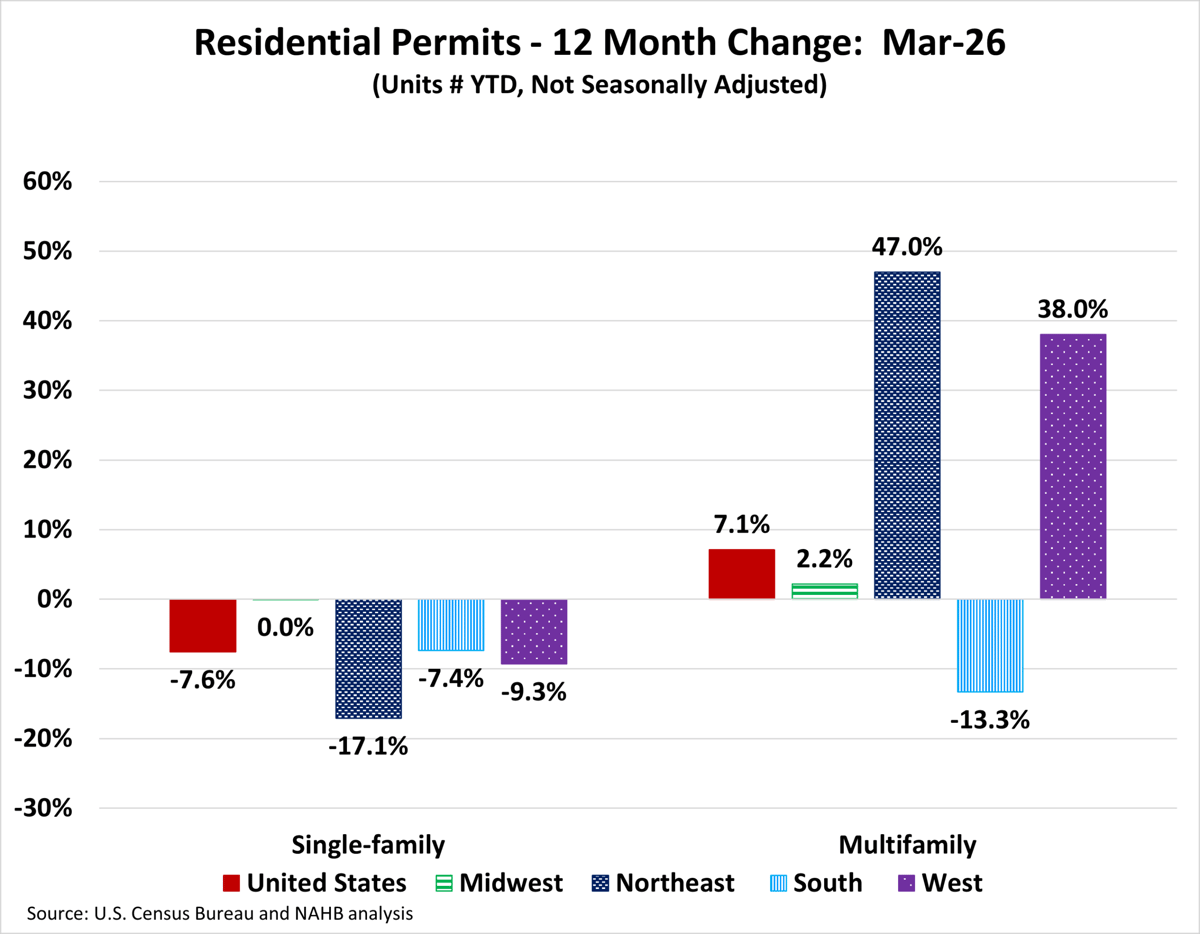
- •Single‑family permits fell 7.6% YoY to 214,655 units
- •Multifamily permits rose 7.1% YoY, reaching 121,404 units
- •Northeast single‑family permits dropped 17.1%, the steepest regional decline
- •California multifamily permits surged 105%, leading national growth
- •South multifamily permits slipped 13.3%, driven by Texas and Florida metros
Pulse Analysis
The early‑2026 permitting data underscores how higher borrowing costs and lingering affordability challenges are throttling single‑family home starts. Builders cite tighter credit spreads and rising mortgage rates as primary deterrents, while consumer sentiment remains muted. Consequently, the sector’s modest 7.6% year‑over‑year decline reflects both demand weakness and cautious developer pipelines, especially in markets that historically drove growth, such as Texas and Florida.
Regional analysis reveals a stark contrast: the Northeast experienced the sharpest single‑family contraction at 17.1%, yet its multifamily permits exploded by 47%, highlighting a pivot toward rental housing in dense urban corridors. The West mirrored this pattern, with multifamily permits up 38% despite a 9.3% dip in single‑family activity. In the South, multifamily growth faltered, falling 13.3% as key metros like Houston and Miami saw double‑digit declines, suggesting localized economic pressures and possibly tighter land‑use constraints.
Looking ahead, the sustained momentum in multifamily permitting suggests investors and lenders will increasingly target rental‑oriented projects, especially in high‑growth states such as California, which posted a 105% surge in multifamily units. Policymakers may need to address the affordability gap by incentivizing affordable single‑family construction or expanding zoning flexibility for higher‑density housing. For construction firms, the data signals a strategic realignment toward multifamily expertise, while capital markets should monitor credit conditions that could further tilt the balance between homeownership and rental supply.
Single-Family Permits Continue to Weaken in Early 2026
Comments
Want to join the conversation?
Loading comments...