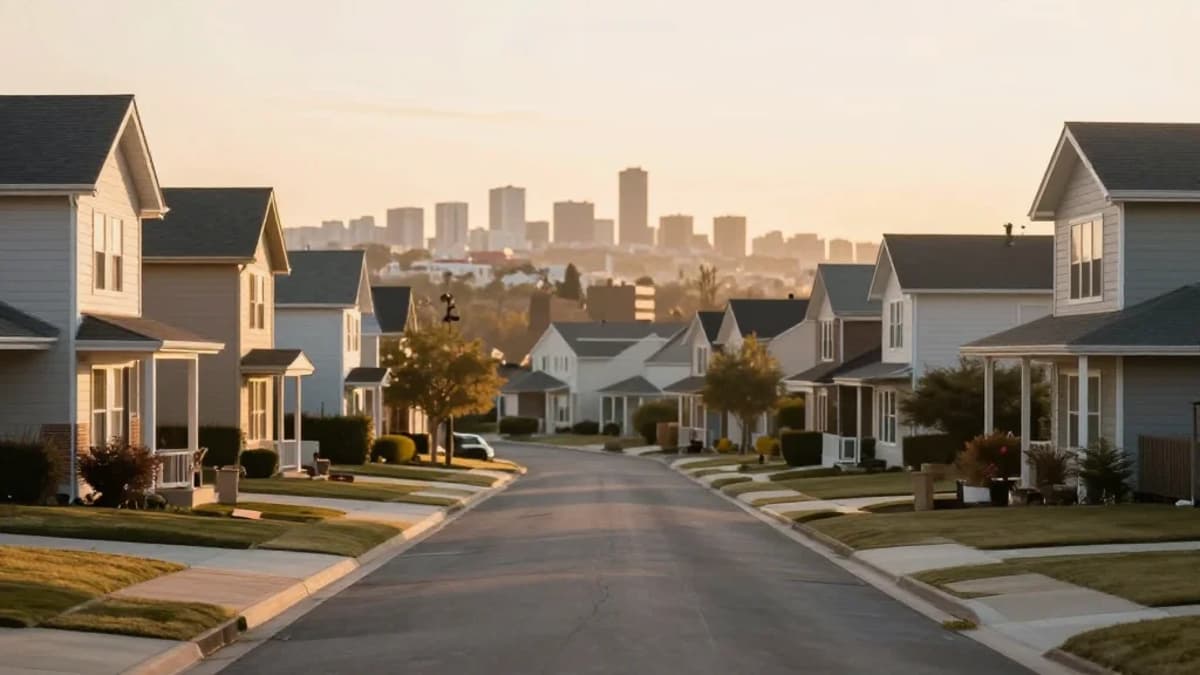
Small Town Commercial Prices Rise as Big City Prices Fall
•March 2, 2026
0
Why It Matters
The divergence signals a shift toward value opportunities in smaller markets while large‑city assets remain pressured, reshaping investment strategies amid uncertain monetary policy.
Key Takeaways
- •Small‑town commercial prices up 1.3% month‑over‑month.
- •Prime city assets down 0.4% in value‑weighted index.
- •Equal‑weighted index rose 1.1% YoY; value‑weighted +0.8%.
- •Investor caution due to higher rates and policy uncertainty.
- •Distressed assets may offer discounts outside major metros.
Pulse Analysis
The latest CoStar data underscores a growing bifurcation in U.S. commercial real estate. While secondary and tertiary markets are experiencing modest price appreciation, flagship properties in coastal metros continue to face downward pressure. This split reflects differing supply‑demand dynamics: smaller towns benefit from limited inventory and localized demand, whereas large‑city assets grapple with elevated financing costs and a slowdown in institutional buying. Analysts note that the equal‑weighted index’s resilience suggests a floor forming for lower‑priced assets, even as the value‑weighted gauge lags behind its pre‑pandemic highs.
Investor sentiment is being reshaped by the Federal Reserve’s rate trajectory. Market participants anticipate one to three cuts by 2026, a softer stance that has already nudged commercial sales volume up 20% year‑over‑year. Yet, lingering policy uncertainty keeps many capital providers on the sidelines, creating a “choppy” acquisition environment. This cautious stance is especially pronounced among large‑scale investors who traditionally dominate the value‑weighted segment, contributing to its recent underperformance.
The emerging landscape presents opportunities for opportunistic buyers. Rising distress in certain sectors—particularly office and retail spaces outside prime locations—means lenders may offload assets at deeper discounts. Mortgage brokers and niche investors can leverage these conditions to acquire properties at attractive valuations, potentially rebalancing portfolios toward higher‑yielding, lower‑cost assets. As the market stabilizes, the flow of distressed sales could catalyze a modest rebound in large‑city pricing, aligning with CoStar’s forecast for the first half of the year.
Small town commercial prices rise as big city prices fall
0
Comments
Want to join the conversation?
Loading comments...