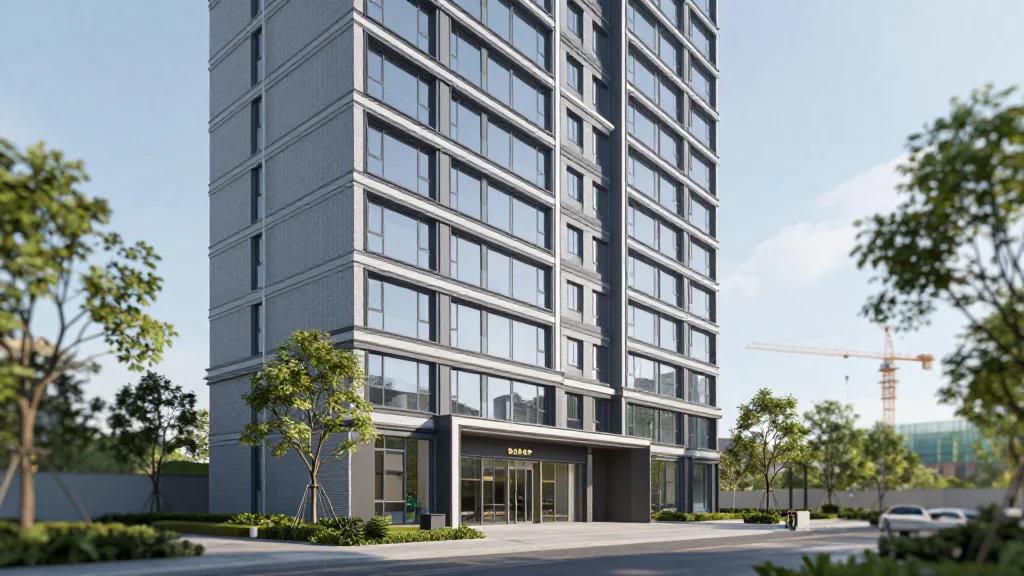
Southbridge 1C Breaks Ground, Adding 80 Mixed‑Income Apartments in Chicago’s South Loop

Why It Matters
Southbridge 1C illustrates how public‑private partnerships can repurpose aging public‑housing sites into mixed‑income, mixed‑use districts that attract a broader demographic while preserving affordability. By anchoring the development around a Green Line station, the project advances Chicago’s transit‑oriented development agenda, reducing reliance on cars and supporting sustainable urban growth. The inclusion of a significant right‑of‑return allocation ensures that former public‑housing residents retain a foothold in the revitalized neighborhood, addressing displacement concerns that often accompany gentrification. The $21.9 million public financing package underscores the city’s willingness to leverage tax‑increment financing and housing authority capital to catalyze private investment. If successful, Southbridge could become a model for other municipalities grappling with aging public‑housing stock, demonstrating that mixed‑income strategies can deliver both economic vitality and social equity.
Key Takeaways
- •Groundbreaking of Southbridge 1C adds 80 mixed‑income apartments and 1,500 sq ft of retail in Chicago’s South Loop
- •44 units priced for households earning 30%‑80% of area median income; 29 units reserved for CHA right‑of‑return households
- •Project financed with $11.9 million in tax‑increment financing and $10 million from the Chicago Housing Authority
- •Completion expected June 2027; total Southbridge development will exceed 800 housing units and 65,000 sq ft of commercial space
- •Mayor Brandon Johnson and CHA CEO Keith Pettigrew highlighted the project’s role in creating a live‑work‑play, transit‑oriented community
Pulse Analysis
Southbridge 1C arrives at a pivotal moment for Chicago’s housing policy. The city has been under pressure to address a chronic shortage of affordable units while also revitalizing underutilized parcels near transit hubs. By embedding affordability directly into a market‑rate tower, The Community Builders sidestep the classic “affordable‑only” stigma and attract a mixed tenant base that can sustain commercial activity on the ground floor. This hybrid model reduces the financial risk for developers, who can offset lower rents with higher‑margin market units, while still meeting the city’s inclusionary housing mandates.
Historically, large‑scale public‑housing demolitions have sparked community backlash due to displacement. Southbridge’s right‑of‑return provision—29 units earmarked for former CHA residents—represents a pragmatic compromise, preserving community continuity while allowing the site to evolve. The $21.9 million public investment signals that Chicago is willing to use its fiscal tools to de‑risk such projects, a strategy that could be replicated in other legacy housing sites across the Midwest.
Looking ahead, the success of Southbridge will hinge on execution. Construction delays or cost overruns could strain the delicate financing balance, while market conditions could affect the absorption of market‑rate units. If the development meets its June 2027 deadline and achieves high occupancy across both affordable and market segments, it will reinforce the viability of mixed‑income, transit‑oriented redevelopment as a cornerstone of urban housing policy.
Southbridge 1C Breaks Ground, Adding 80 Mixed‑Income Apartments in Chicago’s South Loop
Comments
Want to join the conversation?
Loading comments...