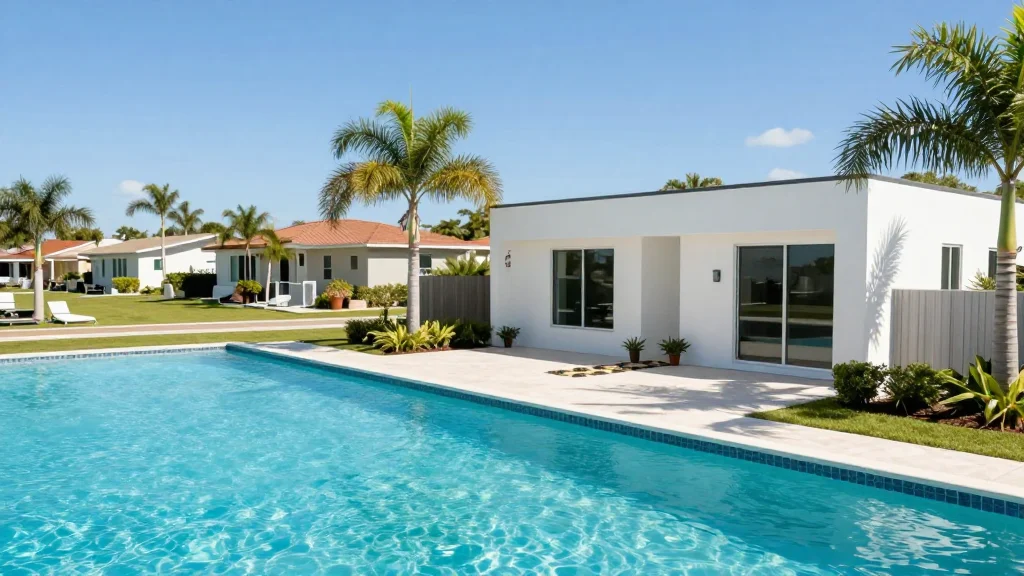
St. Joe Company Posts Record Q1 Hospitality Revenue, Expands Florida Land Portfolio

Companies Mentioned
Why It Matters
St. Joe’s Q1 performance highlights a broader shift in Florida’s real‑estate landscape, where developers are leveraging large‑scale land‑use plans to lock in infrastructure and attract major builders. The record hospitality earnings demonstrate that tourism‑driven revenue can offset softness in other real‑estate segments, offering a template for diversified operators. Moreover, the PulteGroup DSAP contract underscores the importance of securing long‑term, high‑margin residential pipelines in a market where home‑price growth is slowing. For homebuyers and investors, the company’s strategic focus on master‑planned communities signals that future supply will be shaped by developers who can deliver integrated utilities, amenities and zoning certainty. This could influence pricing dynamics in Florida’s housing market, potentially moderating price declines by aligning new inventory with buyer preferences for well‑planned, amenity‑rich neighborhoods.
Key Takeaways
- •Total Q1 revenue $99.1 million, up 5% YoY – highest since 2014 timberland sale.
- •Hospitality revenue hit a record $44.7 million, a 13% increase with margin rising to 24%.
- •Real‑estate revenue grew 4%; leasing fell 10% after Watercrest senior‑living sale.
- •St. Joe signed a DSAP contract for up to 2,653 homesites with PulteGroup in Florida.
- •Capital expenditures $20.7 million; debt reduced $10.9 million; dividends $9.2 million paid.
Pulse Analysis
St. Joe’s earnings illustrate how a diversified real‑estate operator can thrive amid sectoral headwinds by leaning into high‑margin niches. The hospitality surge reflects a post‑pandemic travel rebound that outpaces the modest gains in residential sales, suggesting that tourism dollars remain a critical buffer for Florida developers. The DSAP agreement with PulteGroup is a strategic masterstroke: by locking in a large, pre‑approved land package, St. Joe not only secures future revenue streams but also gains bargaining power with municipal authorities over infrastructure provision. This reduces the risk of costly delays that have plagued many Florida projects in recent years.
Historically, Florida’s real‑estate cycles have been driven by population inflows and climate‑risk considerations. St. Joe’s focus on inland, master‑planned communities—paired with a long‑range utility deal—mitigates exposure to coastal flood zones while still capitalizing on the state’s overall growth. The company’s disciplined capital allocation, including share repurchases and debt reduction, signals confidence in its balance sheet and a willingness to return cash to shareholders without sacrificing growth.
Looking forward, the firm’s ability to translate its land‑bank into sold homes will be the litmus test. If PulteGroup and other builders can absorb the 2,653 homesites at price points that reflect current market softness, St. Joe could set a benchmark for resilient development models. Conversely, if buyer demand stalls, the company may need to pivot to alternative uses—such as data‑center leases or mixed‑use projects—to keep the land productive. Investors should monitor the August earnings call for clues on pricing strategy, construction timelines, and the performance of the nascent commercial‑lease pipeline, all of which will shape St. Joe’s trajectory in a volatile real‑estate environment.
St. Joe Company Posts Record Q1 Hospitality Revenue, Expands Florida Land Portfolio
Comments
Want to join the conversation?
Loading comments...