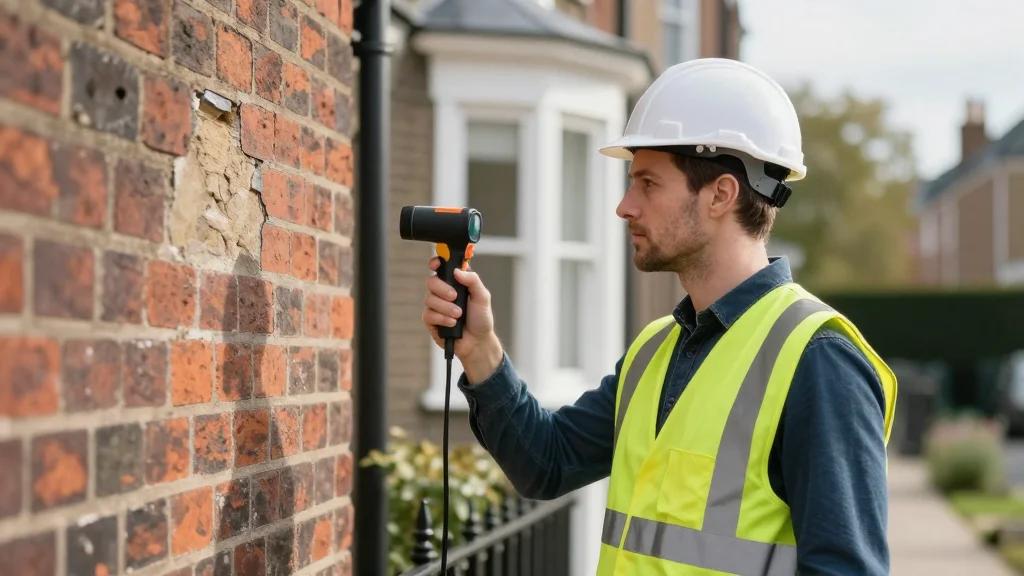
Structural Surveys for Home Renovations – What Do You Need to Know?
Why It Matters
Accurate structural surveys protect buyers from costly surprises and ensure mortgage compliance, directly influencing renovation budgets and timelines. For the heritage‑property market, they are a key risk‑mitigation tool that safeguards both investment value and historic fabric.
Key Takeaways
- •Level 3 RICS surveys essential for historic home renovations
- •Hidden defects often emerge once structural work begins
- •Incompatible modern materials can trap moisture in old masonry
- •Budget at least 20% contingency for unexpected structural repairs
- •Second‑opinion from conservation specialist reduces risk of costly oversights
Pulse Analysis
Structural surveys have become a non‑negotiable step for anyone buying or renovating a historic property. In the UK, the Royal Institution of Chartered Surveyors (RICS) defines three survey levels, with Level 3 providing the depth needed to assess load‑bearing walls, foundation depth, and moisture intrusion. The 2022 Joint Position Statement from RICS and Historic England adds a clear framework for investigating damp in traditional builds, a critical factor for lenders who often mandate a survey before approving a mortgage. Understanding these standards helps owners align expectations with regulatory requirements and avoid financing delays.
Despite their importance, surveys face practical limits. Surveyors can only inspect areas that are safely reachable, meaning concealed defects in roofs, basements, or behind finishes may remain hidden until demolition or major works begin. Misinterpretation of historic decay as structural failure can inflate repair estimates, while the use of modern, impermeable materials—such as cement pointing or synthetic paints—can exacerbate moisture retention. Moreover, recommendations for specialist investigations sometimes come from parties with commercial interests, potentially biasing the advice. Homeowners must therefore scrutinize survey reports, question caveats, and seek independent verification when necessary.
Best practice calls for engaging a surveyor with proven experience in historic construction and familiarity with the JPS 2022 guidelines. A second opinion from a building‑conservation specialist can validate findings and highlight overlooked issues. Financially, allocating at least a 20% contingency—equivalent to roughly $187,500 on a $937,500 renovation—provides a buffer for unexpected structural work, as demonstrated by the York garage conversion where total costs rose from £350,000 to £950,000. By combining rigorous surveying, expert interpretation, and prudent budgeting, owners can protect their investment, preserve heritage value, and keep renovation projects on track.
Structural Surveys for Home Renovations – What Do You Need to Know?
Comments
Want to join the conversation?
Loading comments...