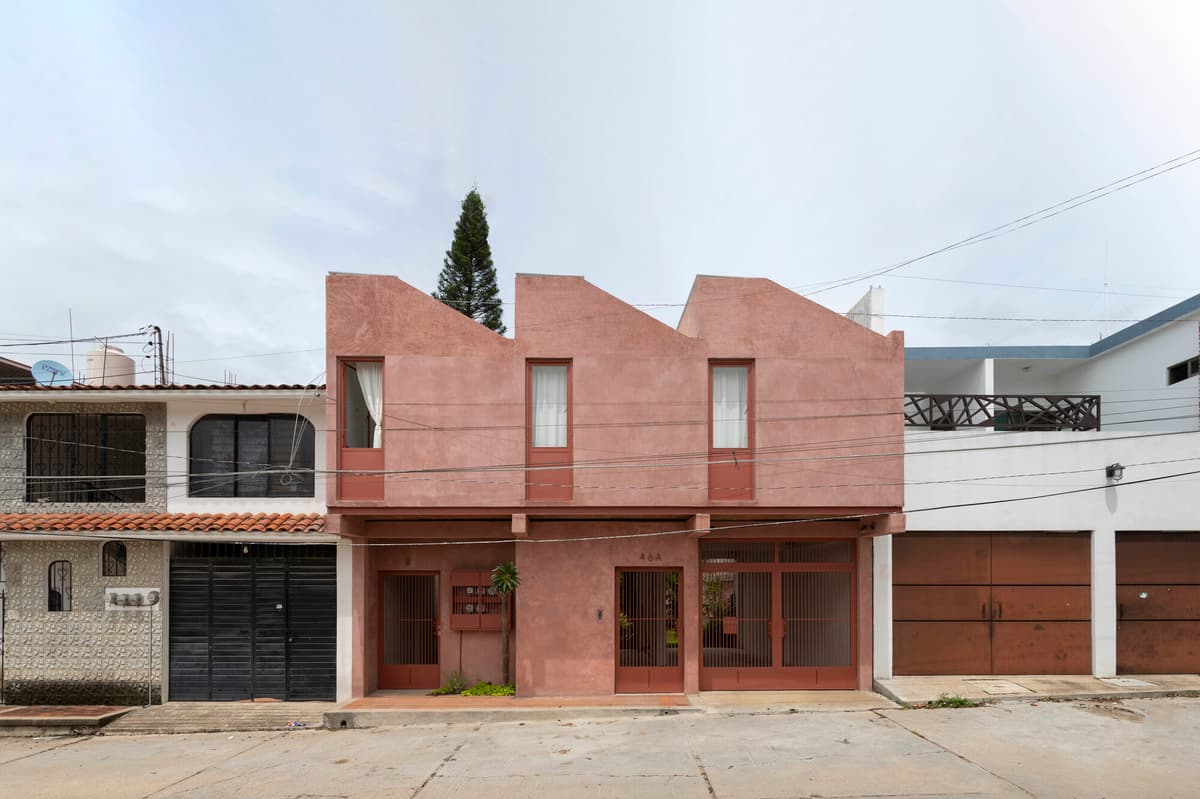
Student Studies 46B / Carmelina & Aurelio Taller De Arquitectura
Companies Mentioned
Why It Matters
The project proves that student housing can be added in intermediate cities without vertical expansion, offering a cost‑effective, sustainable template for urban densification. It signals a shift toward micro‑living solutions that maximize underutilized footprints, appealing to developers and municipalities seeking higher occupancy without altering city skylines.
Key Takeaways
- •Roof of 72 m² garage repurposed into six student studios
- •Each studio packs sleeping, cooking, bathing into 13 m²
- •Project adds seven units without increasing building height
- •Open hallway and low walls enhance perception of space
- •Uses local materials, aligning with regional aesthetic and sustainability
Pulse Analysis
In a region where vertical growth often dominates densification strategies, Student Studies 46B takes a contrarian approach by building upward only as far as the existing garage roof permits. The intervention in Ocozocoautla de Espinosa—an intermediate city with solid public‑transport links—demonstrates how modest footprints can be transformed into vibrant student accommodations. By retaining the original single‑family home and garden, the design respects the neighborhood’s character while delivering seven residential units, a model that could be replicated across similar mid‑size urban contexts where land is scarce but vertical construction faces regulatory or aesthetic constraints.
The architectural solution hinges on spatial efficiency. Each 13 m² studio integrates sleeping, cooking and bathing zones within an open‑plan layout, using low walls that stop short of the ceiling to preserve visual continuity. An open hallway runs the length of the upper level, fostering cross‑ventilation and natural light, while a shared laundry area and communal green spaces enhance livability. Material choices—white walls, dark‑gray tiles, pine wood interiors, and a reddish‑ochre plaster exterior—draw on local craftsmanship, reducing transportation emissions and aligning the building with regional aesthetic traditions. This blend of functional minimalism and contextual materiality underscores a growing demand for sustainable, cost‑effective micro‑living environments.
For developers and city planners, the 46B project offers a scalable blueprint for addressing student housing shortages without resorting to high‑rise towers. The model leverages existing structures, minimizes construction costs, and adheres to densification policies that prioritize land‑use efficiency over skyline alteration. As universities expand and urban populations rise, such low‑rise, high‑density solutions could become a cornerstone of future housing strategies, delivering economic returns while preserving community fabric and environmental stewardship.
Student Studies 46B / Carmelina & Aurelio Taller de Arquitectura
Comments
Want to join the conversation?
Loading comments...