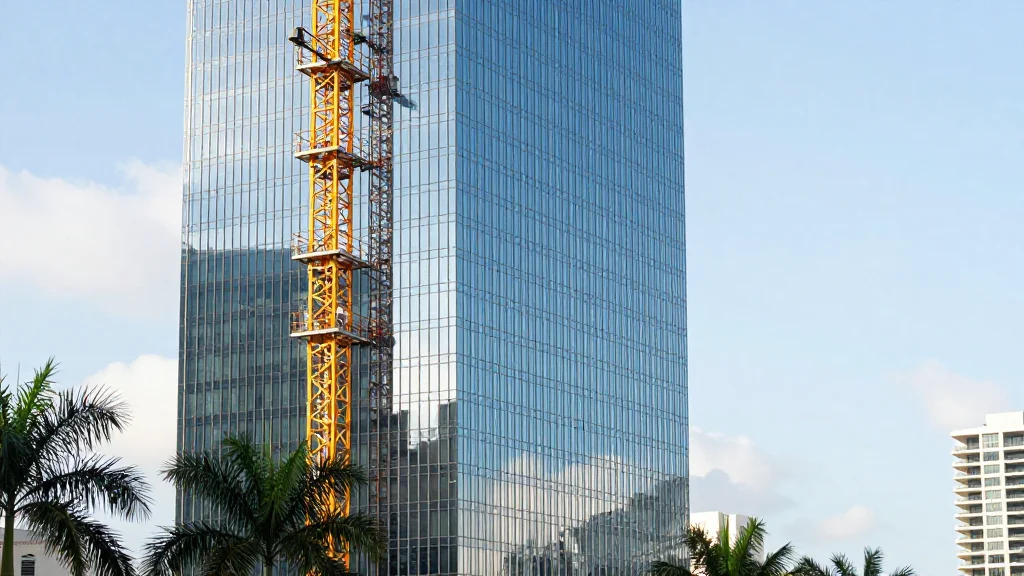
'Tax The Rich' Politics Boosting South Florida's Office Construction Pipeline
Companies Mentioned
Why It Matters
The influx of corporate relocations reshapes the U.S. office landscape, highlighting how tax and regulatory environments can redirect real‑estate investment and employment hubs. It signals a potential long‑term shift of office supply and demand toward low‑tax states like Florida.
Key Takeaways
- •Palm Beach County has 1.4 M SF under construction, up 400% YoY
- •Vacancy in Palm Beach sits at 13.5%, far below 20.2% national average
- •85% of Related Ross leases are out‑of‑state relocations
- •ServiceNow secured 220 K SF second headquarters in West Palm Beach
- •Citadel plans 1.7 M SF office tower in Miami after NY tax push
Pulse Analysis
South Florida’s office pipeline is expanding at a pace unheard of in most of the country. While the U.S. office market overall sits at a 14‑year low, Palm Beach County now boasts more than 1.4 million square feet under construction, a jump that outstrips even Manhattan, Dallas and Los Angeles. The surge is rooted in a political narrative that positions Florida as a refuge from wealth‑tax proposals and aggressive regulation in states like California and New York. By promoting low property taxes and a deregulated environment, state leaders have created a perception of fiscal stability that attracts businesses seeking predictability.
Developers such as Stephen Ross’s Related Ross are capitalizing on this perception, signing 150 leases in the Palm Beach area over the past five years, with 85% representing out‑of‑state relocations. Major tenants—including cloud‑software firm ServiceNow, which secured a 220,000‑square‑foot second headquarters, and Wells Fargo, moving its wealth‑management team—are anchoring new projects that keep vacancy at 13.5%, well below the 20.2% national average. The momentum extends to Miami, where Citadel’s hedge‑fund chief Ken Griffin announced a 1.7‑million‑square‑foot office tower, directly responding to New York’s recent wealth‑tax initiatives.
The broader implication is a geographic rebalancing of office supply driven by fiscal policy rather than pure market fundamentals. If Florida’s upcoming property‑tax exemption ballot passes, effectively eliminating taxes for most homeowners, the state could further cement its appeal to corporations and high‑net‑worth individuals. Competing jurisdictions may feel pressure to revisit tax structures, while developers must weigh the risk of overbuilding if political winds shift. For investors, the South Florida office market now offers a case study in how policy perception can translate into tangible real‑estate activity, reshaping regional employment and capital flows for the decade ahead.
'Tax The Rich' Politics Boosting South Florida's Office Construction Pipeline
Comments
Want to join the conversation?
Loading comments...