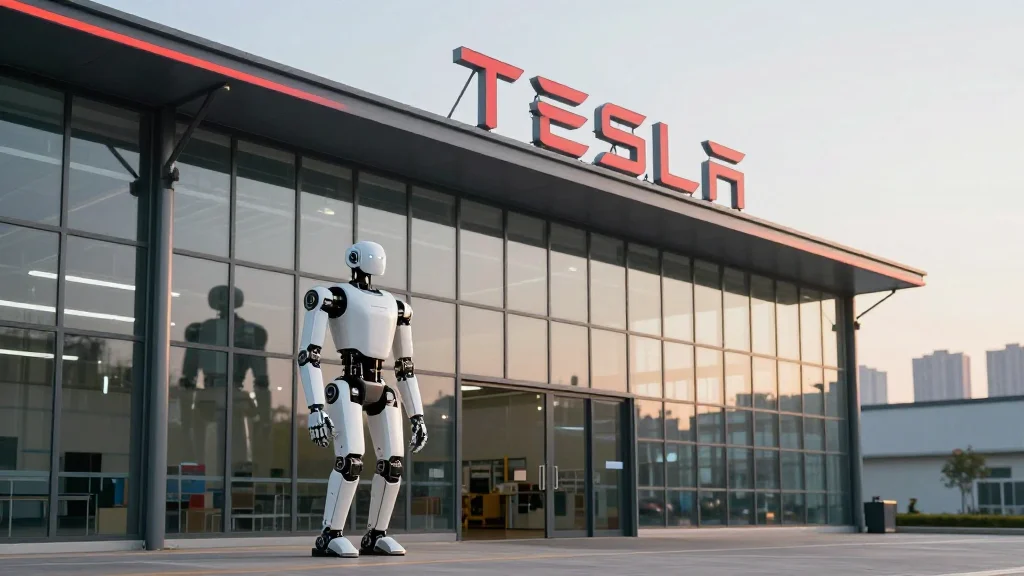
Tesla Signs New Fremont R&D Lease Ahead Of Optimus Robot Pivot
Why It Matters
Tesla’s real‑estate commitment signals a serious shift toward large‑scale robot manufacturing, potentially reshaping its revenue mix and Silicon Valley’s industrial landscape. The expansion also highlights growing demand for high‑tech R&D space in a constrained market.
Key Takeaways
- •Tesla now leases 267K SF R&D space in Fremont
- •Total Fremont footprint reaches 375K SF this year
- •Optimus robot target: 1 million units annually
- •Model 3/Y production will continue alongside robot line
- •Fremont R&D vacancy sits at 17.9% with $1.99/SF rent
Pulse Analysis
Tesla’s latest lease in Fremont underscores a strategic pivot from its traditional electric‑vehicle focus to the ambitious Optimus humanoid robot program. By securing a full‑floor, 267,000‑square‑foot R&D facility, the company is building the physical infrastructure needed to scale robot development, testing, and eventual mass production. This move aligns with Elon Musk’s public commitment to deliver one million Optimus units per year, a target that would require a dedicated manufacturing pipeline distinct from the existing vehicle lines. The decision also reflects a broader trend among tech manufacturers to repurpose legacy plant capacity for emerging automation products, positioning Tesla to compete not just with carmakers but with industrial robotics firms.
The lease also has notable implications for the Fremont real‑estate market, where high‑tech R&D space is scarce. With only about 6.7 million square feet of such space in the wider Silicon Valley and a vacancy rate of 17.9 % in the East Bay, Tesla’s long‑term commitment helps anchor demand and could stimulate further development of infill sites. The average asking rent of $1.99 per square foot is markedly lower than the Bay Area average of $3.80, offering Tesla a cost‑effective foothold while potentially driving up local rent benchmarks as other firms vie for limited space.
From an industry perspective, Tesla’s expansion into robotics could diversify its revenue streams and mitigate the cyclical nature of automotive sales. If the Optimus line reaches mass‑production scale, it may open new markets in logistics, manufacturing, and consumer services, where autonomous humanoid platforms are still nascent. However, the venture carries significant technical risk and requires substantial capital investment in tooling, software, and safety compliance. Success would reinforce Tesla’s brand as a frontier technology leader, while setbacks could strain its balance sheet and distract from core vehicle growth. Stakeholders will be watching how quickly Tesla translates its real‑estate footprint into tangible robot output and whether the Optimus ambition reshapes the competitive dynamics of both the auto and robotics sectors.
Tesla Signs New Fremont R&D Lease Ahead Of Optimus Robot Pivot
Comments
Want to join the conversation?
Loading comments...