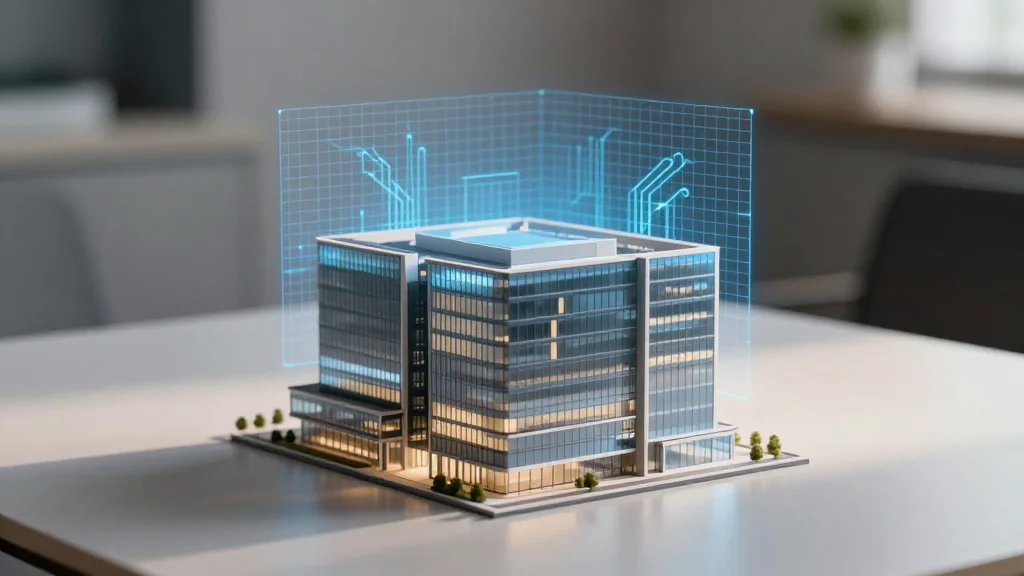
The Real Impact of AI on Commercial Real Estate
Why It Matters
AI’s proven efficiency gains are reshaping CRE operations, yet the trust gap limits its impact on high‑stakes investment decisions, creating a strategic divide between early adopters and laggards.
Key Takeaways
- •AI automates lease abstraction, extracting 200+ variables in minutes.
- •Generative AI cuts listing copy time from 30 minutes to seconds.
- •Predictive maintenance reduces unplanned downtime 30‑50% and HVAC energy 25%.
- •Trust gaps keep investment committees from using AI for valuation.
- •Purpose-built CRE tools outperform generic LLMs for lease and deal analysis.
Pulse Analysis
The commercial real‑estate sector is witnessing a pragmatic AI wave that focuses on repetitive, data‑heavy tasks. Document‑abstraction platforms such as Yardi’s Smart Lease can ingest a lease, identify over two hundred key terms, and feed them directly into underwriting or asset‑management workflows, delivering up to ninety percent time savings. Content‑generation engines now draft property listings, email blasts, and market commentary in seconds, freeing brokers to concentrate on relationship building. Meanwhile, predictive‑maintenance solutions linked to building‑management sensors anticipate HVAC or elevator failures, slashing unplanned downtime by a third to half and cutting energy consumption by roughly a quarter, directly boosting net operating income.
Despite these gains, adoption stalls at the decision‑making layer. Investment committees remain wary of AI‑derived valuations because the models often lack explainability and audit trails, and the output can be opaque when data quality is uneven. Firms still wrestling with legacy PDFs, siloed spreadsheets, and disconnected IoT devices find it difficult to launch enterprise‑wide pilots. General‑purpose large language models excel at drafting and summarizing but miss the nuances of lease structures, rent reviews, and industry‑specific workflows, prompting a shift toward purpose‑built CRE tools that embed domain knowledge natively.
Looking ahead, three trends will define AI’s trajectory in CRE. First, agentic AI will move from passive assistants to autonomous workflow engines, automatically issuing work orders, reconciling invoices, and updating lease terms without human prompting. Second, vertical‑focused platforms will eclipse generic LLMs for high‑value tasks, delivering deeper integration with property‑management systems. Third, the surge in AI compute demand is inflating the need for data‑center and industrial space, reshaping investment theses around power availability and infrastructure resilience. Firms that solidify their data foundations, pilot proven use cases, and adopt purpose‑built solutions will capture the bulk of the estimated $110‑180 billion annual value AI promises for real estate.
The Real Impact of AI on Commercial Real Estate
Comments
Want to join the conversation?
Loading comments...