The Second-Home Tax Is Spreading—Is Your Vacation Property Next?
Why It Matters
Second‑home taxes aim to fund budget shortfalls and curb housing scarcity, but their limited revenue and potential to drive affluent owners out could undermine both fiscal goals and local housing markets.
Key Takeaways
- •NYC's pied-à-terre tax targets homes over $1 million, aiming $500 M revenue.
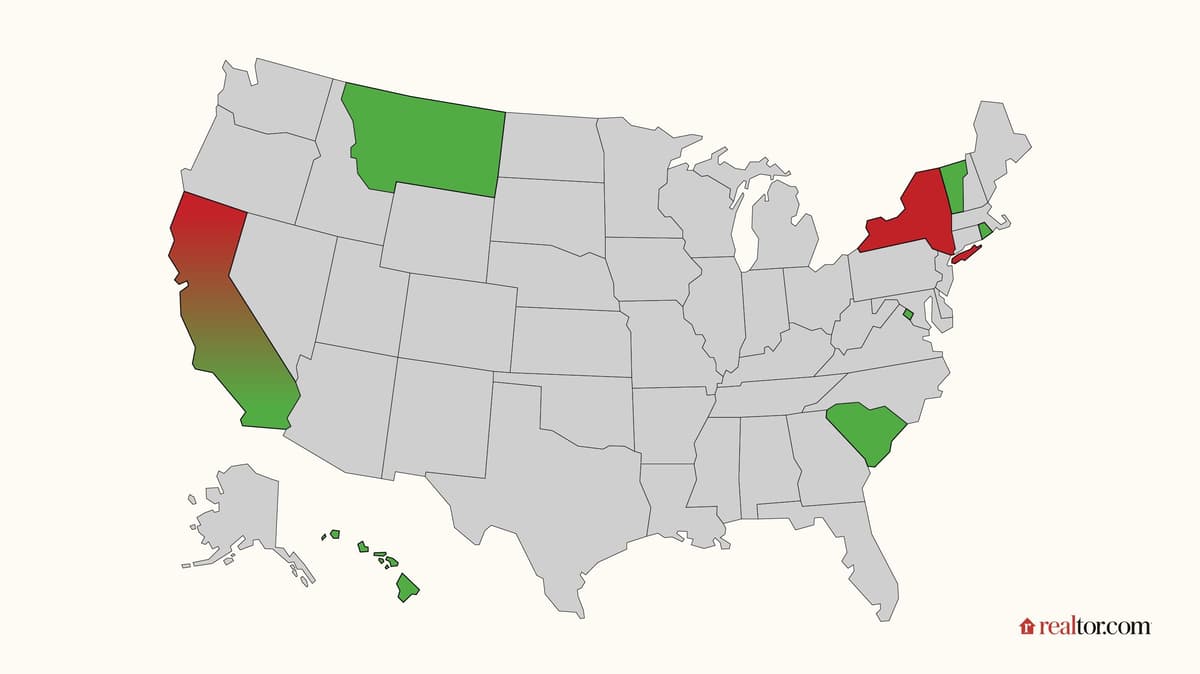
- •Eight states currently levy or propose second‑home taxes, using four mechanisms.
- •Revenue forecasts often shrink due to owners relocating to lower‑tax jurisdictions.
- •Rhode Island’s $2.50 per $500 surcharge can exceed $130 k annually.
- •San Diego voters face a flat $8 k vacancy tax in 2026.
Pulse Analysis
The rise of second‑home taxes reflects a broader policy shift toward taxing visible symbols of wealth rather than raising income rates. As housing shortages push national demand beyond the estimated 4.03 million unit deficit, states like California, Hawaii, and New York have turned to property‑based surcharges to tap affluent owners’ equity. By targeting non‑primary residences, lawmakers hope to generate new streams without burdening average homeowners, yet the diversity of mechanisms—ranging from higher property‑tax brackets to one‑time transfer fees—creates a patchwork of rules that can confuse buyers and complicate compliance.
Revenue projections for these levies are notoriously optimistic. New York City’s pied‑à‑terre proposal, for example, was initially touted to close a $5 billion budget gap with $500 million in annual receipts, but the city’s comptroller warns the figure could dip to $340 million as owners shift assets or relocate. Rhode Island’s surcharge illustrates the scale of potential impact: a $2.50 per $500 assessment on homes over $1 million can generate more than $130 k per year for a single luxury property, a burden that has earned the moniker “Taylor Swift tax.” Similar vacancy taxes in San Diego and proposed reinstatements in San Francisco underscore the growing appetite for such tools, even as critics highlight the high elasticity of the target demographic.
The policy debate hinges on effectiveness versus unintended consequences. While second‑home taxes promise additional revenue and a deterrent to speculative ownership, evidence suggests they often fall short of affordability goals and may accelerate capital flight. Between 2019 and 2023, an estimated $9.9 billion in adjusted gross income left New York for lower‑tax states like Florida, a trend that could intensify if affluent owners perceive the tax environment as hostile. Policymakers must balance fiscal needs with market stability, perhaps by pairing taxes with incentives for long‑term residency or by designing graduated rates that minimize displacement while still contributing to municipal coffers.
The Second-Home Tax Is Spreading—Is Your Vacation Property Next?
Comments
Want to join the conversation?
Loading comments...