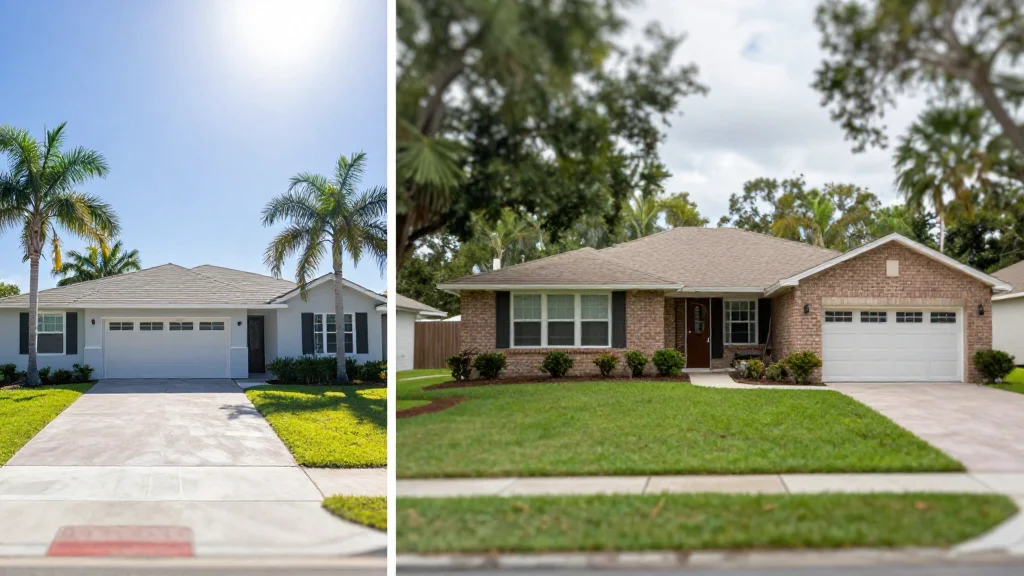
The Tables Have Turned: Florida and Texas Are the Biggest Losers in the Housing Market as Ohio Emerges a Surprise Winner
Why It Matters
The shift redirects home‑buyer demand and investment toward the Midwest, reshaping price dynamics, migration patterns, and regional economic growth prospects.
Key Takeaways
- •Ohio median home price $150k, about 30% of Miami's $625k
- •Austin home prices down 27.8% from 2022 peak
- •Florida insurance premiums $8,292, 181% above national average
- •Intel's $20B Ohio plant spurs housing demand in Columbus
- •Gen Z remote workers migrate to Midwest for affordable homes
Pulse Analysis
The pandemic’s remote‑work era sparked a mass exodus to Sunbelt metros, where low taxes and warm weather justified premium home prices. As office attendance rebounds and affordability resurfaces as a priority, that migration is receding. Nationwide, inventory has surged, creating a buyer’s market where sellers outnumber buyers by a record‑high margin. This reversal is most pronounced in overbuilt markets like Austin, Miami and Houston, where price corrections of 20‑30% from 2022 peaks are now commonplace, compounded by rising property‑tax bills and climate‑related insurance premiums.
Ohio stands out as a counter‑trend, leveraging a blend of economic anchors and cost advantages. The Cleveland Clinic’s global reputation, coupled with Intel’s $20 billion semiconductor campus near Columbus, fuels a steady influx of high‑skill talent. Median home values sit between $150,000 and $275,000, well below the national $400,000 average, allowing buyers—especially Gen Z remote workers—to acquire equity faster. Cities like Columbus and Cincinnati benefit from a robust corporate base, including six Fortune 500 firms, while Cleveland’s balanced market offers ownership costs that undercut rent, a rarity in today’s climate.
For investors and developers, the emerging Midwest focus signals a strategic pivot. Capital is likely to flow toward affordable‑housing projects, renovation of older stock, and mixed‑use developments that cater to younger, mobile professionals. Conversely, Sunbelt developers must contend with excess inventory, higher insurance liabilities, and climate‑risk premiums that erode profitability. Policymakers in high‑cost states may need to address insurance reform and tax relief to retain residents, while Midwestern jurisdictions can capitalize on their competitive advantage by enhancing infrastructure and workforce training. The evolving landscape underscores that housing markets are increasingly driven by fiscal fundamentals rather than lifestyle allure alone.
The tables have turned: Florida and Texas are the biggest losers in the housing market as Ohio emerges a surprise winner
Comments
Want to join the conversation?
Loading comments...