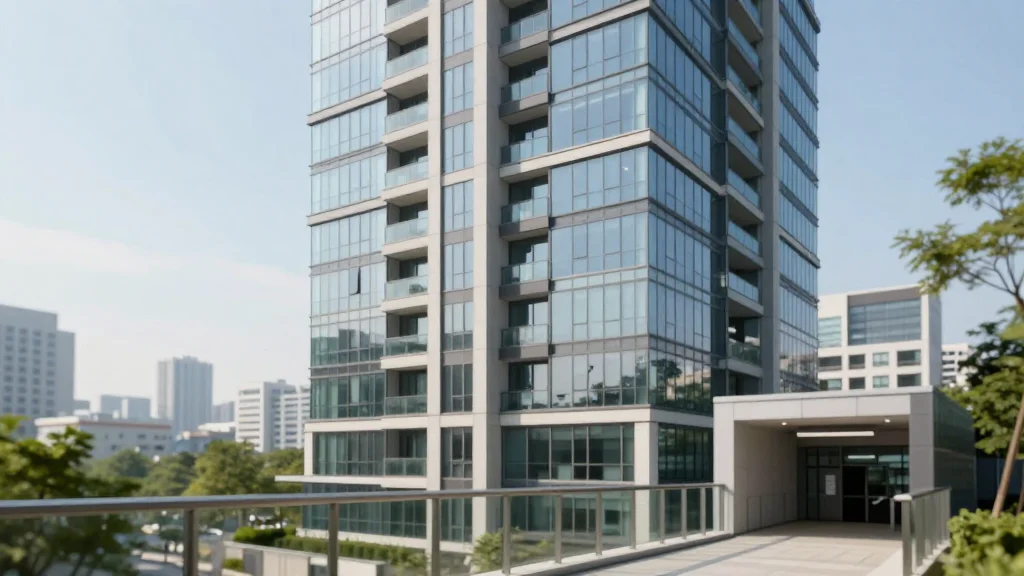
Tishman Speyer Holds First Close on Fund Targeting Multifamily in Seoul
Companies Mentioned
Why It Matters
The fund gives Tishman Speyer a foothold in South Korea’s rapidly expanding multifamily sector, offering investors exposure to a high‑demand, supply‑constrained market and diversifying global real‑estate risk.
Key Takeaways
- •Tishman Speyer secured $300M equity from APG and Bouwinvest
- •Fund aims for $400M equity, $800M total investment capacity
- •Targeting Seoul‑area multifamily near transit, business districts, universities
- •Korean multifamily market considered under‑institutionalized with strong demand
- •Diversifies Tishman Speyer’s global portfolio into high‑growth Asia
Pulse Analysis
South Korea’s urban housing landscape is undergoing a seismic shift as rising incomes and a growing middle class fuel demand for quality multifamily units. Seoul, in particular, faces chronic supply constraints near transit corridors and employment hubs, driving rents and vacancy rates to historic highs. Institutional investors have been cautious, leaving a gap that private equity firms are eager to fill. By targeting properties adjacent to subway stations, business districts, and university campuses, Tishman Speyer’s Korea Living Venture aligns with demographic trends that favor walkable, amenity‑rich living environments.
The Korea Living Venture’s structure reflects a classic co‑investment model: $300 million of committed equity from APG and Bouwinvest, with a target of $400 million, translates into roughly $800 million of total capital when leverage is applied. This capital stack enables the fund to pursue a mix of acquisitions, value‑add repositioning, and ground‑up development, spreading risk across asset types and stages. The partnership with blue‑chip European pension funds not only validates the market thesis but also provides a stable, long‑term capital base, essential for the illiquid nature of multifamily projects that often span 5‑10 years.
For investors, the fund offers a conduit into an under‑institutionalized segment that promises attractive yield compression relative to more mature markets like the United States or Europe. It also signals a broader trend of global capital gravitating toward Asia’s high‑growth real‑estate corridors, where demographic momentum and urbanization create durable demand. While currency risk and regulatory nuances remain considerations, the strategic focus on transit‑oriented, high‑density neighborhoods positions the Korea Living Venture to capture premium rents and long‑term appreciation, reinforcing Tishman Speyer’s diversification and growth objectives.
Tishman Speyer Holds First Close on Fund Targeting Multifamily in Seoul
Comments
Want to join the conversation?
Loading comments...