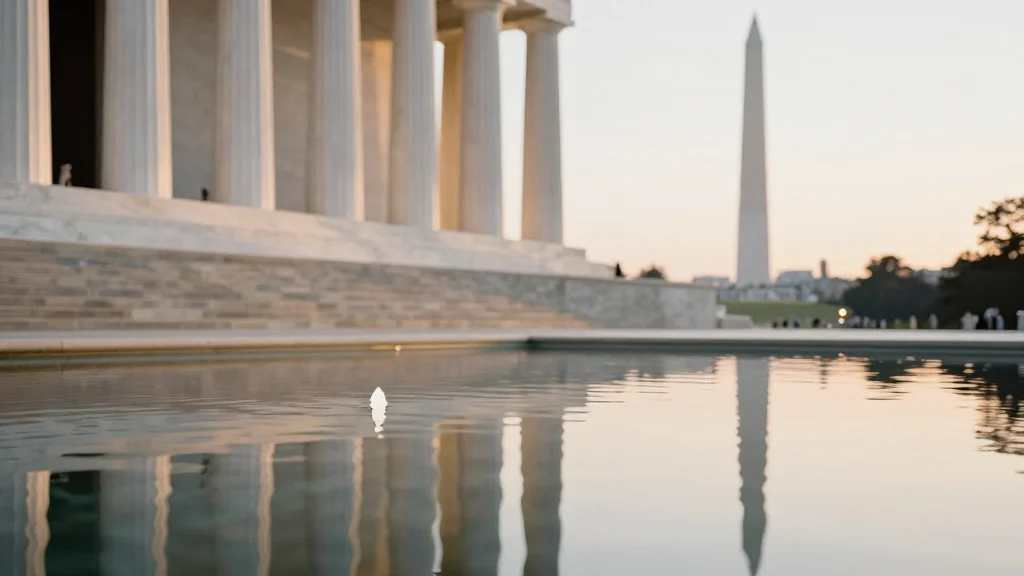
Trump's $13 Million Lincoln Memorial Pool Makeover Sparks Preservation Fight

Why It Matters
The reflecting‑pool renovation sits at the intersection of historic preservation, federal spending, and political symbolism. By altering a landmark that has stood for a century, the Trump administration tests the limits of executive authority over national monuments, potentially reshaping how future presidents approach capital‑city infrastructure projects. The $13.1 million cost—significantly higher than the president’s public estimate—raises concerns about transparency and oversight in federal real‑estate spending, especially when projects are fast‑tracked without standard review processes. Moreover, the legal challenge by the Cultural Landscape Foundation could set a judicial precedent for enforcing historic‑preservation statutes against unilateral executive actions. Beyond the immediate fiscal and legal ramifications, the makeover influences the broader real‑estate market in Washington, D.C. A high‑profile, government‑led renovation can spur private developers to propose complementary projects, such as hotels, retail spaces, or cultural venues, that capitalize on increased foot traffic and renewed aesthetic appeal. Conversely, the controversy may deter investment if stakeholders perceive heightened regulatory risk or political volatility surrounding landmark sites. Understanding these dynamics is crucial for investors, city planners, and policymakers navigating the capital’s evolving built environment.
Key Takeaways
- •President Trump announced completion of a $13.1 million repaint and water‑refill of the Lincoln Memorial reflecting pool.
- •Initial estimate given by Trump was $2 million; Interior Department records show a far higher cost.
- •The Cultural Landscape Foundation sued, alleging the project bypassed required historic‑preservation reviews.
- •Senate Minority Leader Chuck Schumer called the renovation a "vanity" use of taxpayer money.
- •The work includes darkening the pool surface to "American flag blue" and sealing crevices to prevent leaks for 50‑100 years.
Pulse Analysis
Trump’s hands‑on approach to Washington’s built environment marks a departure from the traditionally bureaucratic, consensus‑driven process that governs federal real‑estate projects. By framing the reflecting‑pool makeover as a patriotic, long‑lasting fix, the administration attempts to legitimize rapid, top‑down execution, yet the ensuing legal pushback reveals the resilience of preservation institutions. Historically, major alterations to national monuments have required extensive stakeholder engagement—think of the 1970s renovation of the National Mall or the 1990s refurbishment of the Jefferson Memorial—processes that ensure both aesthetic integrity and fiscal accountability. Skipping these steps not only inflames partisan criticism but also risks cost overruns, as evidenced by the $11 million discrepancy between Trump’s public figure and the actual spend.
From a market perspective, the project could act as a catalyst for private development in the surrounding Mall area. A refreshed reflecting pool may increase visitor numbers, encouraging hospitality and retail operators to seek leases nearby. However, the controversy also signals heightened regulatory scrutiny; developers may need to factor in potential preservation lawsuits and the likelihood of stricter oversight under future administrations. In the longer term, the case may prompt Congress to tighten statutory requirements for any alterations to federally owned historic sites, thereby reshaping the risk calculus for both public and private investors in the capital’s real‑estate sector.
Ultimately, the reflecting‑pool revamp is a microcosm of a broader struggle over who gets to define the visual and functional character of America’s most iconic public spaces. Whether the pool’s new hue endures as a symbol of patriotic renewal or as a cautionary tale of unchecked executive ambition will depend on the outcome of the pending lawsuit and the political winds that follow the 2026 midterms.
Trump's $13 Million Lincoln Memorial pool makeover sparks preservation fight
Comments
Want to join the conversation?
Loading comments...