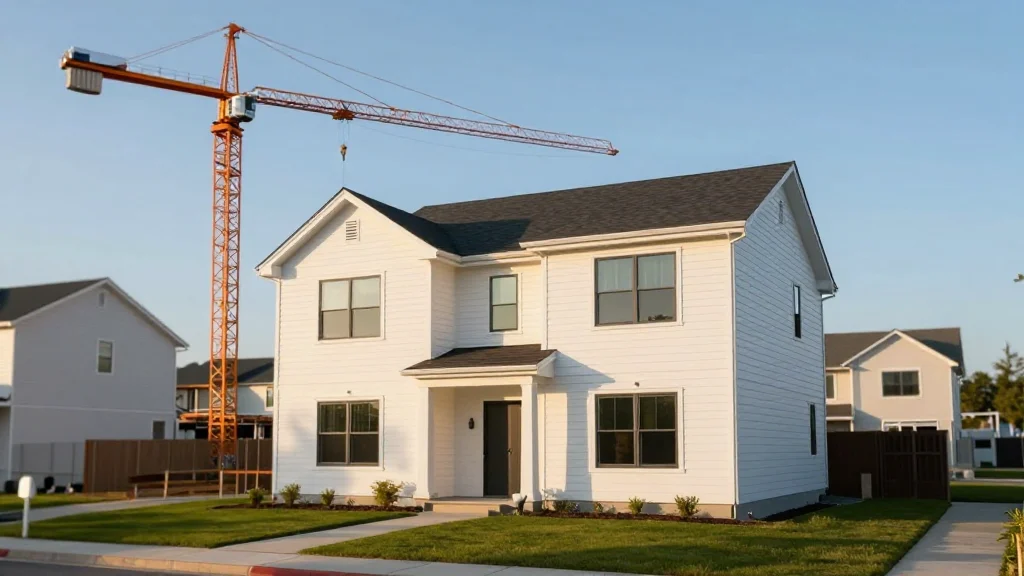
TWO Capital and Origin Secure Financing for 199‑Unit Build‑to‑Rent Project in Madison, Tenn.

Companies Mentioned
Why It Matters
The Tessa Madison financing illustrates that capital continues to flow into suburban build‑to‑rent projects despite a higher‑interest‑rate environment. By locating the development in a Qualified Opportunity Zone, the sponsors are tapping tax incentives that can improve equity returns, a strategy likely to be emulated as more developers seek to differentiate their projects and attract institutional money. The partnership between a private‑equity sponsor and a major single‑family rental owner also signals a maturing BTR market where development risk is increasingly shared with operators who have proven leasing and management platforms. For the broader real estate sector, the deal reinforces the shift toward purpose‑built rentals as a core component of the multifamily pipeline. As metropolitan areas like Nashville experience sustained population inflows, the need for high‑quality, amenity‑rich rental housing will push developers to pursue similar financing structures, potentially reshaping the supply dynamics of suburban markets nationwide.
Key Takeaways
- •TWO Capital Partners and Origin Investments secured construction financing for Tessa Madison, a 199‑unit build‑to‑rent community in Madison, TN.
- •Financing was arranged by Patterson Real Estate Advisory Group through Invitation Homes; amount undisclosed.
- •The 55‑acre site sits in a Qualified Opportunity Zone, offering potential tax benefits to investors.
- •Units average 1,851 sq ft with three‑ or four‑bedroom layouts, two‑car garages, and a suite of community amenities.
- •Construction slated to start later in 2026 with phased deliveries beginning in early 2028.
Pulse Analysis
The Tessa Madison deal is emblematic of a broader realignment in multifamily capital allocation. Historically, developers relied on senior bank loans or equity from traditional REITs to fund suburban projects. Today, the confluence of higher interest rates and a competitive loan market has nudged sponsors toward hybrid structures that blend private‑equity equity, institutional ownership, and tax‑advantaged financing. By partnering with Invitation Homes, TWO Capital gains access to a pipeline of operational expertise and a ready tenant base, while Invitation Homes secures a pipeline of rent‑ready assets that can be integrated into its portfolio without the typical development risk.
Opportunity Zones, introduced in 2017, have matured into a strategic tool for developers seeking to enhance equity yields. The Tessa Madison project leverages these incentives, suggesting that the tax credit market may become a differentiator for future BTR projects, especially in regions where land costs are rising. If the development meets its projected timelines and rent targets, it could validate the model for other sponsors eyeing similar suburban markets.
Looking ahead, the success of Tessa Madison could spur a wave of comparable financing arrangements across the Sun Belt, where population growth and housing affordability pressures are most acute. Developers may increasingly adopt the build‑to‑rent format to lock in design standards and operational efficiencies, while investors will likely prioritize projects that combine strong demographic fundamentals with tax‑efficient structures. The market will be watching how quickly the pipeline of such deals materializes and whether the financing terms remain favorable as the Federal Reserve’s policy stance evolves.
TWO Capital and Origin Secure Financing for 199‑Unit Build‑to‑Rent Project in Madison, Tenn.
Comments
Want to join the conversation?
Loading comments...