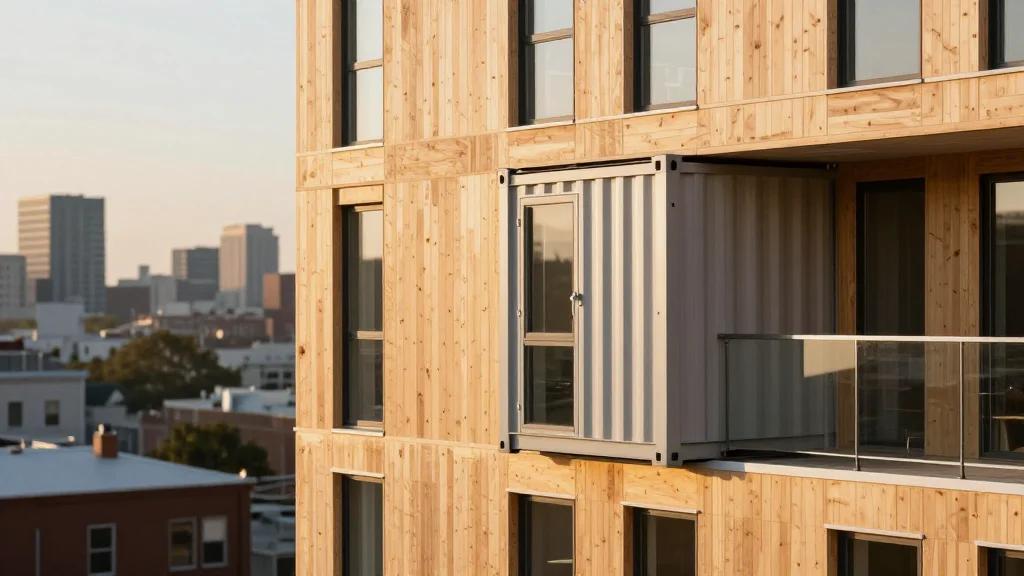
UL10: 10 Small-Scale Infill Projects Add Density to Tight Sites
Why It Matters
These infill interventions demonstrate how targeted, sustainable design can alleviate housing shortages, boost urban density, and catalyze neighborhood regeneration without expanding the urban footprint.
Key Takeaways
- •Infill projects add 500+ new affordable units across five countries
- •Designs prioritize all‑electric systems and renewable energy integration
- •Modular and timber construction shaved up to 15 months off schedules
- •Projects repurpose vacant lots, medians, and former industrial sites
- •Community amenities and green spaces boost neighborhood livability
Pulse Analysis
Small‑scale infill is emerging as a pragmatic response to the twin pressures of housing scarcity and climate imperatives. By inserting new structures into existing urban fabrics—often on vacant lots, former industrial parcels, or even highway medians—cities can increase density without the political and financial burdens of large‑scale expansions. Policymakers are increasingly incentivizing such projects through zoning bonuses, tax credits, and streamlined permitting, recognizing that infill can preserve greenfield land while leveraging existing utilities and transit corridors.
The ten case studies illustrate a spectrum of innovative tactics that marry affordability with sustainability. All‑electric designs, as seen in Oakland’s Coliseum Place and Toronto’s Ulster House, rely on photovoltaic arrays and heat‑pump systems to eliminate fossil‑fuel consumption. Modular construction, exemplified by Los Angeles’ Isla Intersections, trimmed project timelines by over a year, while timber mass‑construction in Portland’s Julia West House reduced embodied carbon. Moreover, many developments embed community services—social rooms, galleries, and on‑site support—to foster social cohesion and address homelessness directly.
Looking ahead, the scalability of these infill models hinges on replicable design templates, financing mechanisms attuned to modest site sizes, and continued community engagement. As cities grapple with rising land costs, the demonstrated ability to deliver high‑quality, energy‑positive housing on constrained footprints offers a compelling blueprint. Developers that master the balance of density, sustainability, and local context are poised to capture emerging market opportunities while contributing to resilient, inclusive urban growth.
UL10: 10 Small-Scale Infill Projects Add Density to Tight Sites
Comments
Want to join the conversation?
Loading comments...