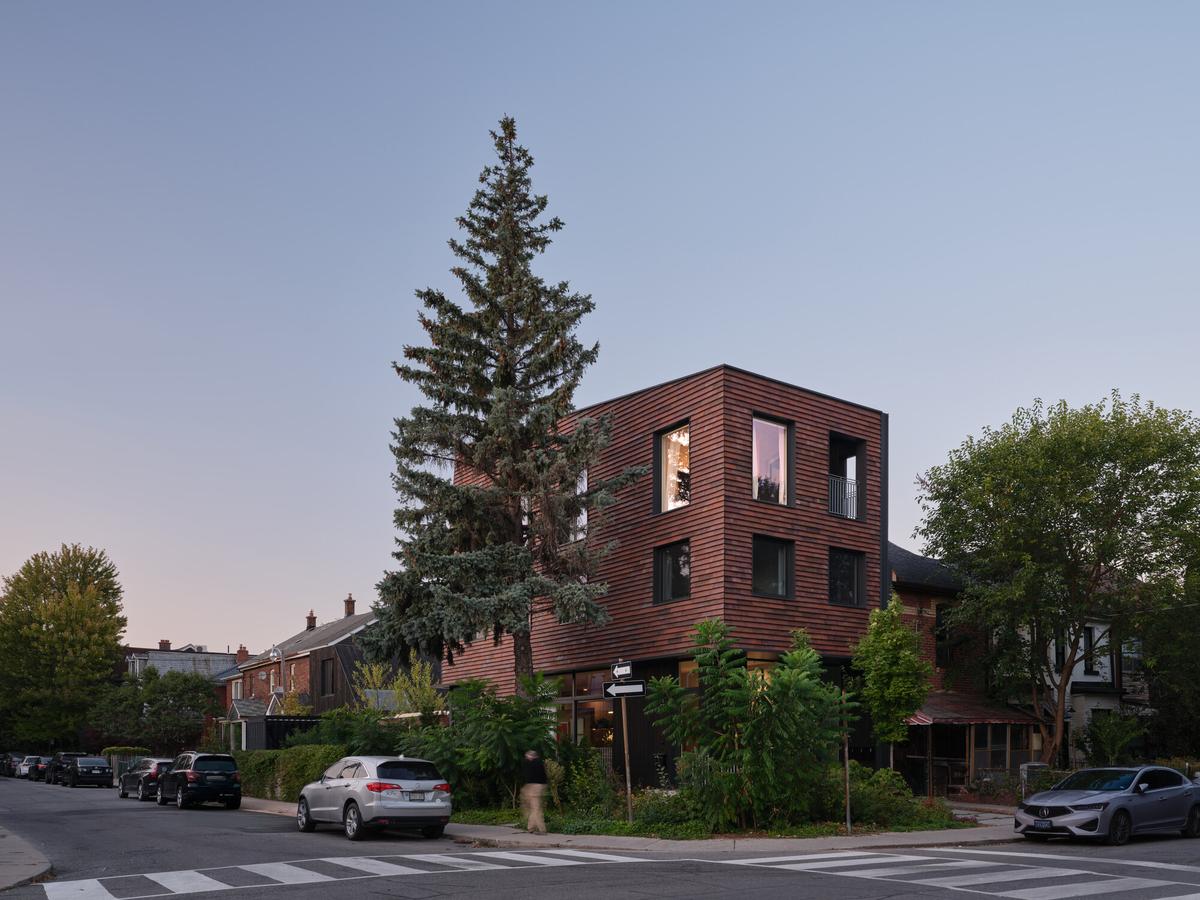
Why It Matters
The project proves that medium‑density, owner‑built housing can deliver lower carbon footprints and cost‑effective affordability, challenging Toronto’s reliance on high‑rise towers and suburban sprawl. It offers a replicable model for cities seeking to increase housing supply without sacrificing sustainability or neighborhood character.
Key Takeaways
- •Ulster House introduces Toronto’s first multiplex condo, five units total
- •Project cuts building GWP by 50% using timber and minimal concrete
- •All‑electric HVAC and rooftop solar achieve net‑zero energy potential
- •Design blends Victorian‑style cladding with pollinator‑friendly landscaping
- •Demonstrates citizen‑developer model for affordable, sustainable gentle‑density housing
Pulse Analysis
Ulster House illustrates how modest‑scale infill projects can address Toronto’s housing crunch while meeting aggressive climate goals. By opting for a dimensional‑lumber frame and limiting carbon‑intensive concrete and steel, the developers slashed the building’s embodied emissions by roughly half, aligning with the Architecture 2030 Challenge’s 40 % reduction target. Complementary strategies—such as an all‑electric HVAC system and a rooftop solar array—further lower operational carbon, positioning the multiplex as a near‑net‑zero prototype for future residential developments.
Beyond its environmental credentials, the project showcases a thoughtful integration with the existing streetscape. The clay‑tile cladding echoes the texture of neighboring Victorian brick homes, while a retained mature blue spruce and pollinator‑friendly landscaping preserve local ecology and enhance storm‑water management. Interior finishes of oak‑veneer plywood replace conventional drywall, offering healthier indoor air quality and a warm aesthetic that resonates with contemporary buyers seeking both sustainability and design integrity.
Perhaps the most compelling aspect is the citizen‑developer model championed by principals Janna Levitt and Dean Goodman. By living in two of the units and designing flexible layouts that can transition between multi‑family and single‑occupancy use, they demonstrate a hands‑on approach to affordable homeownership. This model empowers architects and residents to co‑create housing that balances cost, livability, and ecological responsibility, providing a scalable template for municipalities aiming to diversify density without resorting to high‑rise towers or sprawling suburbs.
Ulster House / LGA Architectural Partners
Comments
Want to join the conversation?
Loading comments...