Why It Matters
The project showcases how thoughtful spatial design can boost employee well‑being and productivity, a priority for post‑pandemic workplaces, while giving landlords a template to turn structural limitations into rental‑ready features.
Key Takeaways
- •70 m² Barcelona office designed as neutral, versatile workspace.
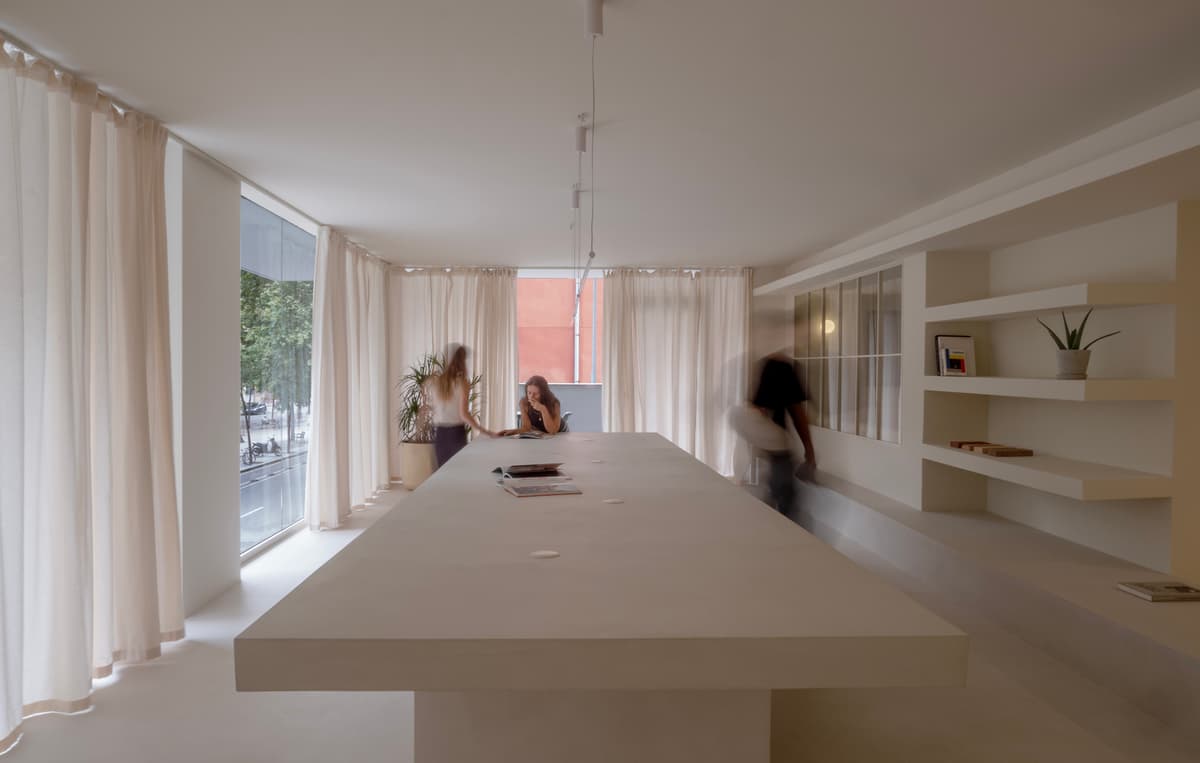
- •Curtain wall softens daylight, improves acoustics and intimacy.
- •Structural beam repurposed into central bench, enhancing layout.
- •Iron‑framed joinery and continuous flooring create seamless flow.
- •Design targets stress reduction and calm productivity for occupants.
Pulse Analysis
The rise of flexible, wellness‑focused work environments has reshaped office design across Europe, and Barcelona is at the forefront. Companies now prioritize spaces that reduce cognitive load, offering employees a refuge from the constant buzz of urban life. Unwhite Office taps into this trend by delivering a minimalist palette, abundant natural light filtered through a full‑length curtain, and acoustic enhancements that make conversations clearer and distractions fewer. Such attributes align with the growing demand for "quiet hubs" within dense city cores, where talent expects both collaboration and concentration.
At the heart of the Barcelona project is a clever reinterpretation of a structural beam that initially limited leasing options. By converting the beam into a long bench, the designers created a natural boundary between the open work area and a dedicated meeting zone, preserving floor continuity while adding functional seating. Iron‑framed joinery and uninterrupted flooring further reinforce a sense of flow, allowing employees to move fluidly between tasks. The curtain, spanning 18 meters, not only softens daylight but also acts as an acoustic buffer, enhancing privacy without sacrificing openness—a solution increasingly sought after in mixed‑use developments where space must serve multiple purposes.
For property owners and developers, the Unwhite Office model illustrates a scalable approach to adding value to existing structures. By embracing architectural constraints as design opportunities, landlords can differentiate their offerings in a competitive market, command higher rents, and attract tenants focused on employee well‑being. Moreover, the use of neutral, durable materials supports sustainability goals, reducing the need for frequent refurbishments. As the post‑pandemic office landscape continues to evolve, such adaptable, health‑centric designs are likely to become a benchmark for future mixed‑use projects worldwide.
Unwhite Office / brenzo
Comments
Want to join the conversation?
Loading comments...