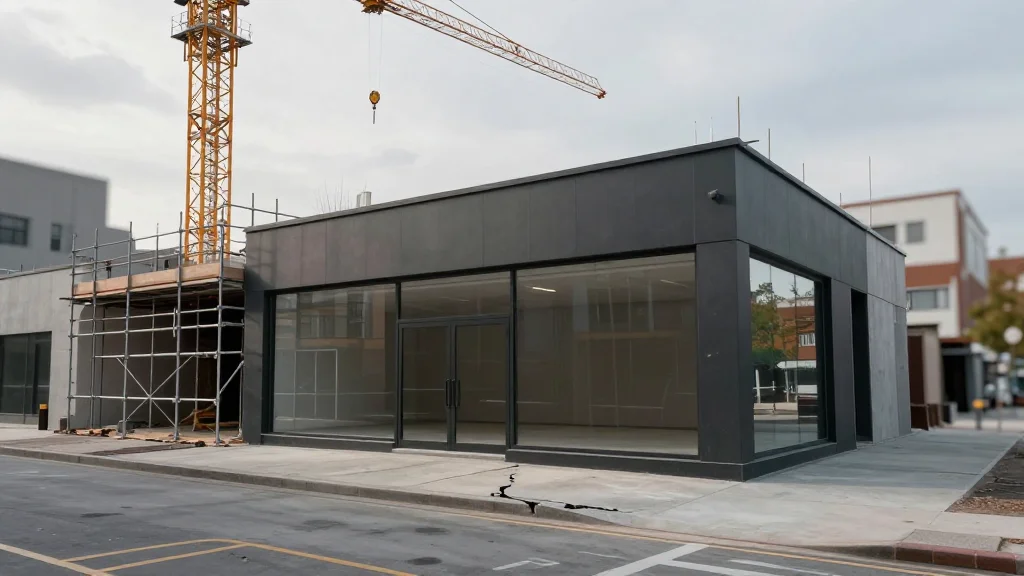
U.S. Retail Construction Completions Drop to 4.7M SF, Lowest Since 2005

Companies Mentioned

Why It Matters
The plunge in retail construction completions signals a structural shift in how the U.S. retail landscape will evolve. With fewer new stores entering the market, existing landlords gain leverage to raise rents and negotiate longer leases, potentially reshaping tenant‑landlord dynamics. At the same time, the surge in institutional capital into existing retail assets underscores a belief that the sector’s fundamentals remain sound, even as brick‑and‑mortar faces headwinds from e‑commerce and changing consumer habits. For developers, the data highlights the urgency of addressing labor and cost challenges if they hope to revive new‑store pipelines. For investors, the contrast between a stagnant supply side and robust capital demand creates opportunities to acquire high‑quality assets at attractive yields, especially in growth markets like the Sun Belt where demand for modern retail formats persists.
Key Takeaways
- •Retail construction completions fell to 4.7 M SF in Q1 2026, lowest since 2005.
- •Availability rate rose to 4.9% while net absorption stayed positive at 1.7 M SF.
- •Phoenix led new deliveries with 744 K SF; Sun Belt markets dominate the limited pipeline.
- •Apollo pledged $1 B for a 49% stake in a Realty Income joint venture targeting single‑tenant retail.
- •Retail sales reached $66.8 B in 2025, up 35% YoY, driven by institutional buying.
Pulse Analysis
The current construction lull is less a temporary hiccup than a symptom of deeper macro‑economic pressures. Labor scarcity in the construction sector, compounded by material cost inflation, has raised the breakeven point for many developers, especially for lower‑margin strip centers and neighborhood malls. Those projects that do move forward are increasingly concentrated in high‑growth Sun Belt metros where demographic trends and lower land costs offset some of the headwinds.
Meanwhile, the influx of institutional money into existing retail assets reflects a strategic pivot. Investors are betting on the resilience of cash‑flow‑stable, single‑tenant properties—particularly grocery‑anchored and essential‑service locations—that have proven less vulnerable to e‑commerce disruption. The Apollo‑Realty Income partnership and Nuveen’s grocery‑focused fund illustrate a broader reallocation of capital from speculative development toward income‑generating, lower‑risk assets.
Looking forward, the sector’s trajectory will likely diverge along two lines. If construction labor constraints ease and material prices stabilize, we could see a modest revival in new retail builds, especially for experiential formats that cannot be replicated online. Conversely, if costs remain elevated, developers may double down on adaptive reuse and mixed‑use projects, blending retail with residential or office components to maximize returns. Investors will continue to monitor rent growth and vacancy trends as leading indicators of whether the current supply deficit translates into higher yields or simply inflates prices without improving cash flow.
U.S. Retail Construction Completions Drop to 4.7M SF, Lowest Since 2005
Comments
Want to join the conversation?
Loading comments...