Vermont’s First Neighborhood Geothermal Project Prepares to Break Ground
Why It Matters
The pilot provides a tangible pathway for decarbonizing residential heating in a region still reliant on fossil fuels, potentially lowering energy bills and advancing Vermont’s 80% emissions‑reduction target by 2050. Success could spur similar affordable‑housing geothermal projects nationwide, reshaping utility business models and accelerating the shift to electric heat pumps.
Key Takeaways
- •Vermont Gas funds $275K geothermal borehole infrastructure for 36-unit project.
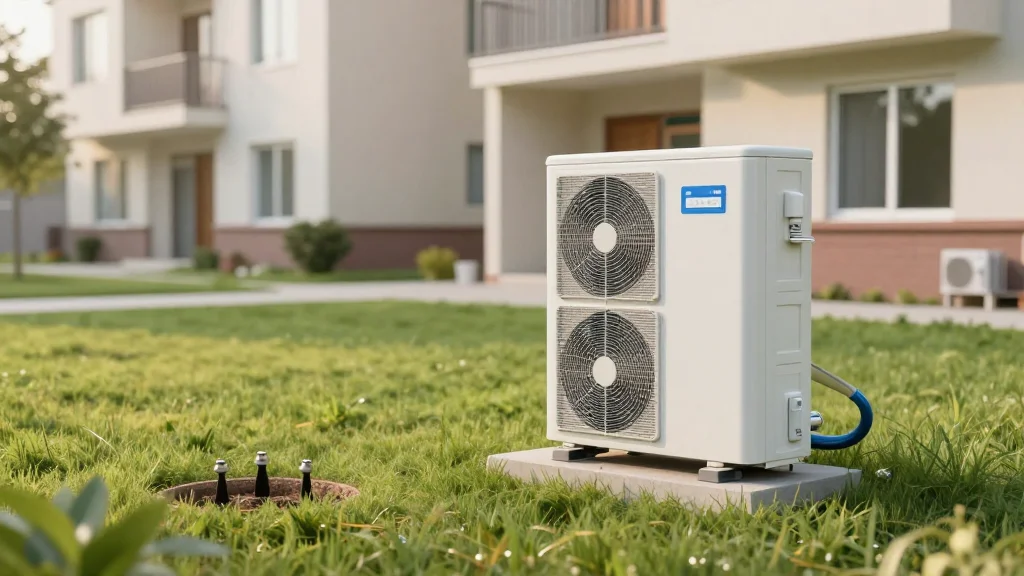
- •Project uses 12‑16 boreholes 400 ft deep, delivering heat via electric heat pumps.
- •Champlain Housing Trust pays $25‑$35 monthly access fee per unit.
- •Pilot aims to prove cost‑effective model for future affordable‑housing builds.
Pulse Analysis
Geothermal heating and cooling is gaining traction as states chase aggressive climate goals, yet most U.S. deployments have focused on retrofitting existing buildings or large‑scale district systems. Vermont’s approach diverges by embedding the technology in new, affordable‑housing construction, leveraging the state’s abundant low‑grade heat at 45‑50 °F year‑round. By pairing electric heat‑pump technology with deep borehole loops, the project sidesteps natural‑gas dependence and offers a predictable, emissions‑free energy source that aligns with the utility’s long‑term infrastructure expertise.
The financing structure reflects the unique challenges of nonprofit developers. While Vermont Gas shoulders the $275,000 upfront cost for the underground loop network, Champlain Housing Trust assumes responsibility for interior equipment and a modest per‑unit access fee. This arrangement mitigates capital barriers for affordable‑housing providers and ensures the utility recoups its investment without imposing prohibitive rents. Design simplifications—four separate loops rather than a complex shared network—cut costs and eliminated the need for federal tax‑credit compliance, illustrating how pragmatic engineering can preserve economic viability.
If the pilot proves cost‑effective, it could become a template for replicating geothermal systems across the country’s fragmented housing markets. Utilities could expand service offerings beyond traditional gas, positioning themselves as providers of thermal‑energy services in a decarbonizing economy. For developers, the model promises lower operating expenses and a marketable green credential, helping address both housing shortages and climate mandates. The success of Vermont’s first neighborhood geothermal project may therefore catalyze broader adoption, influencing policy incentives, utility investment strategies, and the future of sustainable, affordable housing.
Vermont’s first neighborhood geothermal project prepares to break ground
Comments
Want to join the conversation?
Loading comments...