Companies Mentioned

Why It Matters
Without faster grid access and competitive energy pricing, the UK risks losing AI‑driven data‑centre projects to rivals like the Nordics, limiting economic growth and tech leadership. Addressing these fundamentals could unlock billions in infrastructure spend and job creation.
Key Takeaways
- •UK power connection timelines average 12‑18 months, deterring hyperscalers
- •Electricity costs in Britain are ~35% higher than Germany, raising operating expenses
- •Google’s £800 M (~$1 B) Waltham Cross centre secured a 100 MW offshore wind PPA
- •Decentralised energy pricing could shift data‑centre builds to Scotland, Wales, and north‑east
Pulse Analysis
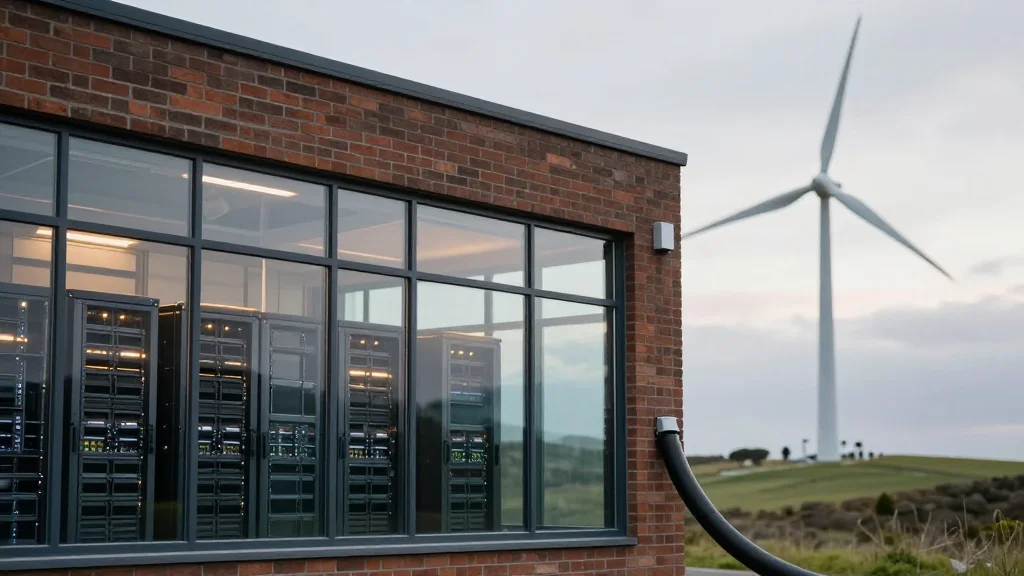
The United Kingdom’s data‑centre market sits at a crossroads, with hyperscalers like Google weighing the trade‑offs between proximity to end users and the cost of power. While London remains a logical hub for latency‑sensitive workloads, the country’s grid‑connection process—often taking a year or more—has become a decisive factor for firms that need rapid deployment to support AI training and inference. Google’s recent £800 million (~$1 billion) Waltham Cross campus illustrates both the ambition and the friction; the site relies on a 100‑megawatt offshore wind purchase agreement, yet the lengthy approval pipeline underscores a systemic bottleneck that could steer future projects to regions with faster grid access.
Energy pricing is another critical lever. Britain’s electricity rates sit roughly 35% above Germany’s, a disparity that directly inflates operating expenditures for data‑centre operators. Industry leaders, including BGO Data Centres, argue for a decentralized pricing model that would allow facilities to locate near abundant renewable resources in Scotland, Wales, or the north‑east, mirroring the cost advantages enjoyed by the Nordics and Spain. Such a shift could also dovetail with the UK government’s AI growth zones, encouraging AI‑intensive workloads—like large‑scale model training—to settle in lower‑cost, renewable‑rich locales without sacrificing reliability.
Planning reforms are equally pivotal. The current National Planning Policy Framework often yields inconsistent outcomes, slowing the delivery of large‑scale infrastructure. Google’s interest in "powered shells"—pre‑fitted shells with grid connections—highlights a desire for standardized, plug‑and‑play solutions that reduce time‑to‑market. By streamlining planning approvals and aligning energy policy with regional renewable potential, the UK can transform these challenges into a competitive advantage, attracting the next wave of AI‑driven data‑centre investment and cementing its role in the global digital economy.
What A Hyperscaler Wants From UK Data Centres
Comments
Want to join the conversation?
Loading comments...