Who Drives Remodeling Spending?
Why It Matters
The concentration of remodeling spend in higher‑income, mid‑life households signals strong demand for home‑improvement services and fuels related sectors such as construction, materials, and financing. Understanding these drivers helps investors and policymakers gauge consumer confidence and housing market resilience amid tight inventory and high mortgage rates.
Key Takeaways
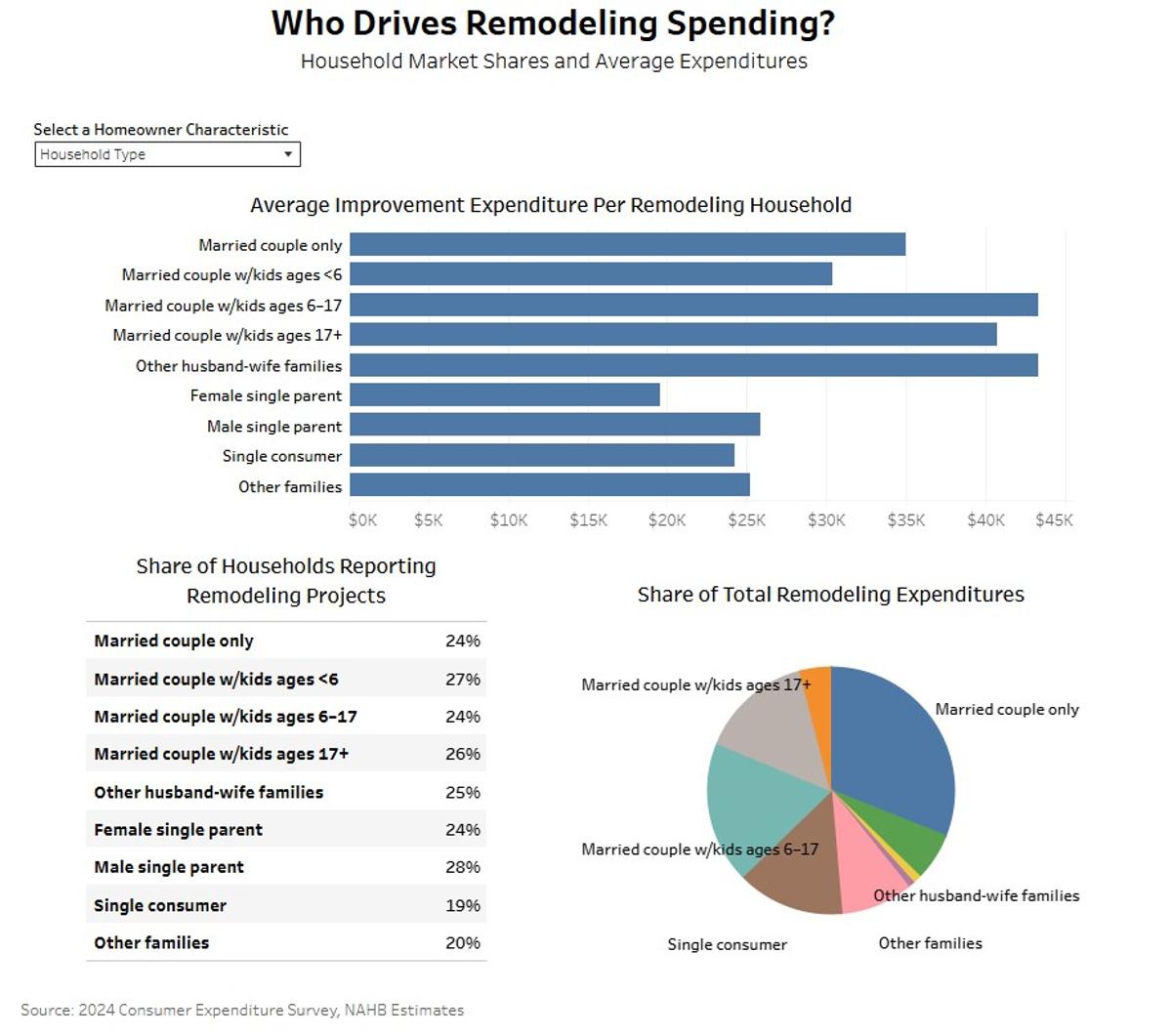
- •Married‑couple households spent $458 billion, 60% of remodeling market.
- •Homeowners 35‑44 and 55‑64 have highest per‑household spending.
- •Baby Boomers contributed $254 billion, the largest generational share.
- •Households earning ≥$200k account for 40% of total remodeling spend.
- •Single‑consumer households report remodeling at only 19% participation rate.
Pulse Analysis
The residential remodeling market surged to $670 billion in 2024 as elevated mortgage rates and a chronic shortage of for‑sale homes pushed owners to upgrade rather than move. This macro environment amplified demand for additions, alterations and replacements, creating a robust pipeline for contractors, material suppliers, and financing firms. Analysts view the spending surge as a barometer of consumer confidence, especially when traditional home‑buying activity stalls.
Household composition and age shape where the money flows. Married‑couple families—both with and without children—account for roughly 60% of remodeling projects, with couples with children leading per‑household spend at over $43,000. Peaks in spending among 35‑44‑year‑olds and 55‑64‑year‑olds reflect life‑cycle milestones: growing families and pre‑retirement upgrades. Baby boomers dominate the generational share, contributing $254 billion, while millennials, despite lower total spend, lead in high‑value additions, signaling a shift toward larger, value‑adding projects.
Income remains the strongest predictor of remodeling intensity. Households earning $200,000 or more generate 40% of total outlays and average $61,000 per remodel—more than three times the average of sub‑$50,000 earners. This concentration creates opportunities for premium product lines, specialized financing, and targeted marketing. As the housing inventory crunch persists, the remodeling sector is poised to remain a key engine of construction‑related growth, offering investors a resilient avenue amid broader market volatility.
Who Drives Remodeling Spending?
Comments
Want to join the conversation?
Loading comments...