Humanoid Robotics Complements Existing Automation at BMW
•March 2, 2026
0
Why It Matters
Integrating humanoid robots complements existing automation, addressing ergonomic and safety‑critical tasks while boosting throughput, positioning BMW as a technology leader in flexible, AI‑driven manufacturing.
Key Takeaways
- •First European humanoid robot pilot at BMW Leipzig.
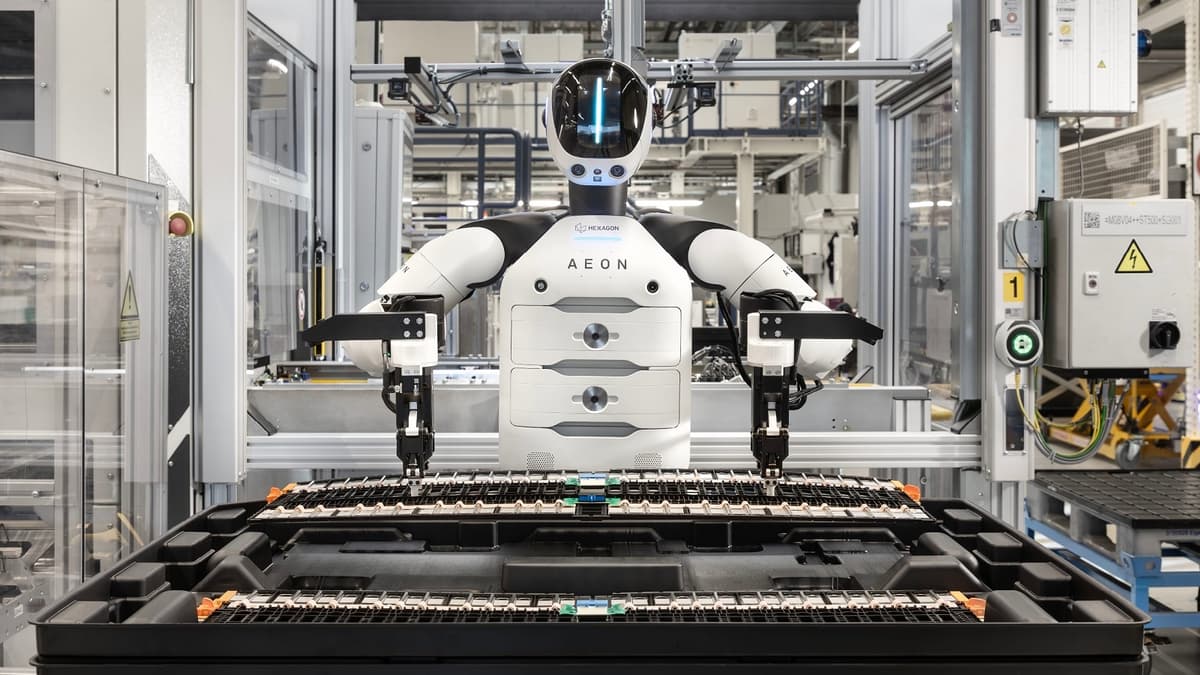
- •AEON robot handles battery and component assembly tasks.
- •Spartanburg pilot moved 90,000 parts, 30,000 X3s produced.
- •Unified data platform enables AI agents across production.
- •Center of Competence centralizes Physical AI expertise.
Pulse Analysis
BMW’s rollout of Physical AI marks a decisive shift from isolated automation to collaborative, AI‑enabled robotics. By unifying its production data model, the automaker creates a digital backbone that allows intelligent agents to operate across the factory floor, from digital twins to real‑time quality control. This data cohesion reduces silos, accelerates learning cycles, and makes it possible for humanoid robots to receive consistent instructions, ensuring they can adapt to complex, variable tasks without extensive reprogramming.
The Leipzig pilot, powered by Hexagon Robotics’ AEON platform, focuses on high‑voltage battery assembly and component handling—areas traditionally plagued by ergonomic strain and precision bottlenecks. AEON’s human‑like form factor supports interchangeable end‑effectors, enabling rapid reconfiguration for diverse tasks. Early results echo the Spartanburg deployment, where the Figure 02 robot completed over 1,250 operating hours, positioning 90,000 components with millimetre accuracy. These metrics demonstrate tangible productivity gains and validate the scalability of humanoid solutions within existing smart‑robotics ecosystems.
Beyond immediate efficiency, the initiative signals a broader industry trend toward flexible, AI‑driven manufacturing. As the Center of Competence for Physical AI consolidates expertise, BMW can faster evaluate partners, standardize interfaces, and propagate best practices across its global network. This approach not only improves worker safety and job satisfaction but also equips the automotive sector to respond swiftly to evolving product mixes, such as electric‑vehicle battery modules. In the long run, the successful integration of humanoid robotics could redefine plant layouts, reduce capital intensity, and set a new benchmark for competitive, future‑proof production.
Humanoid Robotics Complements Existing Automation at BMW
0
Comments
Want to join the conversation?
Loading comments...