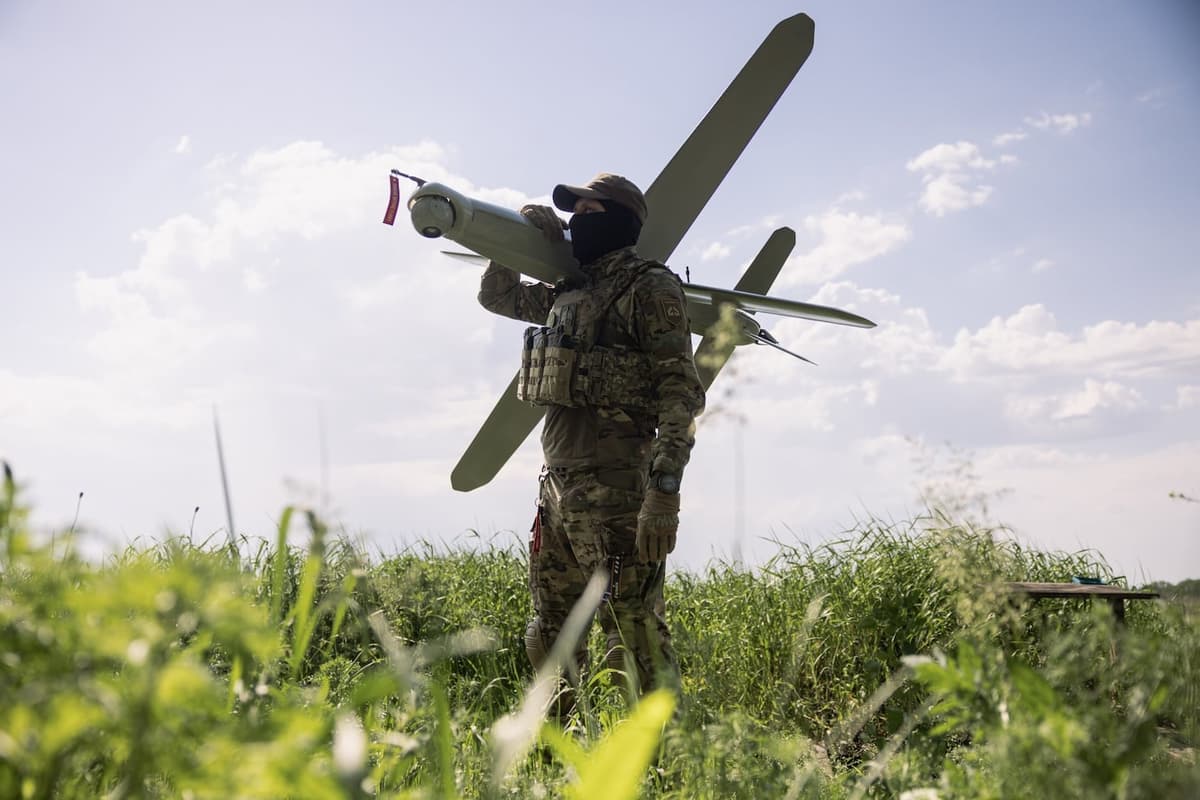
The New Weapon Behind Ukraine’s Battlefield Success
Companies Mentioned
Why It Matters
The drone campaign forces Russia to divert resources to protect supply routes, raising its operational costs and accelerating a logistics lockdown. It also showcases how low‑cost, AI‑guided UAVs can reshape conventional warfare dynamics.
Key Takeaways
- •Ukrainian mid‑range drones reach up to 100 miles behind Russian lines
- •Strike campaign quadrupled attacks beyond 12 miles since February
- •Ukraine rewards units with cash e‑points for successful drone strikes
- •FP‑2 drone carries 440‑lb payload, 200‑mile range, $50k each
- •Russia may need a year to develop counter‑measures against Ukrainian drones
Pulse Analysis
The introduction of mid‑range strike drones marks a turning point in the Ukraine‑Russia conflict. Platforms like the Hornet, with a 62‑mile reach, and the FP‑2, capable of delivering a 440‑pound warhead over 200 miles, give Kyiv the ability to hit high‑value targets deep inside occupied territory. Unlike earlier rocket systems that cost upwards of $168,000 per missile and were vulnerable to jamming, these UAVs cost roughly $50,000 each and rely on Starlink links and AI‑driven targeting to evade Russian electronic warfare.
Strategically, the drones have forced Moscow into a costly logistics lockdown. By repeatedly striking fuel trucks, ammunition depots and supply convoys, Ukrainian forces compel Russian commanders to reroute or heavily guard their supply lines, inflating operational expenses and slowing offensives. Kyiv’s new "e‑points" incentive scheme, which hands cash rewards to units that achieve confirmed kills, accelerates drone usage and creates a feedback loop that further degrades Russian sustainment capabilities. Analysts warn, however, that the points system may skew unit priorities toward easily filmed targets rather than the most strategically valuable nodes.
Looking ahead, Russia’s ability to neutralize the threat remains limited. Experts estimate a minimum of twelve months before effective counter‑drone defenses are fielded, given the current lack of dedicated anti‑UAV assets and the sophistication of Ukrainian intelligence, much of which is supplied by the United States. Any interruption in that intelligence flow could expose a vulnerability for Kyiv, but the rapid production rate—about 200 FP‑2 drones per day—provides a buffer. The success of these UAVs underscores a broader shift toward affordable, AI‑enabled drones as force multipliers, a trend likely to influence future conflicts worldwide.
The New Weapon Behind Ukraine’s Battlefield Success
Comments
Want to join the conversation?
Loading comments...