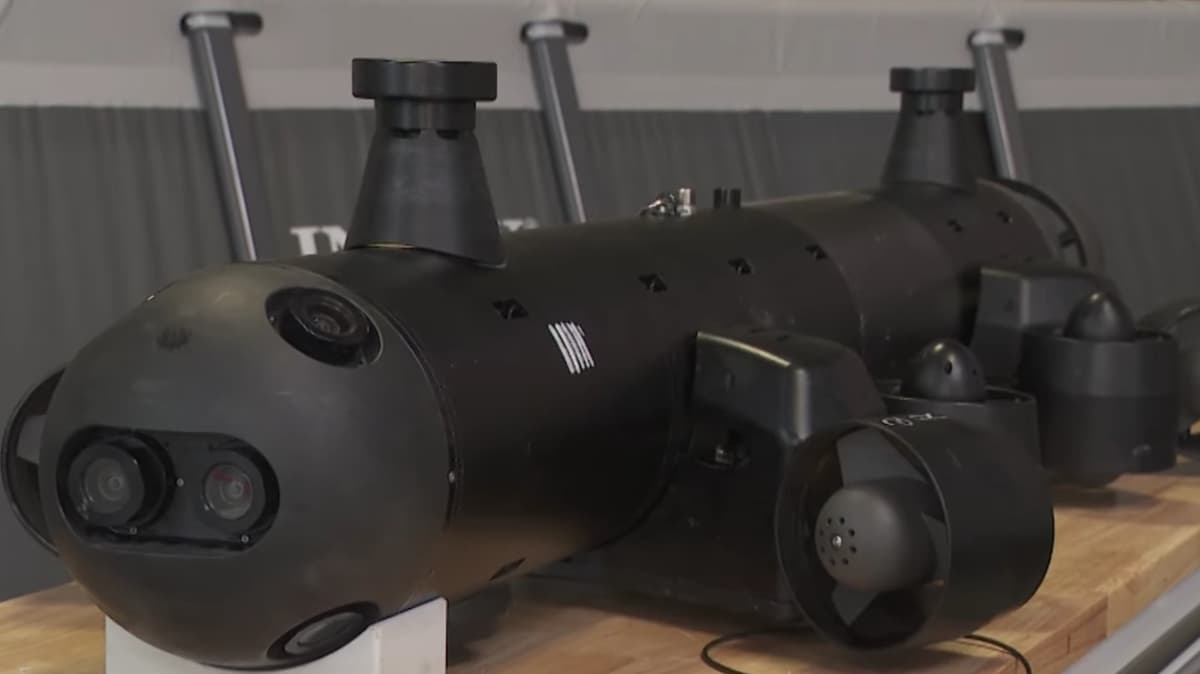
This High-Tech Drone Could Autonomously Scope Out Undersea Mines
Why It Matters
Mako promises a far cheaper, reusable alternative to current minesweeping tools, potentially reshaping naval logistics and enhancing maritime safety. Its rapid‑scale production could accelerate deployment in high‑risk chokepoints like the Strait of Hormuz.
Key Takeaways
- •Mako drone offers modular agility and endurance configurations.
- •Detects mines using 2D/3D radar and high‑resolution cameras.
- •Costs roughly ten times less than Navy's $100k neutralizers.
- •Production can scale to 1,000 units within months.
- •Also supports seagrass growth and illegal‑fishing surveillance.
Pulse Analysis
Underwater mines remain a persistent threat to commercial shipping and naval operations, yet traditional clearance methods are costly, slow, and hazardous. The ocean’s dynamic environment—varying depths, currents, and low visibility—complicates detection, forcing crews to approach dangerous ordnance directly. Autonomous systems like Ulysses’ Mako address these challenges by removing personnel from the blast radius and providing continuous, precise mapping capabilities, a shift that aligns with broader defense trends toward unmanned, AI‑driven platforms.
Mako’s standout feature is its modular architecture, which lets operators swap between an Agility Configuration for fine‑grained maneuvering in turbulent waters and an Endurance Configuration that maximizes coverage area. Integrated 2D/3D radar, high‑resolution cameras, and optional payload bays enable real‑time mine identification and, if equipped, on‑site neutralization. By reusing the same hardware for multiple missions, Ulysses claims the system can be delivered at roughly one‑tenth the price of the Navy’s $100,000 disposable neutralizers, a cost advantage that could drive rapid fleet expansion and lower overall minesweeping budgets.
Beyond military use, Mako’s sensor suite lends itself to civilian applications such as seagrass restoration and illegal‑fishing detection, expanding its market appeal. The company’s in‑development Leviathan mothership could further streamline drone maintenance and deployment, creating a scalable underwater network. If the U.S. Navy adopts the platform, it may set a new standard for autonomous maritime security, prompting other navies and commercial operators to explore similar cost‑effective, reusable solutions.
This High-Tech Drone Could Autonomously Scope Out Undersea Mines
Comments
Want to join the conversation?
Loading comments...