IMEC Built a Chip Platform that Works up to 325GHz, and It Could Make 6G Hardware Cheap Enough to Actually Deploy
Why It Matters
The breakthrough lowers the cost and complexity of manufacturing high‑frequency RF chips, accelerating the path to commercially viable 6G networks and AI‑driven telecom infrastructure.
Key Takeaways
- •IMEC’s interposer cuts 6G chiplet cost by moving passives to silicon.
- •Record‑low loss up to 325 GHz enables sub‑THz 6G links.
- •Laser‑assisted bonding aligns III‑V chiplets on 300 mm wafers.
- •Scalable modeling framework speeds design verification for RF components.
- •Nvidia’s $1 billion Nokia stake underscores telecom AI‑hardware push.
Pulse Analysis
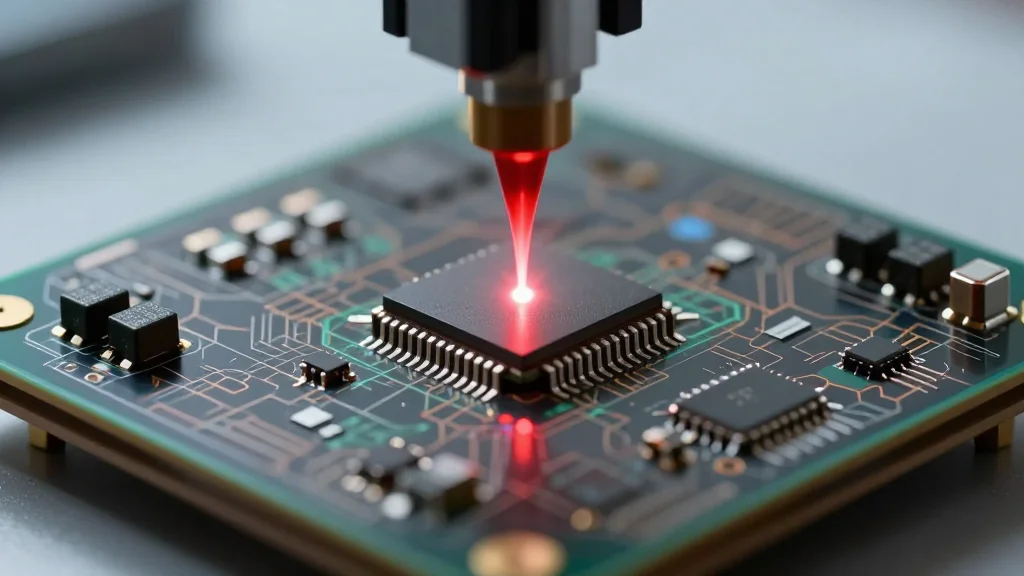
IMEC’s silicon interposer platform tackles one of 6G’s biggest hurdles: marrying ultra‑high‑frequency performance with the economics of mass production. Traditional III‑V compounds such as indium phosphide and gallium arsenide deliver the needed RF characteristics but are confined to small, expensive wafers. By using a 300 mm silicon carrier, IMEC enables these premium chiplets to be integrated alongside digital logic and passive components, dramatically reducing material costs while preserving signal integrity up to 325 GHz.
The three new manufacturing capabilities announced in June further streamline the design‑to‑fab pipeline. High‑density embedded MIM capacitors shift passive circuitry onto the silicon substrate, shrinking the expensive III‑V die footprint. A scalable modeling framework gives designers predictive insight into passive behavior before a single wafer is processed, cutting iteration cycles. Meanwhile, laser‑assisted bonding provides sub‑micron alignment accuracy, essential for maintaining low insertion loss at sub‑terahertz frequencies. Together, these tools lower the barrier for low‑volume production, a critical step for early‑stage 6G pilots.
Industry momentum amplifies the platform’s relevance. Nvidia’s $1 billion stake in Nokia and its coalition of carriers signal a strategic push toward AI‑native radio access networks, where every antenna becomes a compute node. The bottleneck will shift from software to silicon, demanding affordable, high‑performance RF chips at scale. IMEC’s interposer, backed by partners like TSMC, Samsung and Intel, positions the ecosystem to meet that demand, potentially compressing the typical five‑to‑seven‑year gap between research breakthroughs and commercial rollout as 6G standardization looms around 2028.
IMEC built a chip platform that works up to 325GHz, and it could make 6G hardware cheap enough to actually deploy
Comments
Want to join the conversation?
Loading comments...