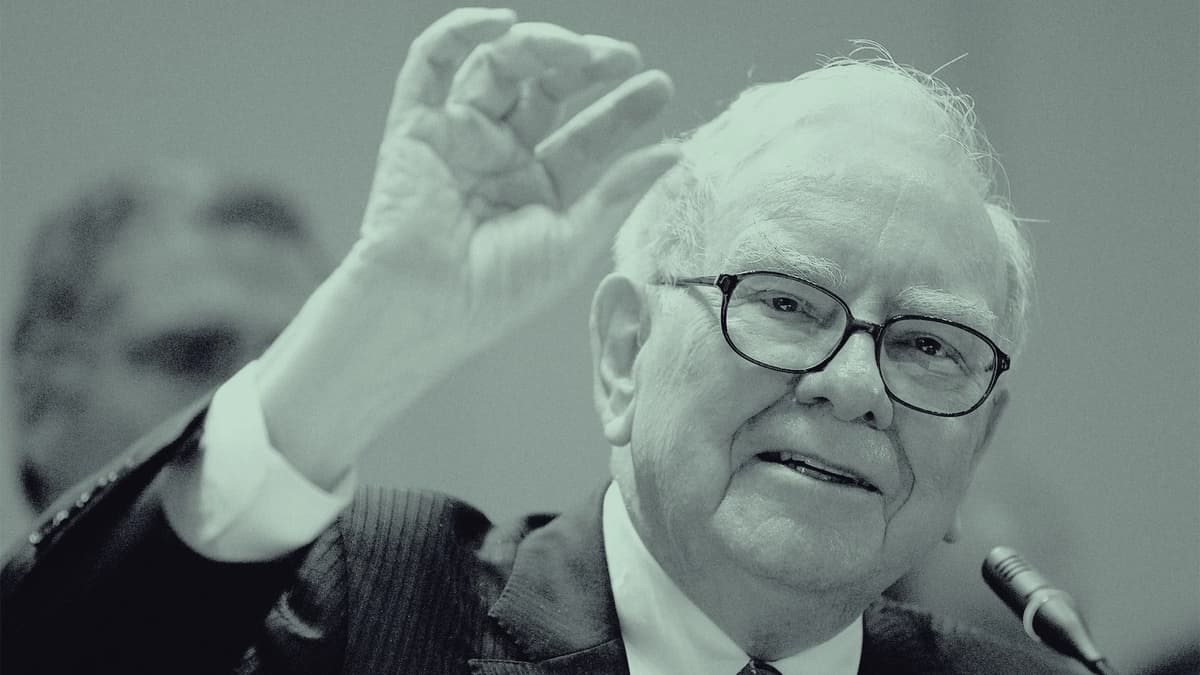
Warren Buffett Used a Brilliant Strategy in 2008 That Most Founders Get Entirely Wrong Today
Companies Mentioned
Why It Matters
Buffett’s disciplined cash hoarding shows that preserving capital can generate outsized returns during downturns, a lesson founders must apply to avoid costly, reactionary spending that shortens runway and dilutes focus.
Key Takeaways
- •Buffett kept cash equal to 25% of Berkshire’s assets pre‑2008
- •Crisis created dry‑powder advantage, enabling discounted acquisitions
- •Founder’s rushed sprint risked a quarter of annual runway
- •Inaction bias can erode capital faster than hasty pivots
Pulse Analysis
Warren Buffett’s pre‑2008 strategy of amassing cash, often called "dry powder," ran counter to the era’s aggressive capital deployment. While most investors were loading up on equities, Berkshire Hathaway’s balance sheet grew to roughly a quarter of its total assets in liquid form. This contrarian posture positioned Buffett to act decisively when the financial crisis forced competitors to sell quality assets at deep discounts, turning what appeared to be a missed opportunity into a multi‑billion‑dollar advantage. The episode underscores how disciplined capital preservation can be a competitive moat in volatile markets.
In the startup world, the opposite tendency dominates. Founders are conditioned to equate speed with leadership, leading to an "action bias" where any movement is celebrated, even if it addresses a non‑existent problem. The article’s anecdote of a founder diverting engineers to a six‑week sprint illustrates how reactive decisions can consume precious runway without measurable customer impact. This misallocation not only drains cash but also fragments focus, delaying the execution of initiatives that truly drive growth. The hidden cost is opportunity loss—time and money spent on low‑value work that could have been invested in product‑market fit or scalable revenue streams.
Balancing patience with decisive action requires a structured decision framework. Companies should define clear criteria for deploying cash, such as measurable market signals, validated customer demand, and alignment with long‑term strategic goals. Maintaining a reserve—whether in cash, credit lines, or convertible notes—provides the flexibility to seize genuine opportunities without compromising core operations. For founders, the lesson is to treat inaction not as weakness but as strategic restraint, preserving capital and focus for moves that generate sustainable value rather than short‑term reassurance.
Warren Buffett Used a Brilliant Strategy in 2008 That Most Founders Get Entirely Wrong Today
Comments
Want to join the conversation?
Loading comments...