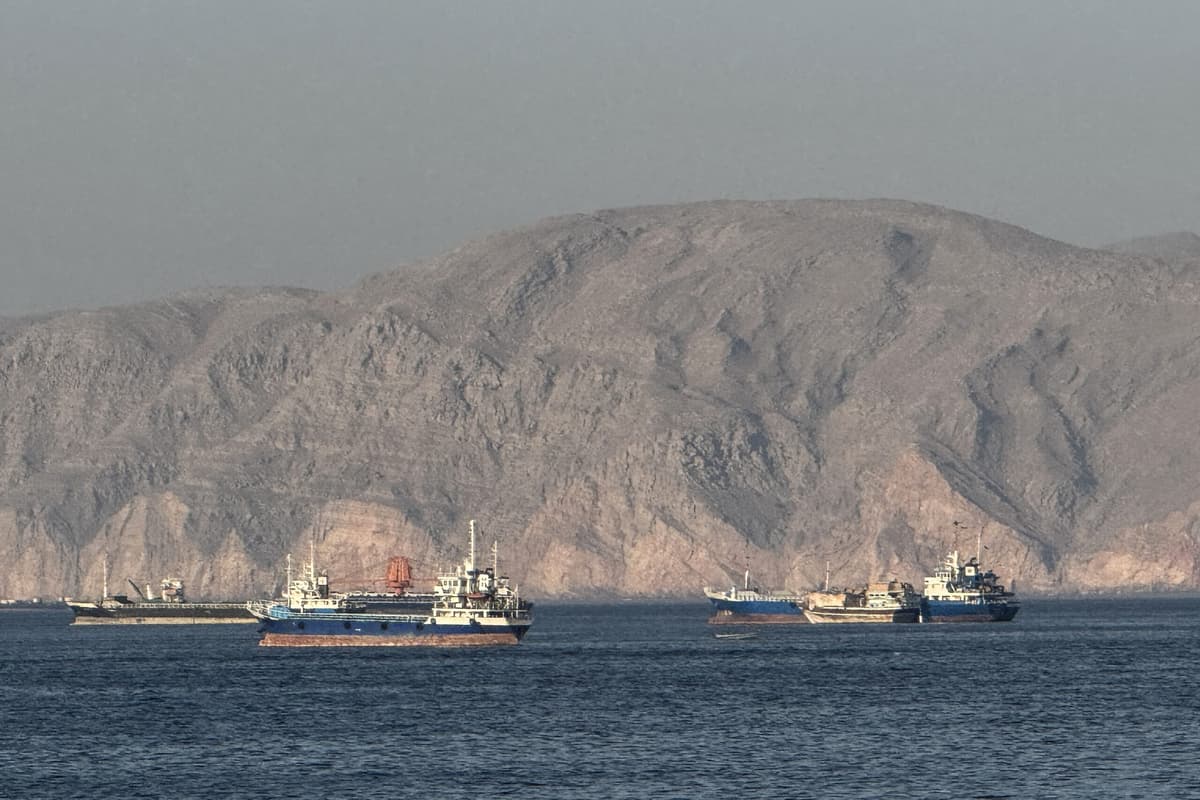
Scouring the Strait of Hormuz for Mines Could Take Weeks
Why It Matters
Prolonged clearance timelines risk tightening global oil supplies and push energy prices higher, while uncertainty hampers commercial shipping and insurance underwriting in a critical trade corridor.
Key Takeaways
- •Minesweeping may take 40‑50 days before ships resume normal traffic
- •Up to 1,000 Iranian naval mines could be present in Hormuz
- •Delays could hold tens of millions of barrels, tightening global oil supply
- •Daily ship transits fell from 120‑140 to just 12‑15 vessels
- •Insurers demand mine‑free clearance before approving $300 million supertanker voyages
Pulse Analysis
The Strait of Hormuz, a chokepoint that moves roughly 20 % of the world’s daily oil and LNG, has been thrust back into the spotlight after the February 28 U.S.–Israel strikes on Iran. A tentative cease‑fire deal announced this week promises to reopen the waterway, yet both Tehran and Washington acknowledge the lingering danger of naval mines. Iran’s Revolutionary Guard has hinted at extensive mine‑laying, and U.S. officials estimate as many as 1,000 devices could be scattered across the narrow channel, forcing a cautious approach to any resumption of traffic.
Clearing the strait is proving technically demanding. Western navies are deploying conventional minesweepers alongside autonomous underwater drones capable of mapping seabed anomalies in real time. Maritime security sources project a 40‑ to 50‑day window before a credible “mine‑free” corridor can be declared, a timeline that aligns with the pace of similar operations in the Gulf of Aden. Until then, insurers are reluctant to underwrite voyages, especially for supertankers whose cargoes can exceed $300 million, and shippers are likely to reroute or delay shipments, further constraining supply.
The economic ripple effects are immediate. Holding tens of millions of barrels in limbo adds pressure to already depleted strategic reserves, nudging Brent and WTI futures upward as markets price in supply uncertainty. Reduced daily transits—down from 120‑140 vessels pre‑war to roughly a dozen—also curtails the flow of liquefied natural gas, tightening the global energy balance. As the minesweeping effort progresses, the speed at which confidence returns will dictate whether oil prices stabilize or remain volatile, making the clearance timeline a key barometer for investors and policymakers alike.
Scouring the Strait of Hormuz for Mines Could Take Weeks
Comments
Want to join the conversation?
Loading comments...