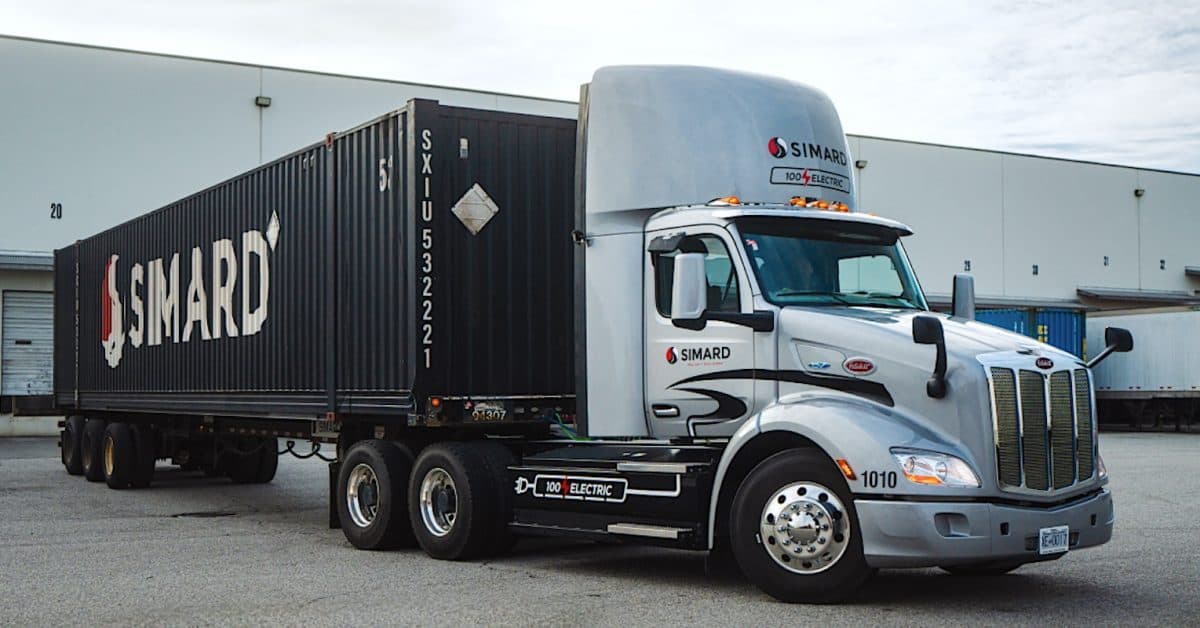
The First Mile: Port of Vancouver Launches New Electric Semi Truck Pilot
Why It Matters
Electrifying first‑mile drayage could slash operating costs and eliminate emissions, accelerating broader adoption of battery‑electric semis in North America.
Key Takeaways
- •ELECTRA pilot provides 60‑month subsidized leases for five electric semis
- •Funding totals about $2.2 million USD from Canadian government and port authority
- •Participants will share operational data to guide future EV truck adoption
- •First‑mile drayage offers predictable routes ideal for battery‑electric use
- •Expected savings could reach $160,000 per truck annually, per prior study
Pulse Analysis
First‑mile drayage—the short haul that moves containers from a seaport to a rail yard or truck terminal—has long been a cost‑center for logistics firms. Because routes are short, repetitive and heavily loaded, they present a perfect use case for battery‑electric Class 8 trucks, which can recharge overnight and avoid the idling emissions typical of diesel rigs. As supply chains tighten and carbon‑reduction mandates intensify, shippers are looking for technologies that cut fuel spend while delivering reliable service, and electric drayage is emerging as a viable solution.
The ELECTRA program, launched by the Port of Vancouver in partnership with Transport Canada, BC Hydro and the Vancouver Fraser Port Authority, places five Peterbilt 579EV semis into the hands of local shippers. Each carrier receives a 60‑month lease that includes charging stations, maintenance, technical support and driver training, all subsidized by roughly $2.2 million USD in public funds. Participants—Simard Westlink, Aheer Transportation, Lally Bros., TransBC Freight and West Coast Freight—will log mileage, energy consumption and uptime, feeding a shared data repository that government and industry analysts can use to benchmark performance against diesel baselines.
Early projections echo results from a similar Montreal pilot, which showed up to $160,000 in annual savings per electric truck and a dramatic drop in greenhouse‑gas output. If the Vancouver data confirm those figures, the economics of electric drayage could shift from niche to mainstream, prompting fleets nationwide to reconsider capital allocations. Moreover, the transparent data‑sharing model creates a feedback loop that accelerates technology refinement, charging infrastructure rollout, and policy development. In short, the pilot not only tests hardware but also builds the evidence base needed for large‑scale adoption of zero‑emission heavy‑duty trucks.
The first mile: Port of Vancouver launches new electric semi truck pilot
Comments
Want to join the conversation?
Loading comments...