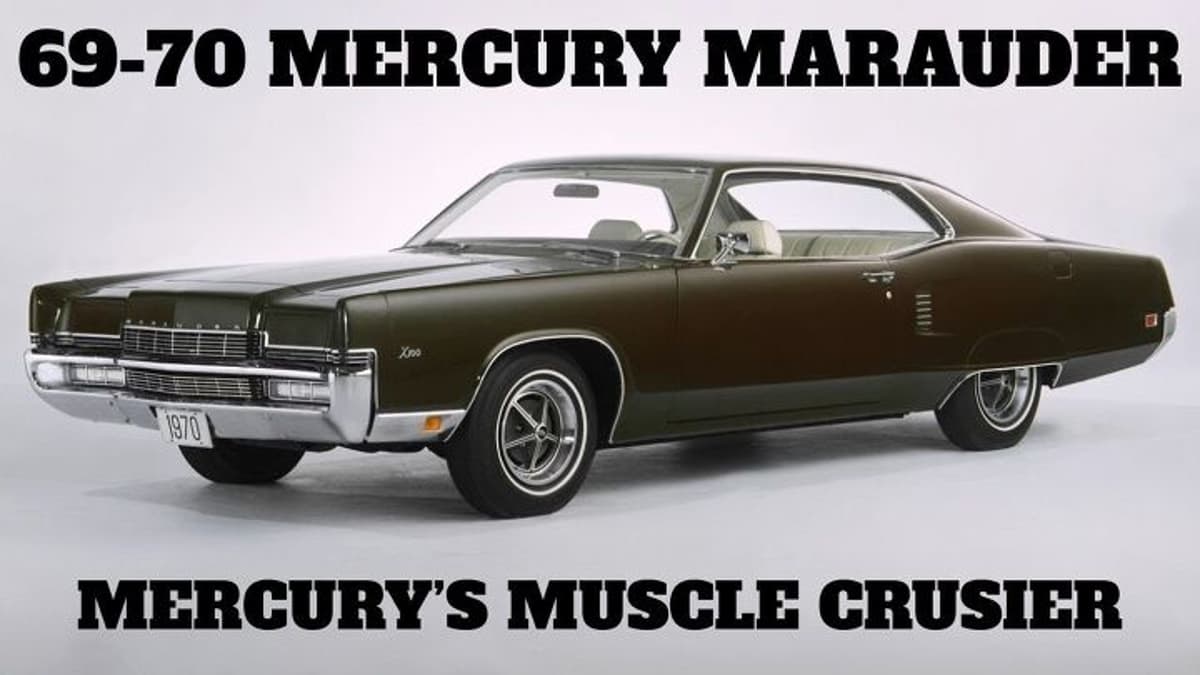
1969 - 70 Mercury Marauder: BIG Brute Muscle?
•March 5, 2026
0
Key Takeaways
- •1969 Marauder offered 429 V8 up to 360 hp.
- •Sales dropped from 14,666 (1969) to 6,043 (1970).
- •Positioned as personal luxury, not true muscle car.
- •X‑100 trim added performance cues, limited availability.
- •Today values $15k‑$25k, parts scarce.
Summary
The 1969‑70 Mercury Marauder was revived as a full‑size personal luxury coupe, featuring a 429‑cubic‑inch V8 delivering up to 360 horsepower. While the X‑100 trim added sportier styling and optional performance equipment, the car’s 0‑60 time of 7.8 seconds and quarter‑mile run placed it far from true muscle‑car performance. Mercury sold 14,666 units in 1969, but sales fell to 6,043 in 1970 as buyers favored competitors like the Oldsmobile Toronado. Today the Marauder commands modest collector prices of $15,000‑$25,000, though parts scarcity can drive costs higher.
Pulse Analysis
When Mercury resurrected the Marauder name in 1969, it aimed to blend the era’s burgeoning personal‑luxury segment with a hint of performance flair. Built on the Ford Galaxie platform, the Marauder’s 121‑inch wheelbase and 219‑inch length gave it a commanding road presence, while the optional 429‑cubic‑inch V8, especially in the X‑100 edition, promised muscle‑car credentials. However, its 7.8‑second 0‑60 sprint and 16‑second quarter‑mile placed it squarely in the cruiser category, a reality reflected in contemporary road‑test reviews that praised comfort over outright speed.
The market response underscored the challenges of mixed messaging. Competing against true muscle icons and emerging personal‑luxury rivals such as the Oldsmobile Toronado, the Marauder’s sales peaked at 14,666 units in its debut year but slumped to just over 6,000 by 1970. Buyers gravitated toward models that either delivered raw performance or offered refined luxury without compromise. Mercury’s attempt to straddle both worlds resulted in a vehicle that was stylish and well‑appointed but lacked a clear identity, limiting its appeal in a rapidly evolving automotive landscape.
Decades later, the Marauder occupies a modest niche among collectors. Its relative rarity—especially the X‑100 variant—combined with a price range of $15,000 to $25,000 makes it an attainable classic for enthusiasts seeking a blend of 1960s design and comfortable cruising. While drivetrain components remain accessible thanks to shared Ford parts, body panels and interior trim are harder to source, adding a layer of exclusivity. The Marauder’s story serves as a cautionary tale for automakers: aligning product positioning with consumer expectations is crucial for both immediate sales success and enduring legacy.
Comments
Want to join the conversation?