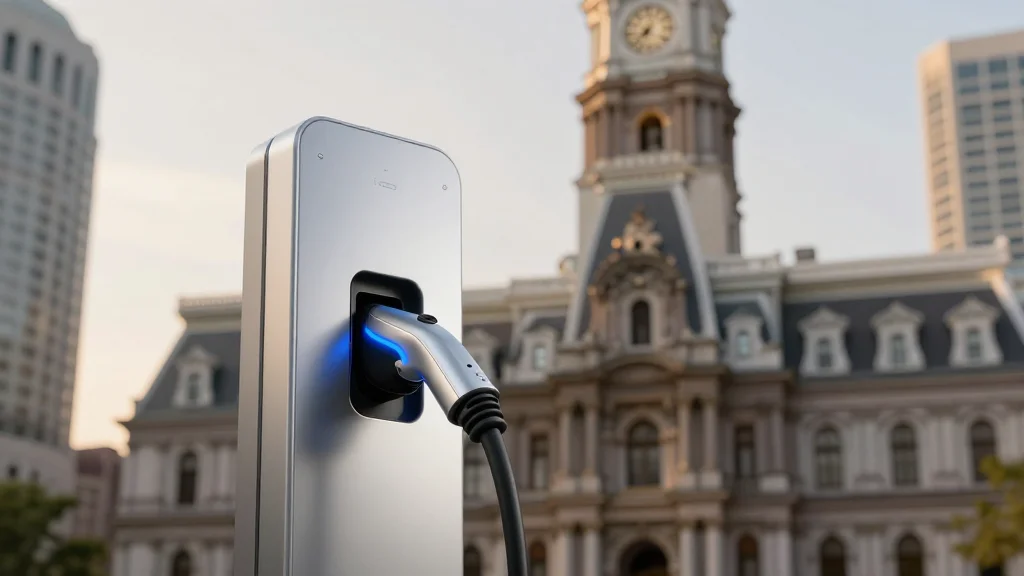
435 New EV Chargers To Be Installed In Philadelphia
Key Takeaways
- •Philadelphia partners with PositivEnergy to install 435 public EV chargers
- •Project aims to improve charging equity across underserved neighborhoods
- •Federal funding persists despite congressional pushback on EV incentives
- •Expanded charger network expected to cut Philadelphia's air pollution
- •Private-sector chargers grow, complementing public infrastructure expansion
Pulse Analysis
Philadelphia’s new partnership with PositivEnergy marks a decisive step toward a citywide electric‑vehicle (EV) charging ecosystem. By deploying 435 public chargers, the municipality targets gaps in service that have left many residents—particularly in low‑income districts—without convenient access to fast charging. The initiative dovetails with the city’s broader sustainability agenda, which includes reducing greenhouse‑gas emissions and meeting stricter air‑quality standards. Leveraging both federal grant dollars and local planning expertise, the project showcases how municipalities can accelerate infrastructure rollout despite shifting national policy.
The political backdrop adds nuance to the rollout. Although the House of Representatives recently eliminated federal EV purchase incentives, Congress has largely maintained funding streams for public charger installations. This bipartisan support reflects a recognition that a robust charging network is essential for the EV market’s resilience. Philadelphia’s effort, therefore, benefits from a federal safety net that counters legislative attempts to stall clean‑energy investments. The city’s proactive stance also signals to private developers that public‑private collaboration can thrive, encouraging retailers, supermarkets, and travel centers to add their own chargers and further densify the network.
Beyond convenience, the health and environmental implications are profound. Philadelphia consistently ranks among the nation’s most polluted cities, with ozone and particulate matter linked to respiratory and cardiovascular ailments. Expanding the charger base reduces reliance on gasoline‑powered vehicles, directly cutting tailpipe emissions that fuel smog and health crises. Moreover, the equitable placement of chargers ensures that underserved communities gain the same clean‑mobility benefits as affluent neighborhoods, fostering broader social acceptance of EVs. As the network matures, the city is poised to see measurable declines in air‑pollution metrics and a surge in EV ownership, reinforcing its role as a model for urban clean‑transport initiatives.
435 New EV Chargers To Be Installed In Philadelphia
Comments
Want to join the conversation?