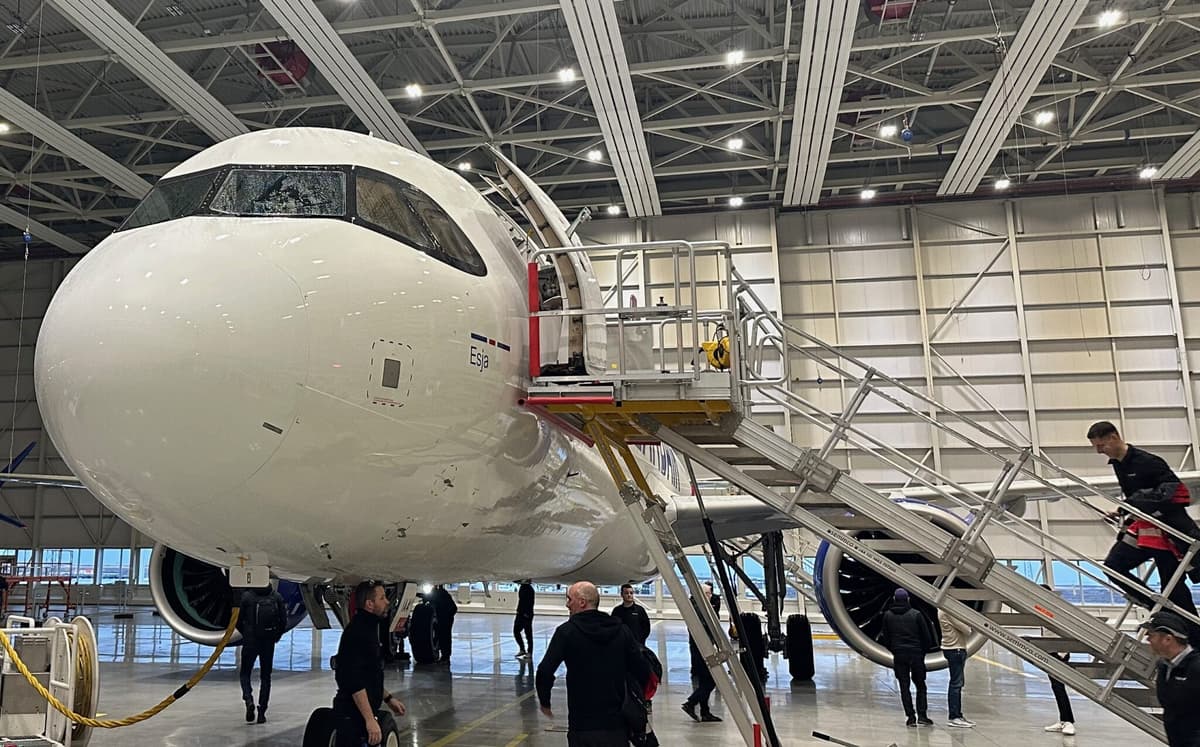
Airbus Vents Frustration at GTF Engine Delays and Slow Progress on SAF
•February 27, 2026
0
Why It Matters
Engine supply constraints directly curb Airbus’s production capacity and earnings, while slow SAF adoption hampers industry‑wide carbon‑reduction goals, affecting both financial performance and regulatory compliance.
Key Takeaways
- •Pratt & Whitney GTF delays cut A320 rate to 70‑75/month
- •Airbus cites engine shortages as guidance‑dragging factor
- •SAF adoption remains slower than regulatory expectations
- •2026 delivery target set at 870 aircraft, backlog 8,754
- •Airbus plans 13 A220s/month by 2028, down from 14
Pulse Analysis
The GTF engine shortfall underscores a broader vulnerability in the aerospace supply chain. Pratt & Whitney’s recall, triggered by a powdered‑metal defect, has forced airlines to ground hundreds of A320neo family jets and delayed new engine deliveries. With CFM International’s LEAP‑1A as the only viable alternative, Airbus is compelled to renegotiate contractual terms and accelerate its own mitigation strategies, a move that could reshape supplier dynamics across the sector.
Despite the production hiccup, Airbus’s financial outlook remains robust. Revenue rose 6% to €73.4 billion and adjusted EBIT jumped 33% to €7.1 billion in 2025, supporting a 2026 delivery target of 870 aircraft and a record backlog of 8,754. The firm’s revised A320 rate, alongside steady A220, A330 and A350 outputs, signals confidence in demand recovery, yet the lowered A220 cadence to 13 units per month by 2028 hints at cautious capacity planning amid lingering engine uncertainties.
Airbus’s frustration with SAF progress reflects a systemic market lag. While Europe mandates 2% SAF use now and 6% by 2030, fragmented global policies and limited feedstock keep volumes low. The airline manufacturer argues that a unified global SAF target is essential for scaling production and meeting climate commitments. Continued advocacy for policy harmonisation and investment in SAF infrastructure will be critical for the industry to achieve its decarbonisation roadmap without compromising growth.
Airbus vents frustration at GTF engine delays and slow progress on SAF
0
Comments
Want to join the conversation?
Loading comments...