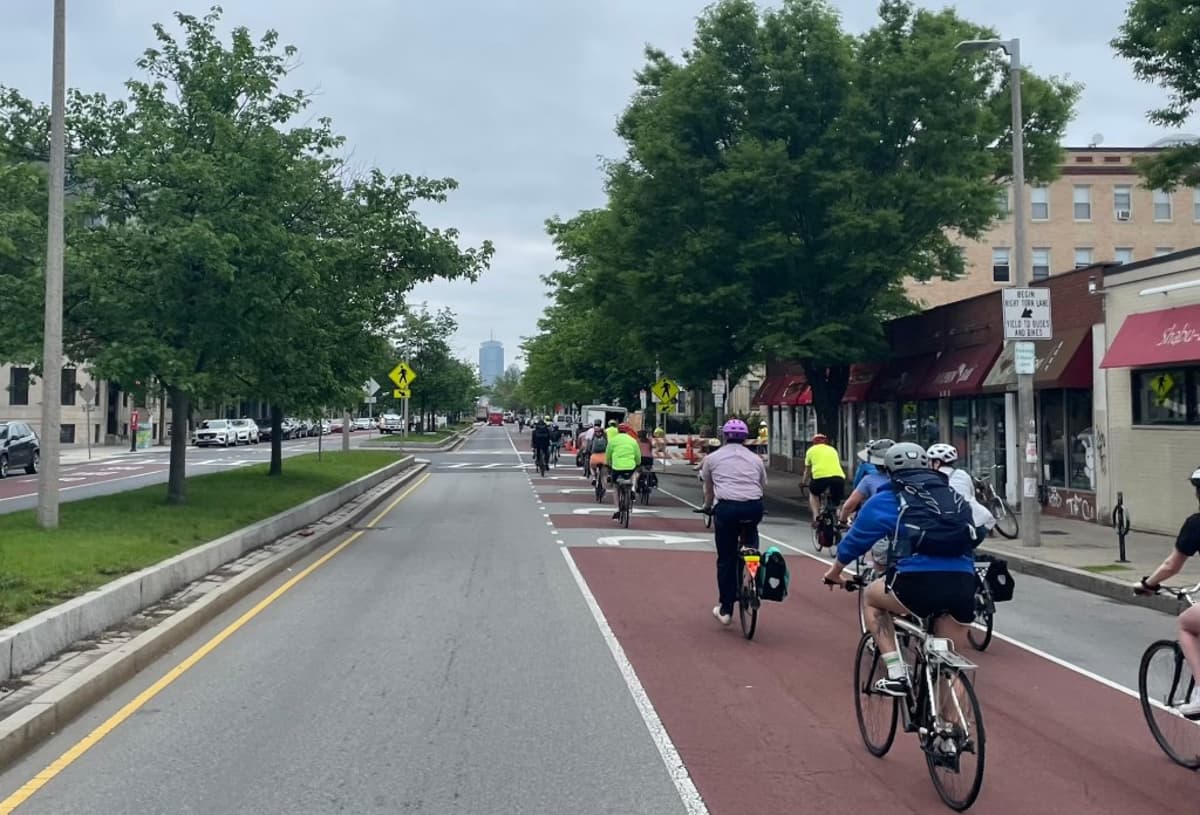
Boston’s New Climate Plan Is At Odds With Boston’s New Transportation Policies
Key Takeaways
- •Bus lanes removed on Boylston and North Washington streets
- •9 of 10 slowest MBTA routes run through Mattapan, Roxbury
- •Traffic accounts for 31% of Boston’s climate emissions
- •Green infrastructure projects like Cummins Highway face funding delays
- •Mayor Wu’s 30‑day review stalls climate‑aligned transportation reforms
Pulse Analysis
Boston’s climate action plan reads like an ambitious blueprint, but its implementation has hit a political wall. The city’s six‑point strategy—expanding bus lanes, boosting active‑transport networks, and scaling green infrastructure—was designed to shift vehicle miles traveled and cut tailpipe emissions. However, since Mayor Wu’s 2025 reelection campaign, key projects have been cancelled or delayed, and a secretive 30‑day review has frozen further transportation reforms. This policy inertia undermines Boston’s pledge to lower its 31% traffic‑related emissions and raises questions about the city’s capacity to meet state climate mandates.
The transportation setbacks have tangible equity implications. MBTA service on routes that traverse Mattapan and Roxbury—Boston’s most densely populated Black neighborhoods—is now among the slowest in the system, exacerbating commute times and limiting access to jobs. The removal of bus lanes on high‑ridership corridors like Boylston and North Washington streets forces more buses into mixed traffic, increasing congestion and emissions. Moreover, the city’s emissions inventory only counts vehicle miles inside municipal borders, masking the broader climate impact of commuters driving from suburbs, which could add millions of pounds of pollutants annually.
Boston’s green‑infrastructure agenda offers a partial remedy by targeting heat islands and storm‑water runoff, yet projects such as the Cummins Highway redesign are stalled by budget cuts and administrative delays. Replacing asphalt with permeable gardens can lower urban temperatures and mitigate flooding, but without coordinated transportation policies, the benefits may be outweighed by rising traffic volumes. Aligning transit improvements with climate‑resilient street design is essential for Boston to achieve its emissions goals while delivering equitable, livable neighborhoods.
Boston’s New Climate Plan Is At Odds With Boston’s New Transportation Policies
Comments
Want to join the conversation?