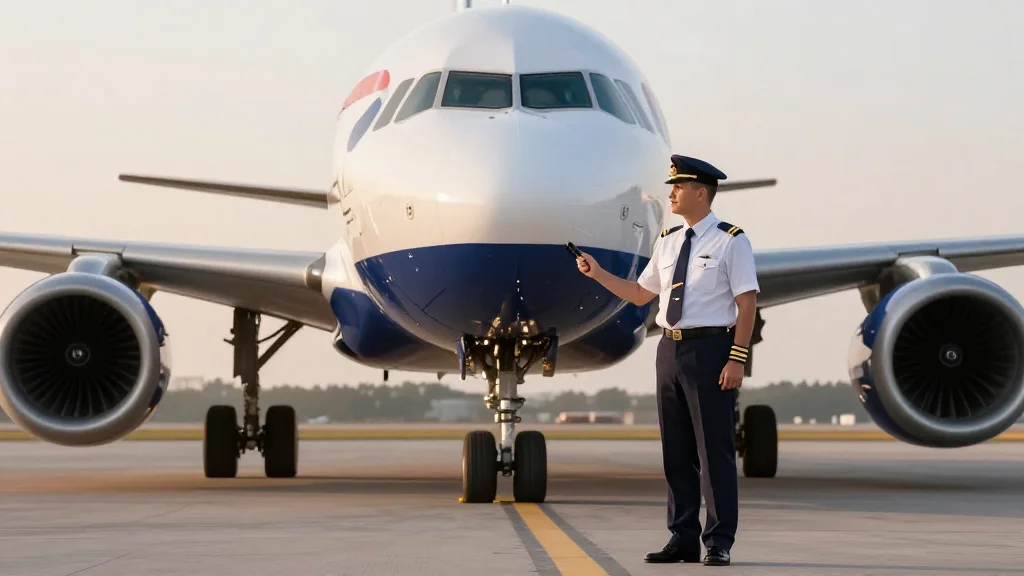
British Airways Will Pay Pilots $100,000 a Year Just to Taxi Planes On the Ground Around Chicago O’Hare
Key Takeaways
- •BA pays $90‑$100K for ground taxiing at O’Hare.
- •Retired pilots can earn without flying commercial routes.
- •Moves planes to Terminal 3 for American Airlines connections.
- •Saves BA costs from missed connections and delays.
- •Highlights niche aviation labor opportunities amid pilot shortages.
Pulse Analysis
British Airways’ decision to pay pilots up to $100,000 a year to taxi aircraft at Chicago O’Hare reflects the unique operational constraints of the airport’s terminal configuration. Because BA’s international flights land at Terminal 5 while departures occur from Terminal 3—American Airlines’ hub—the airline must shuttle its Boeing 777 and 787 fleets across a few kilometres of busy airfield. This ground‑move eliminates the need for passengers to change terminals, a scenario that would likely generate costly misconnects and erode the airline’s on‑time performance metrics. By internalizing the taxi operation, BA gains tighter control over gate timing and reduces reliance on external tug services, which are not permitted for such moves at ORD.
The labor model leverages a niche segment of the pilot workforce: recently retired airline transport pilots who retain their type‑rating credentials but are barred from commercial flight duties in the United States. For these pilots, a $90,000‑$100,000 salary represents attractive supplemental income, especially compared with the limited part‑time aviation roles available post‑retirement. From BA’s perspective, the cost is modest relative to the potential revenue loss from delayed or missed connections, and it sidesteps the higher wages associated with active pilots. The arrangement also provides a low‑risk, high‑visibility safety net, as seasoned captains bring extensive procedural knowledge to the ground‑taxi task.
Industry‑wide, the initiative signals a creative response to the chronic pilot shortage and rising labor costs. Airlines are increasingly exploring flexible staffing solutions—such as part‑time, contract, or retired‑pilot programs—to fill operational gaps without inflating payroll. If BA’s model proves financially beneficial, other carriers operating at congested hubs may adopt similar ground‑crew strategies, especially where terminal geography forces aircraft repositioning. Moreover, the practice underscores a broader trend: airlines are re‑evaluating every touchpoint in the flight‑cycle for efficiency gains, turning what was once a peripheral task into a revenue‑protecting function. This could reshape how airlines think about crew utilization, airport logistics, and cost management in the years ahead.
British Airways Will Pay Pilots $100,000 a Year Just to Taxi Planes On the Ground Around Chicago O’Hare
Comments
Want to join the conversation?