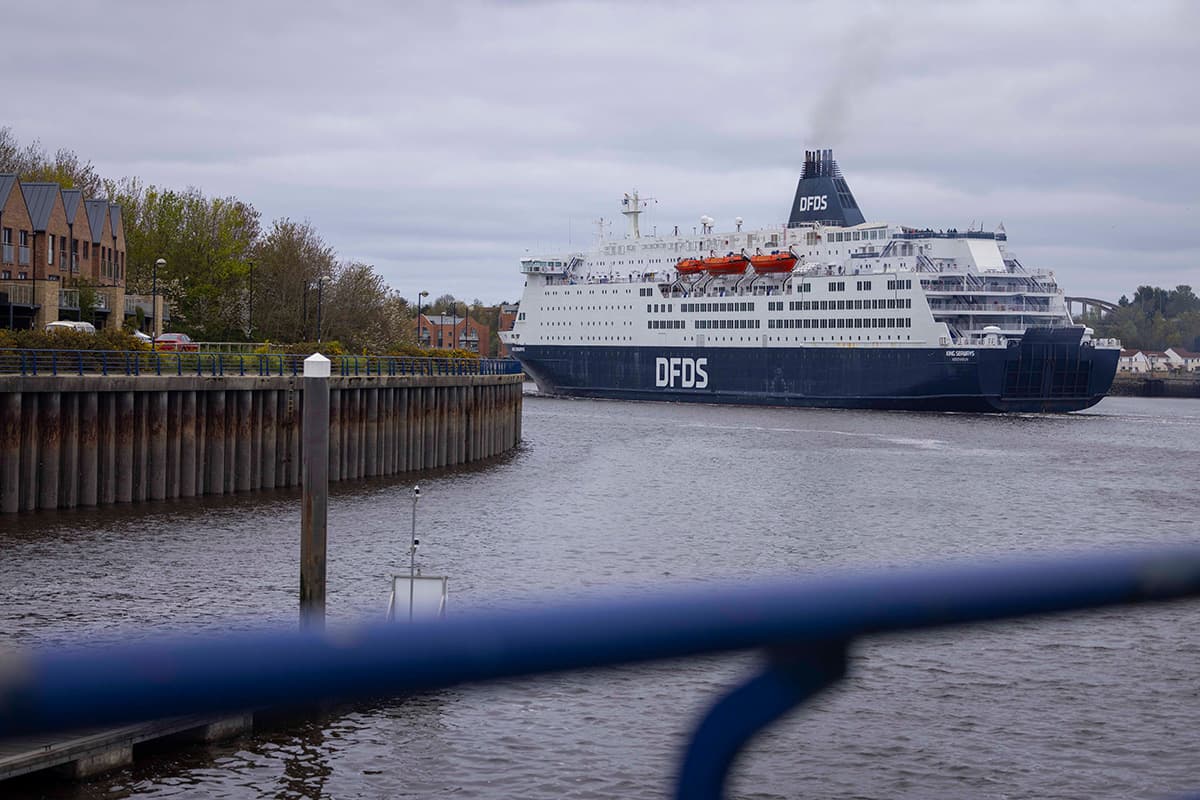
British Army Charters Ferry for First Time in 20 Years
Key Takeaways
- •1,400 troops moved via civilian ferry for first time in 20 years
- •Charter reduces need for seven RAF Voyager flights, saving airlift capacity
- •Exercise Rhino Storm tests NATO rapid deployment across road, rail, sea, air
- •British Army leverages civilian infrastructure to boost force‑multiplication in Europe
- •Joint deployment with French Foreign Legion underscores NATO's collective defence
Pulse Analysis
The British Army’s decision to charter the DFDS King Seaways for moving 1,400 soldiers marks a strategic shift toward leveraging civilian logistics for large‑scale deployments. Historically, the UK has relied on dedicated military sealift or air transport, but the high cost and limited availability of RAF Voyager aircraft make civilian vessels an attractive alternative. By integrating sea lift with rail and road movements, the 7th Light Mechanised Brigade demonstrated a flexible, cost‑effective model that can be replicated in future NATO exercises or real‑world contingencies.
Exercise Rhino Storm, part of NATO’s Steadfast Defender 27 series, tested the alliance’s ability to mobilise forces across multiple domains. The inclusion of French Foreign Legion units highlighted the multinational nature of the drill, while the British emphasis on road, rail, sea and air mobility underscored a doctrinal focus on rapid, interoperable deployment. Analysts view this as a response to evolving security challenges in Europe, where speed and adaptability are critical for deterring aggression and reassuring allies.
Beyond the immediate training value, the chartered ferry operation sends a clear message to both allies and potential adversaries: the UK can augment its military transport capacity by tapping into commercial infrastructure, preserving strategic airlift for high‑priority missions. This approach not only reduces operational costs but also expands surge capability without the need for additional military vessels. As NATO continues to refine its rapid‑response framework, civilian‑military partnerships are likely to become a cornerstone of collective defence planning.
British Army charters ferry for first time in 20 years
Comments
Want to join the conversation?