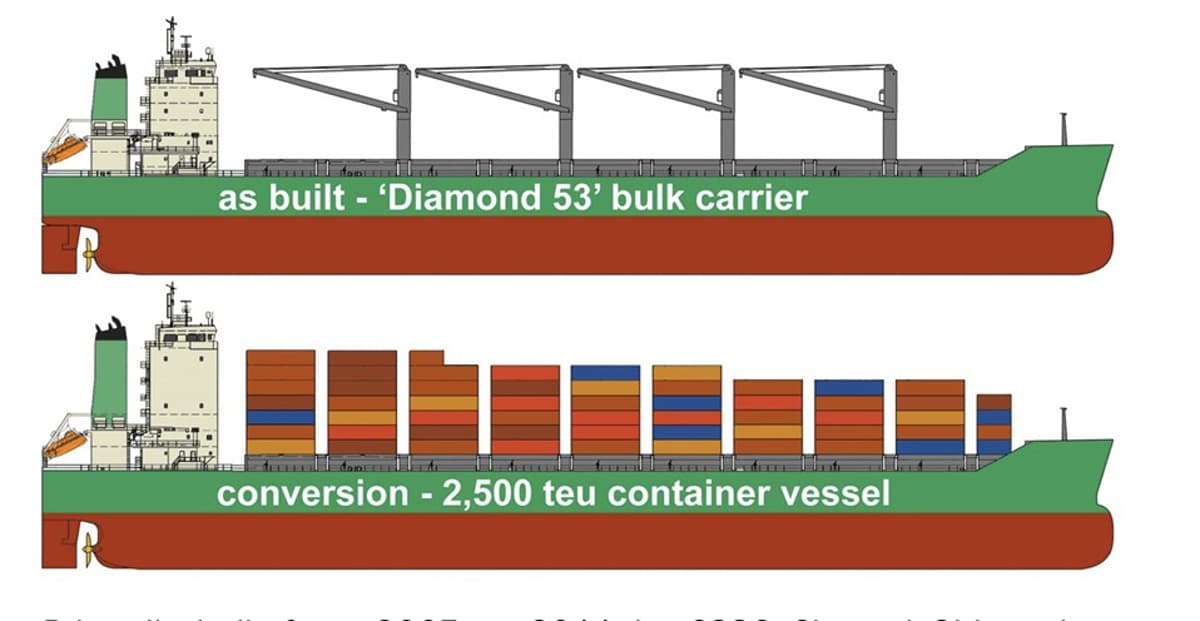
Bulkers Converted to Container Ships as Tonnage in Short Supply
Key Takeaways
- •Two Supramax bulkers being rebuilt as 2,500‑TEU gearless ships.
- •Conversions respond to container‑ship scarcity and charter rates above $30,000/day.
- •New container orders won’t ship until at least 2029, tightening supply.
- •Gear‑equipped bulkers offer faster conversion than newbuilds, saving capital.
Pulse Analysis
The global container fleet is entering a period of scarcity, with Alphaliner estimating fewer than 5,000 new vessels will be delivered before 2029. Existing ships are aging, and shipyards are booked years in advance, pushing charter rates for 20‑foot and 40‑foot units to historic highs—often exceeding $30,000 per day on major Asia‑Europe lanes. In this environment, operators are hunting for alternative sources of capacity, and converting existing tonnage has emerged as a pragmatic shortcut.
Converting a geared Supramax bulk carrier into a 2,500‑TEU box ship involves removing the hatch‑side cranes, reinforcing deck structures, and installing cell guides to accommodate standardized containers. The “Diamond 53” class, originally designed for bulk cargo, offers a favorable length‑beam ratio that translates well to container stowage, while retaining sufficient stability for gearless operation. Financially, the retrofit cost—estimated at $30‑$35 million per vessel—is markedly lower than the $120‑$150 million price tag of a new 2,500‑TEU build, delivering a faster return on investment as charter contracts are signed immediately.
If the first two conversions prove successful, the approach could spark a broader trend, especially among owners of older geared bulkers with limited resale value. Industry analysts anticipate that a modest wave of similar projects could add several thousand TEU of capacity each year, easing the supply‑demand imbalance and tempering freight rate spikes. Investors should watch for charter agreements, conversion timelines, and regulatory approvals, as these factors will dictate whether the strategy scales beyond a niche solution. The shift underscores a larger theme: flexibility in asset utilization is becoming a competitive advantage in the volatile maritime logistics market.
Bulkers converted to container ships as tonnage in short supply
Comments
Want to join the conversation?