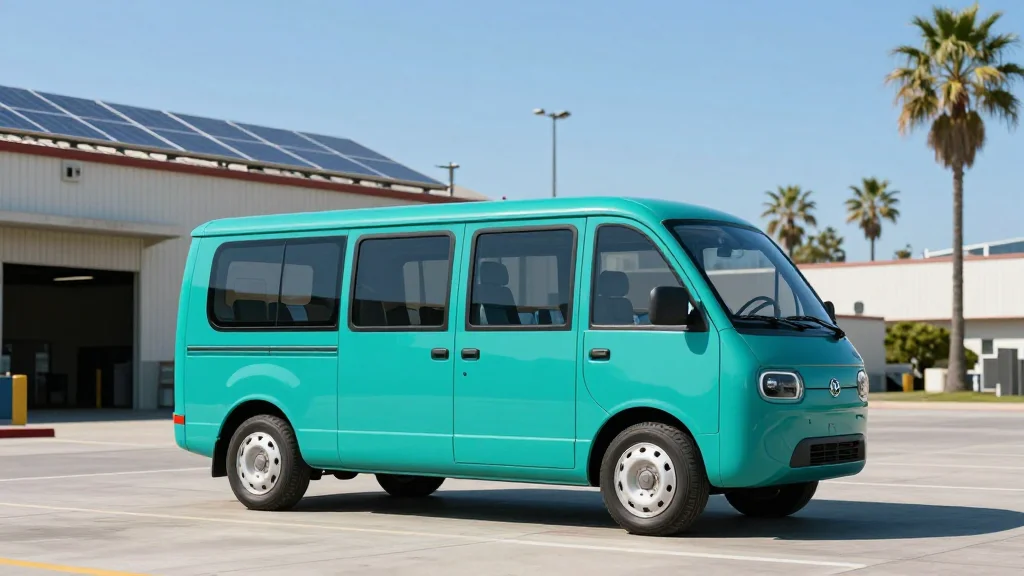
California Offers Incentives To Philippine Automaker To Set Up Electric Jeepney Factory
Key Takeaways
- •California offers up to $20 million in tax exemptions for the project.
- •Project Mesa plans $5 billion investment, 1,800‑2,200 jobs.
- •Incentives include California Competes Credit, 15% R&D credit, $850k training funds.
- •Facility located in Santa Clarita, near LA airport and major ports.
- •Exports target Philippines, Southeast Asia, Africa, and high‑value European markets.
Pulse Analysis
California’s zero‑emission vehicle (ZEV) agenda has reached a new milestone with the state courting Francisco Motors, a veteran Philippine jeepney maker, to locate its first U.S. plant in Santa Clarita. The incentive suite—spanning the California Competes Tax Credit, a 15% R&D credit, full sales‑tax exemptions up to $20 million, and a $850,000 workforce‑training grant—mirrors the aggressive fiscal tools used to lure established EV players like Tesla and Rivian. By bundling tax relief with utility discounts, industrial bonds and a dedicated cross‑agency coordination team, California aims to convert policy intent into tangible manufacturing capacity, reinforcing its target of 100% ZEV sales by 2035.
For Francisco Motors, the move addresses two strategic challenges: the need for a sophisticated supply chain and the urgency of market entry. While the Philippines remains a long‑term production goal, current tariff structures, limited local financing and slower policy rollout make the U.S. a faster gateway to global markets. The Santa Clarita site offers proximity to the Los Angeles ports, a deep talent pool from nearby universities, and access to a burgeoning hydrogen‑fuel‑cell ecosystem, allowing the company to prototype, scale and export electric jeepneys to emerging regions where durable, low‑cost transport is in high demand.
The broader industry impact is significant. The projected 1,800‑2,200 permanent jobs will deepen California’s manufacturing base, while the $5 billion capital outlay adds to the state’s $10 billion clean‑transport infrastructure commitment. Success could signal a new wave of foreign EV firms seeking U.S. footholds, intensifying competition and accelerating technology diffusion. Moreover, the partnership underscores how targeted state incentives can bridge policy gaps, turning climate ambition into economic opportunity and reinforcing America’s leadership in the global electric‑mobility transition.
California Offers Incentives To Philippine Automaker To Set Up Electric Jeepney Factory
Comments
Want to join the conversation?