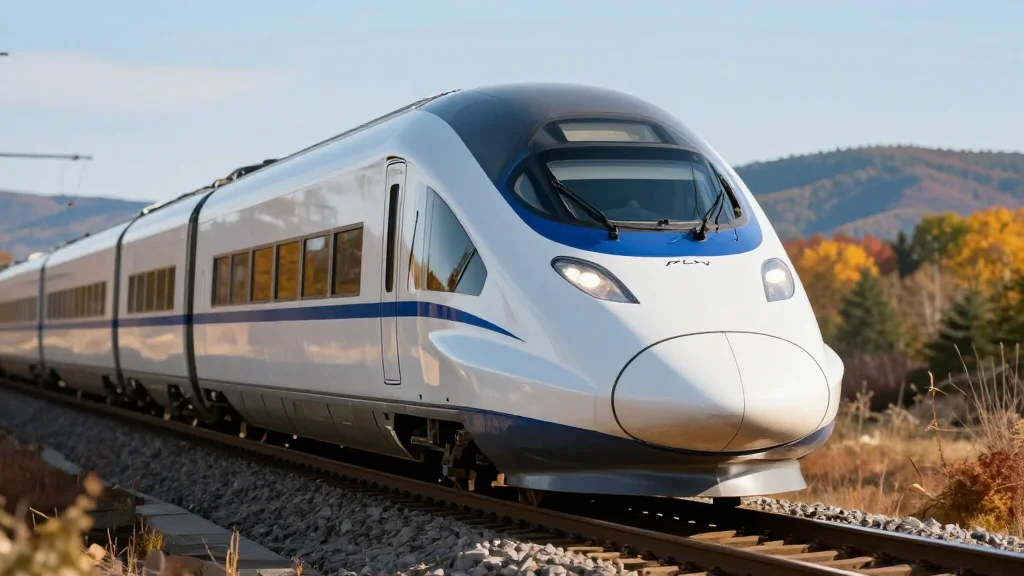
Canada Wants High-Speed Rail. Megaproject Reality Wants a Word.
Key Takeaways
- •Alto estimates C$60‑90 bn (~$44‑66 bn) for 1,000 km line.
- •First Ottawa–Montréal segment construction targeted 2029‑30, opening likely 2040.
- •Corridor density half of comparable Chinese routes, raising ridership uncertainty.
- •Québec‑heavy station map fuels Ontario political resistance.
- •Reference‑class data predicts 40‑45% cost overruns and schedule delays.
Pulse Analysis
Canada’s high‑speed rail ambition resurfaces after decades of half‑measures, positioning the Alto proposal as the most concrete effort to date. By targeting speeds of up to 300 km/h and linking seven cities, the plan promises a leap from today’s freight‑constrained VIA service to a dedicated, electrified corridor. The projected C$60‑90 billion price tag translates to roughly $44‑66 billion, placing it at the high end of international HSR cost per kilometre. Compared with China’s densely populated routes, the Toronto‑Québec spine serves fewer people per kilometre, a factor that directly influences farebox recovery and ridership forecasts.
Beyond demographics, the project’s design raises classic megaproject red flags. A station lineup that favours Québec—Toronto, Peterborough, Ottawa, Montréal, Laval, Trois‑Rivières, Québec City—creates an uneven political calculus, with Ontario officials already voicing concerns over limited local benefits. Historical evidence from Europe and the United States shows that large rail builds typically suffer 40‑45% cost overruns and multi‑year schedule slips. Applying that reference class to Alto suggests the initial Ottawa‑Montréal segment, slated for a 2029‑30 start, may not see passengers until the early 2040s, while the full network could be delayed into the late 2040s or early 2050s.
Strategically, the corridor aligns with Canada’s climate and resilience goals, offering a lower‑carbon alternative to car and short‑haul flight travel. Yet future competition will intensify as autonomous electric vehicles and hybrid‑electric regional aircraft become mainstream. To safeguard the public‑interest case, policymakers should anchor the project in realistic cost and timing assumptions, integrate robust feeder transit at each station, and pursue a phased rollout that matches evolving mobility patterns. Strong governance can mitigate risk, but the fundamental geometry and market dynamics will ultimately determine Alto’s success.
Canada Wants High-Speed Rail. Megaproject Reality Wants a Word.
Comments
Want to join the conversation?