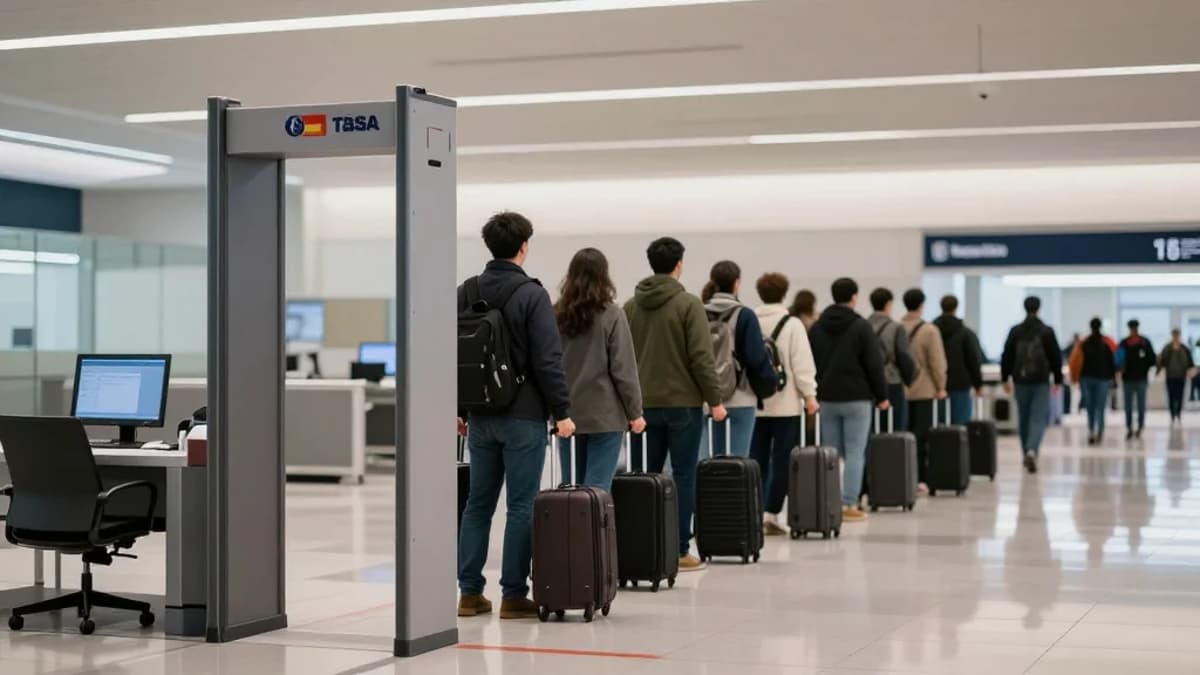
DHS Shutdown Turns Into Airport Chaos — Security Lines Stretch Up to 3.5 Hours
•March 8, 2026
0
Key Takeaways
- •TSA staffing shortages cause up to 3.5‑hour security waits
- •Major hubs like Houston Hobby, Atlanta, New Orleans affected
- •Shutdown stems from partisan dispute over DHS funding
- •Democrats demand immigration enforcement reforms for funding resolution
- •Prolonged delays risk airline revenue and passenger confidence
Summary
A Department of Homeland Security shutdown has left TSA screeners working without pay, prompting many to miss shifts. Consequently, security lines at airports such as Houston Hobby, Atlanta, and New Orleans have stretched to as long as 3.5 hours. The impasse stems from a partisan dispute over DHS funding, with Democrats tying payment to immigration‑enforcement reforms. Negotiations are ongoing, but travelers are already facing significant delays.
Pulse Analysis
The current DHS shutdown uniquely targets the Transportation Security Administration, leaving thousands of screeners on the job without a paycheck. With paychecks delayed, many employees have chosen to stay home, creating a staffing vacuum that has swollen security lines at major hubs. Airports such as Houston Hobby, Atlanta’s Hartsfield‑Jackson, and New Orleans’ Louis Armstrong International have reported wait times exceeding an hour, with Hobby briefly hitting a 3.5‑hour peak. For business travelers and frequent flyers, these delays translate into missed connections, added lodging costs, and a heightened sense of uncertainty about future travel plans.
Politically, the shutdown reflects a broader standoff between Democratic congressional leaders and Republican officials over DHS funding. Democrats have leveraged the funding impasse to push a ten‑point agenda focused on immigration enforcement reforms, ranging from warrant requirements to body‑camera mandates. While Republicans have offered concessions on training and oversight, core demands such as profiling restrictions and detention safeguards remain unresolved. This bargaining chip not only stalls the budget but also raises questions about the operational readiness of security agencies when political negotiations dictate resource allocation.
The ripple effects extend beyond the terminal. Airlines face cascading schedule disruptions, leading to revenue losses and strained customer loyalty. Prolonged queues can depress demand for air travel, especially among time‑sensitive business passengers who may seek alternative modes or carriers. Moreover, the visible chaos puts additional pressure on lawmakers, as public frustration mounts and the economic cost of the shutdown becomes clearer. A swift resolution would restore normal TSA operations, stabilize airline performance, and reaffirm confidence in the nation’s travel infrastructure.
Comments
Want to join the conversation?