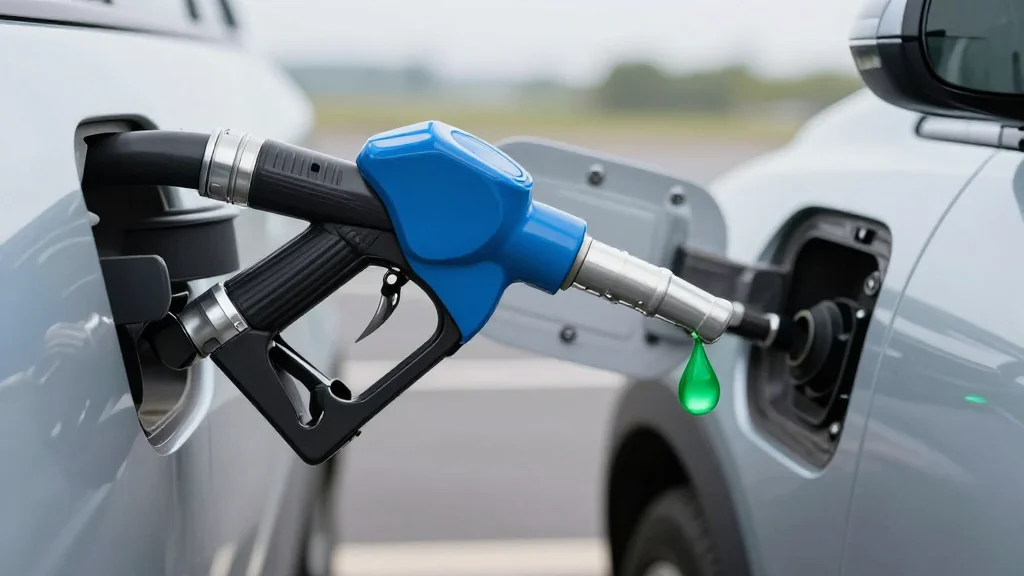
E-Fuels in Cars: Unaffordable for Drivers
Key Takeaways
- •E‑petrol production cost projected at €4/L ($4.40) by 2030.
- •Pump price for e‑petrol estimated around €7/L ($7.70), four times fossil fuel.
- •Co‑product e‑petrol would be pricier than dedicated e‑petrol, limiting scale.
- •Potential e‑fuel co‑products represent <3% of EU car fuel demand in 2035.
- •Study urges EU to scrap fuel‑credit incentives favoring e‑fuels.
Pulse Analysis
The debate over e‑fuels has intensified as European policymakers search for alternatives to meet stringent car‑CO₂ standards. Synthetic e‑petrol promises to reuse renewable electricity in a liquid form compatible with existing internal‑combustion engines, but the new Transport & Environment analysis reveals a stark cost gap. With production projected at €4 per litre (about $4.40) and a pump price near €7 per litre ($7.70), e‑petrol would be roughly four times more expensive than conventional gasoline and far costlier than electricity‑based mobility, which can be as low as €1.5 per 100 km when charged at home.
Beyond headline prices, the study scrutinises the economics of co‑product e‑fuel streams that would emerge from scaling aviation‑fuel plants. Contrary to industry claims, these by‑products would not lower road‑fuel costs; they would actually be pricier than purpose‑built e‑petrol and could be avoided with a modest 10% cost increase. Moreover, the potential volume of such co‑products would satisfy less than 3% of the projected European car‑fuel market by 2035, offering negligible impact on overall emissions. Importantly, e‑fuel combustion does not eliminate tailpipe pollutants, limiting its environmental advantage over fossil fuels.
Policy implications are clear. The European Commission’s proposal to grant fuel‑credit incentives for e‑fuels could inflate decarbonisation expenses for manufacturers and consumers alike, while providing little climate benefit. By removing these credits, the EU would reinforce market signals that favour battery‑electric vehicles—already demonstrably cheaper to run and capable of delivering deeper emissions cuts. In the short term, the cost disparity highlighted by the study suggests that e‑fuels are unlikely to become a viable mainstream solution for passenger cars, reinforcing the case for accelerating electric‑vehicle adoption.
E-fuels in Cars: Unaffordable for Drivers
Comments
Want to join the conversation?