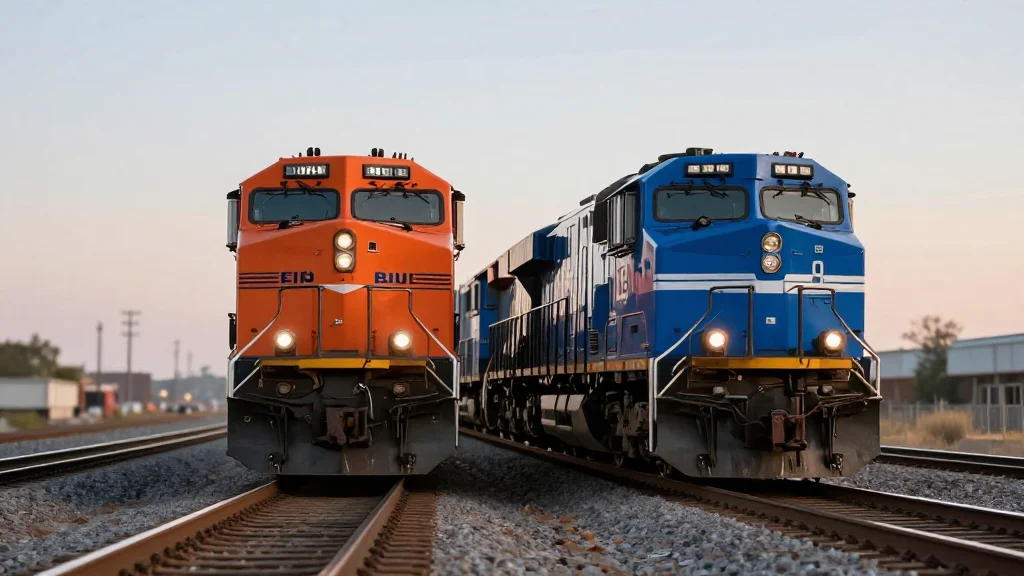
Guest Post: Why the Union Pacific – Norfolk Southern Merger Could Reshape U.S. Rail
Key Takeaways
- •UP and NS aim to create first coast‑to‑coast Class I railroad.
- •Merger could cut cross‑country transit by 1‑2 days, boosting rail competitiveness.
- •STB scrutiny focuses on competition, market dominance, and shipper impact.
- •Combined network would eliminate thousands of daily car handlings, lowering costs.
- •CPKC merger set precedent but is smaller than the proposed UP‑NS entity.
Pulse Analysis
The U.S. rail sector has long been dominated by a handful of Class I carriers, each generating over $1 billion in annual revenue. The upcoming Union Pacific‑Norfolk Southern combination would create a network spanning the entire continent, eclipsing the 2025 Canadian Pacific‑Kansas City Southern merger that linked Canada, the United States, and Mexico. By uniting two of the nation’s largest fleets—304,000 cars for UP and 162,000 for NS—the new railroad would command a scale few competitors can match, positioning it as a pivotal conduit for intermodal and bulk freight.
Operationally, the merged railroad promises tangible efficiencies. Consolidating routes could eliminate thousands of daily car handlings, reducing dwell time at yards and cutting cross‑country transit by one to two days. For shippers, faster, more predictable inland moves translate into lower inventory carrying costs and smoother supply‑chain planning. Moreover, a coast‑to‑coast rail option narrows the performance gap with long‑haul trucking, potentially shifting price‑sensitive freight back onto rails and easing highway congestion.
Regulatory scrutiny, however, remains a decisive factor. The Surface Transportation Board is gathering internal documents to assess whether the merger would diminish competition, create market dominance, or harm shippers through higher rates. While the STB does not function as a traditional antitrust agency, its mandate to safeguard fair competition means the proposal could face conditions or even rejection. Industry stakeholders should monitor the Board’s findings, as any required concessions—such as divestitures or service commitments—will shape the merger’s ultimate impact on freight economics and logistics strategy.
Guest Post: Why the Union Pacific – Norfolk Southern Merger Could Reshape U.S. Rail
Comments
Want to join the conversation?