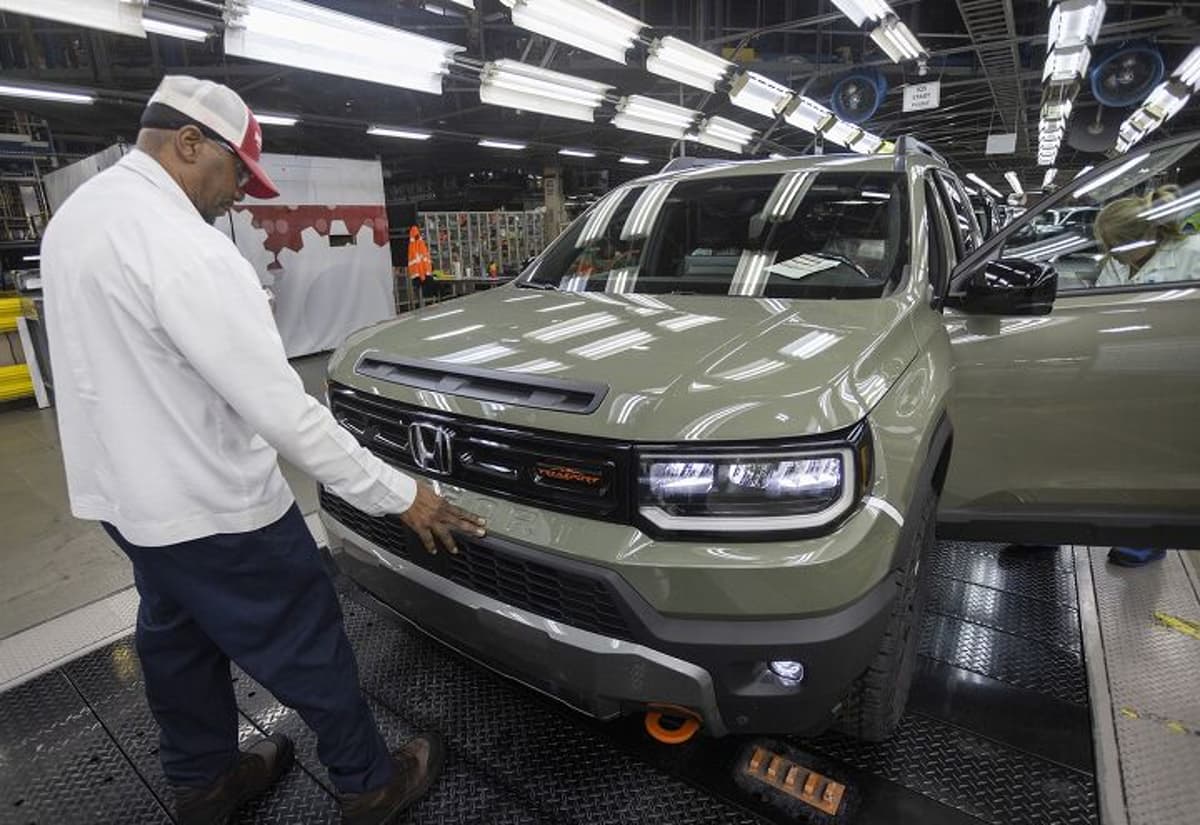
Honda Flips Script by Exporting Two Vehicles to Japan
•March 2, 2026
0
Key Takeaways
- •Honda to ship Acura Integra Type S, Passport TrailSport Elite.
- •Vehicles built in Ohio, Alabama will be left‑hand drive.
- •New US‑Japan agreement eases inspections, cuts tariffs.
- •Limited sales target niche Japanese demand.
- •First Acura export from US to Japan since 1988.
Summary
Honda Motor Co. will begin exporting two U.S.-built models—the Acura Integra Type S and the Honda Passport TrailSport Elite—to Japan in the second half of the year. The move follows a new U.S.-Japan trade accord that streamlines safety inspections and reduces automotive tariffs. Both vehicles are left‑hand‑drive, produced in Ohio and Alabama, and will be sold in limited quantities to meet niche demand. This marks the first Acura export from the United States to Japan since the 1980s.
Pulse Analysis
The bilateral trade agreement signed last year reshapes the trans‑Pacific automotive landscape. By lowering U.S. tariffs on Japanese cars from 27.5% to 15% and simplifying inspection protocols for U.S.-spec vehicles, the deal incentivizes Japanese manufacturers to consider American‑built models for their domestic market. Japan’s commitment to invest $550 billion in U.S. sectors such as semiconductors and energy further cements a strategic partnership that extends beyond mere trade numbers, creating a more integrated supply chain across both economies.
Honda’s decision to export the Acura Integra Type S and the Passport TrailSport Elite reflects a calculated response to this new environment. Both models, assembled in Ohio and Alabama, meet U.S. safety standards and will arrive in Japan as left‑hand‑drive units, a rarity for the market. By limiting sales, Honda gauges consumer interest without overcommitting inventory, while leveraging the novelty of an American‑made Acura to attract enthusiasts seeking distinct performance characteristics. This reverse flow also helps Honda balance production capacity at its U.S. facilities, mitigating excess output amid fluctuating domestic demand.
The broader industry implication is a potential ripple effect as other Japanese automakers evaluate similar export strategies. With inspection hurdles reduced, the cost and time barriers that previously discouraged U.S. vehicle imports have diminished, encouraging a two‑way flow of products. For Japanese consumers, this could mean access to models featuring American engineering nuances, while U.S. manufacturers gain a foothold in a market traditionally dominated by domestic offerings. As trade ties deepen, the automotive sector may witness a more fluid exchange of technology, design, and branding across the Pacific, reshaping competitive dynamics for years to come.
Comments
Want to join the conversation?