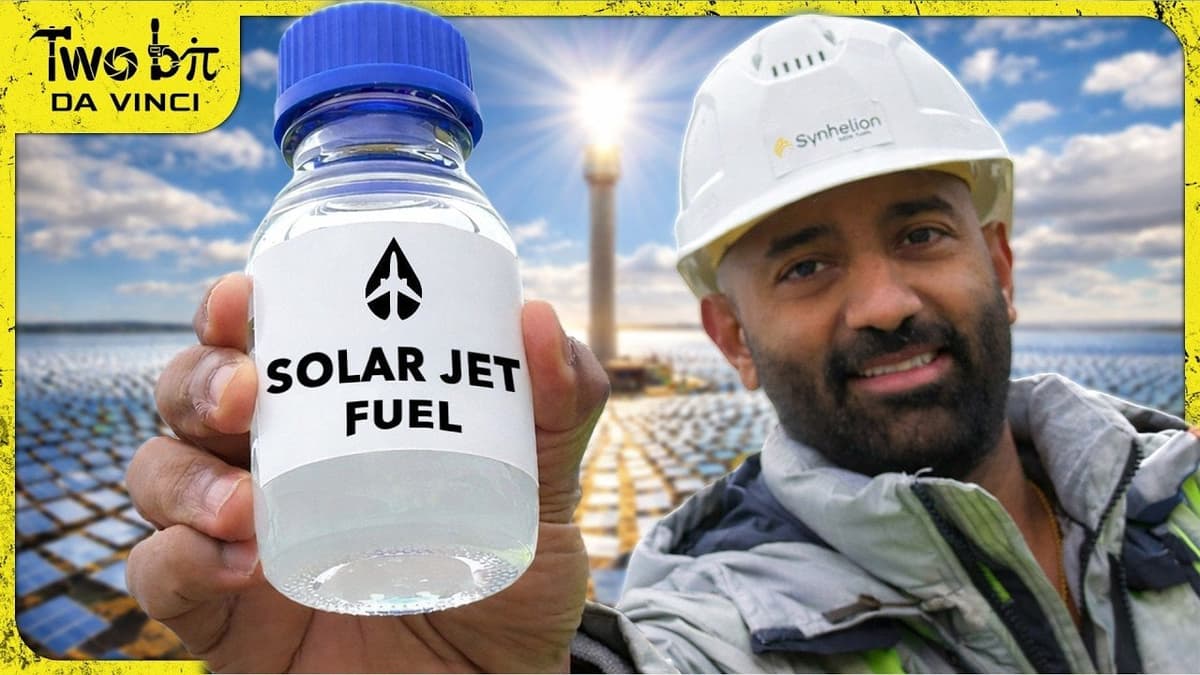
How the Aviation Industry Is Turning Captured Carbon and Sunshine Into Jet Fuel
Key Takeaways
- •SAF reduces aviation CO₂ by up to 80% versus fossil jet fuel.
- •Production requires >1,000 °C heat powered by solar or wind electricity.
- •EU mandates guarantee market, driving SAF capacity expansion to 2027.
- •Thermal storage and biogas cut energy costs, improving scalability.
Pulse Analysis
The aviation sector accounts for roughly 4 % of global greenhouse‑gas emissions, and that share is set to rise as passenger traffic is projected to double by 2040. Because batteries cannot meet the energy density required for long‑haul flights, airlines are turning to sustainable aviation fuel (SAF) as the most viable decarbonisation pathway. SAF is chemically identical to conventional jet fuel, allowing it to be used in existing engines and fueling infrastructure without modification. Its promise lies in the ability to cut lifecycle CO₂ emissions dramatically while preserving the operational efficiency airlines depend on.
The core of SAF production is Fischer‑Tropsch synthesis, which merges captured carbon dioxide with hydrogen at temperatures above 1,000 °C. Supplying that heat and electricity sustainably is the primary cost driver, prompting firms to pair the process with solar farms, wind turbines, and advanced ceramic thermal‑storage units that buffer intermittent generation. Biogas derived from agricultural waste also serves as a low‑carbon feedstock, reducing reliance on fossil‑based inputs. These integrated energy solutions not only shrink the carbon footprint of fuel manufacture but also bring the economics closer to parity with petroleum‑derived jet fuel.
Policy incentives are now the catalyst that could tip SAF into mainstream use. The European Union’s mandatory blending targets and a growing suite of subsidies worldwide guarantee a baseline demand, encouraging investors to fund multi‑gigawatt production plants slated for completion by 2027. As scale drives down capital costs and thermal‑storage technology improves, analysts forecast SAF prices could fall within 20‑30 % of conventional jet fuel within the next decade. When cost parity is achieved, airlines will be able to meet ambitious net‑zero pledges without sacrificing route range or payload, reshaping the economics of global air travel.
How the Aviation Industry is Turning Captured Carbon and Sunshine Into Jet Fuel
Comments
Want to join the conversation?