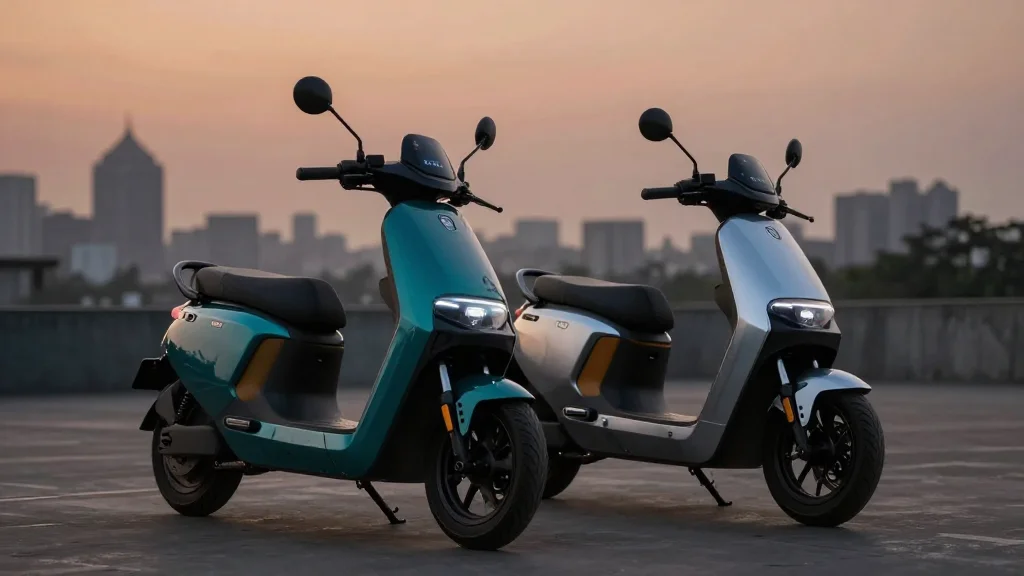
India’s Electric Two-Wheeler Market Surpassed Targets in 1st Quarter
Key Takeaways
- •March 2026 sales hit 191k units, 45% YoY growth.
- •Simple Ultra offers 400 km range at ~ $2,500 price.
- •Yamaha’s EC‑06 enters market with $2,250 price and 169 km range.
- •TVS and Bajaj retain leadership; Ola drops to fifth place.
- •Affordable Hero VX2 Plus targets commuters under $1,400.
Pulse Analysis
The Indian electric two‑wheeler market has crossed a critical mass, with March 2026 deliveries soaring to 191,000 units—up 45% from a year earlier. This growth outpaces many global EV segments and reflects a broader consumer shift away from purely incentive‑driven purchases. While government subsidies such as PM E‑Drive still exist, a growing share of buyers are now paying a premium for range, performance, and brand reliability, indicating a sustainable demand curve.
Product innovation is the new differentiator. Simple Energy’s Ultra, priced at roughly $2,500, pushes the envelope with a 400 km certified range and sport‑bike‑level acceleration, challenging the perception that electric scooters are limited to short‑city hops. Yamaha’s EC‑06, entering at about $2,250, brings legacy engineering, IP67 protection, and a connected ecosystem, signaling that multinational OEMs see India as a strategic EV hub. Meanwhile, mass‑market players like Hero’s VX2 Plus and Ather’s upcoming EL01 aim to democratize premium features, offering removable batteries and software‑centric experiences at sub‑$1,400 price points.
The competitive reshuffle reshapes the industry value chain. TVS and Bajaj’s dominance, backed by extensive dealer networks and after‑sales service, underscores the importance of distribution reach in a market where charging infrastructure remains uneven. Ola’s slide to fifth place highlights that early‑mover advantage can erode without robust support. Suppliers of high‑energy‑density cells, motor controllers, and OTA software stand to benefit as manufacturers chase higher ranges and smarter connectivity. Over the next 12‑18 months, the sector is poised to transition from volume‑driven growth to profitability‑focused competition, setting the stage for India to become a global benchmark for affordable, high‑performance electric two‑wheelers.
India’s Electric Two-Wheeler Market Surpassed Targets in 1st Quarter
Comments
Want to join the conversation?