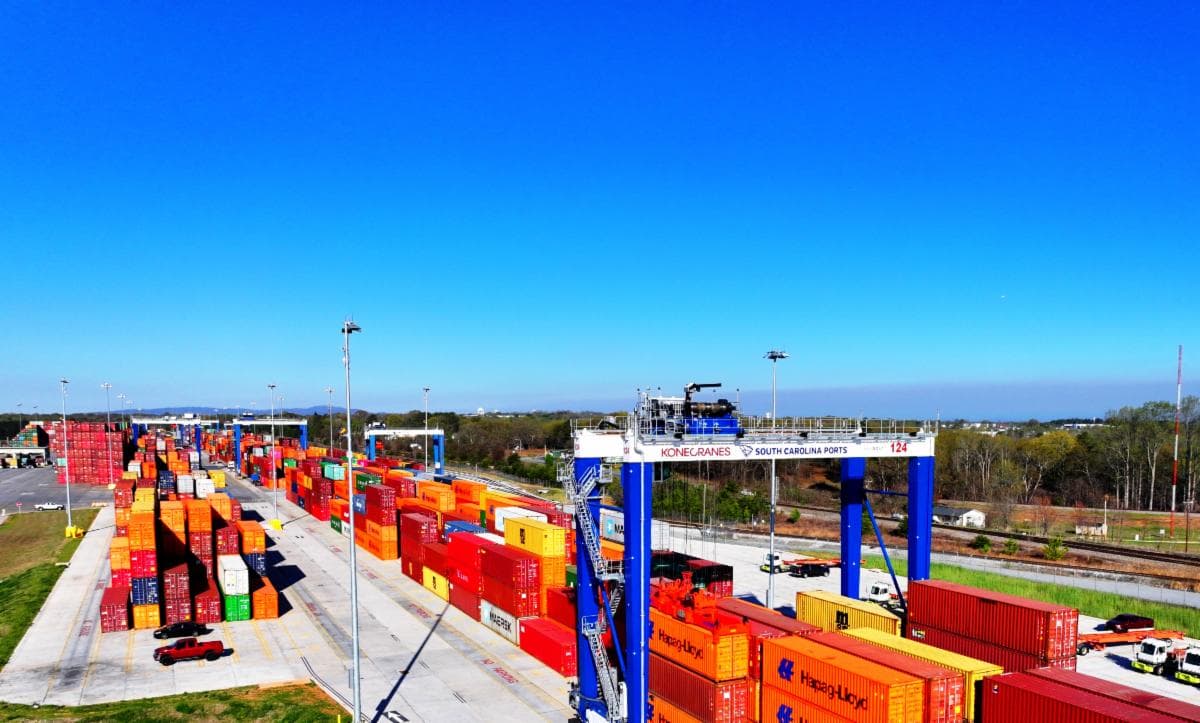
Inland Port Greer Drives Growth in Southeast Intermodal Logistics
Key Takeaways
- •Handled nearly 200,000 rail moves in 2025, record year
- •$55 million expansion raises capacity to 300,000 lifts annually
- •Serves over 150 Southeast customers, reaching 94 million consumers within a day
- •11‑minute gate turn times and 24/7 operations boost efficiency
- •Norfolk Southern’s Greer‑Charleston lane now among its largest intermodal routes
Pulse Analysis
Inland ports have become critical nodes in the United States’ logistics network, offering shippers a cost‑effective bridge between ocean terminals and inland markets. By situating facilities near major highways and rail corridors, they reduce drayage distances, cut dwell times, and improve inventory fluidity. The Southeast, with its growing consumer base and manufacturing footprint, has seen heightened demand for such solutions, prompting operators like South Carolina Ports to invest heavily in capacity and technology.
Greer’s recent $55 million expansion underscores the momentum behind short‑haul intermodal solutions. The added rail length and enlarged container yard enable the facility to lift 300,000 containers annually, a 50% jump from its pre‑expansion capability. Faster 11‑minute gate turn times and 24/7 access translate into lower per‑unit costs for manufacturers and retailers, while the six‑day‑a‑week overnight service with Norfolk Southern provides reliable, time‑critical connections to the Port of Charleston. Moreover, shifting freight from trucks to rail trims carbon emissions, aligning with corporate sustainability goals and regional air‑quality initiatives.
Looking ahead, Inland Port Greer is poised to influence the competitive dynamics of Southeast logistics. Its ability to serve 150+ customers and reach 94 million consumers within a day positions it as a preferred gateway for both export‑oriented manufacturers and domestic distributors. Continued investment could attract additional rail carriers, expand multimodal services, and spur ancillary developments such as warehousing and value‑added processing. As e‑commerce volumes swell and supply‑chain resilience remains a priority, Greer’s growth model may become a blueprint for other inland hubs seeking to balance capacity, cost, and environmental stewardship.
Inland Port Greer drives growth in Southeast intermodal logistics
Comments
Want to join the conversation?