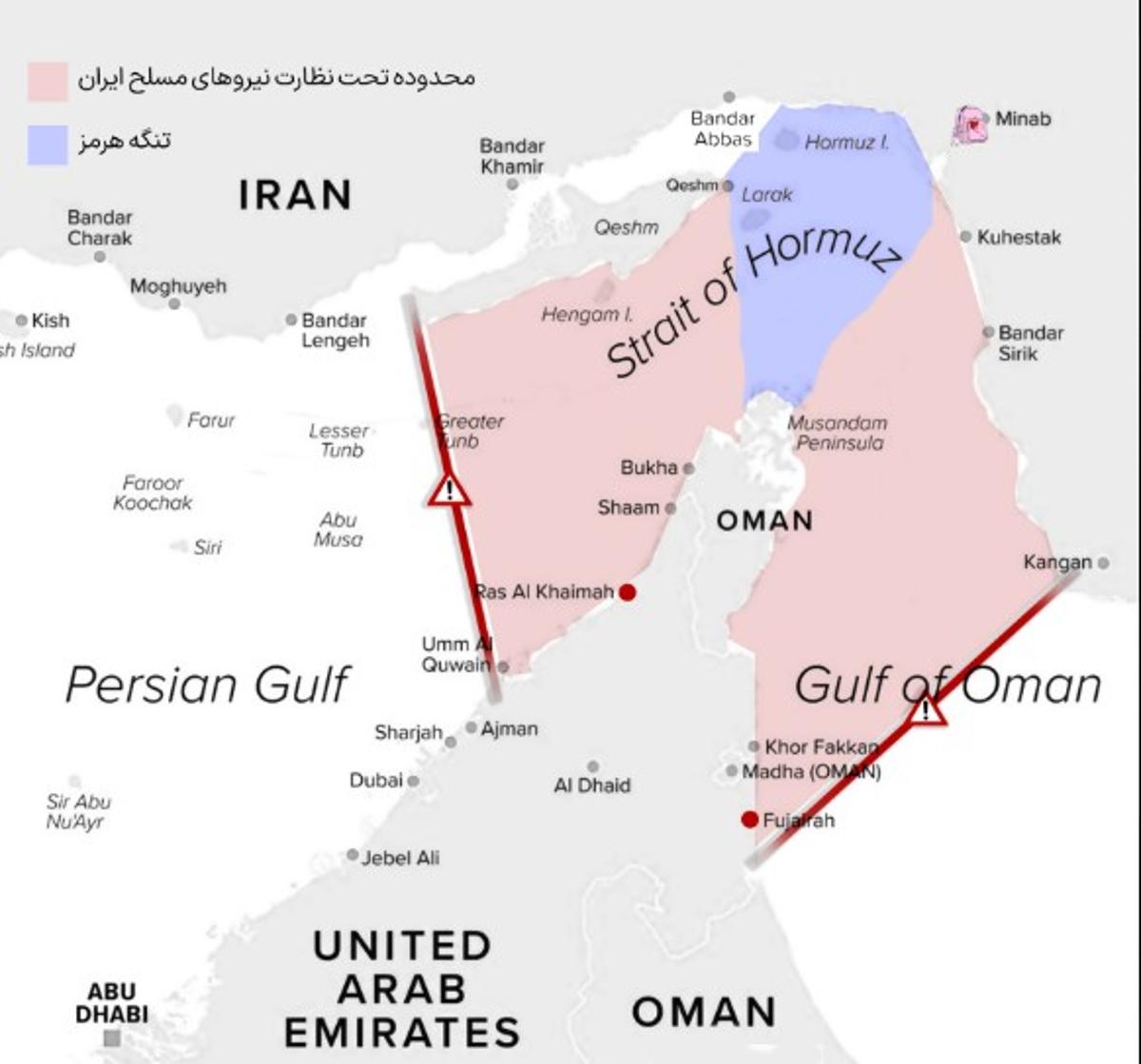
Iran Establishes Persian Gulf Strait Authority
Key Takeaways
- •Iran created PGSA to regulate Strait of Hormuz traffic.
- •Zone spans Kuh-e Mubarak–Fujairah and Qeshm–Umm Al-Quwain.
- •Vessels must secure prior authorization before transiting the strait.
- •New compliance may increase shipping costs and cause delays.
Pulse Analysis
The Strait of Hormuz, a narrow 21‑mile channel linking the Persian Gulf with the Gulf of Oman, handles roughly 20 % of global petroleum trade, moving more than 20 million barrels of oil and significant volumes of liquefied natural gas each day. Historically, navigation through the waterway has been governed by international conventions and informal coordination among regional powers, but no single nation has claimed formal regulatory authority. Iran’s decision to codify its jurisdiction marks a departure from this status quo, introducing a state‑run body that could reshape the operational landscape for carriers crossing this chokepoint.
The newly formed Persian Gulf Strait Authority (PGSA) defines a controlled maritime zone bounded by a line from Iran’s Kuh‑e Mubarak to the UAE’s Fujairah on the eastern entrance, and another line from Qeshm Island to Umm Al‑Quwain on the western side. Under the PGSA framework, any vessel intending to transit the strait must obtain prior authorization, a process that has yet to be detailed but is expected to involve submission of vessel particulars, cargo manifests, and compliance with safety and security protocols. Shipping firms will need to integrate this step into voyage planning, potentially extending turnaround times and adding administrative overhead.
The introduction of mandatory clearance raises several strategic considerations. For shipowners, the extra compliance layer could translate into higher operating costs and schedule uncertainty, prompting a reassessment of route risk premiums. Flag states and insurers may also adjust underwriting criteria as the likelihood of detention or fines rises. Geopolitically, the move could intensify tensions with rival powers that view unilateral control of the strait as destabilizing, while offering Iran leverage in broader negotiations over sanctions and regional security. Observers will watch closely how quickly the PGSA’s procedures become operational and whether alternative routes gain traction.
Iran establishes Persian Gulf Strait Authority
Comments
Want to join the conversation?