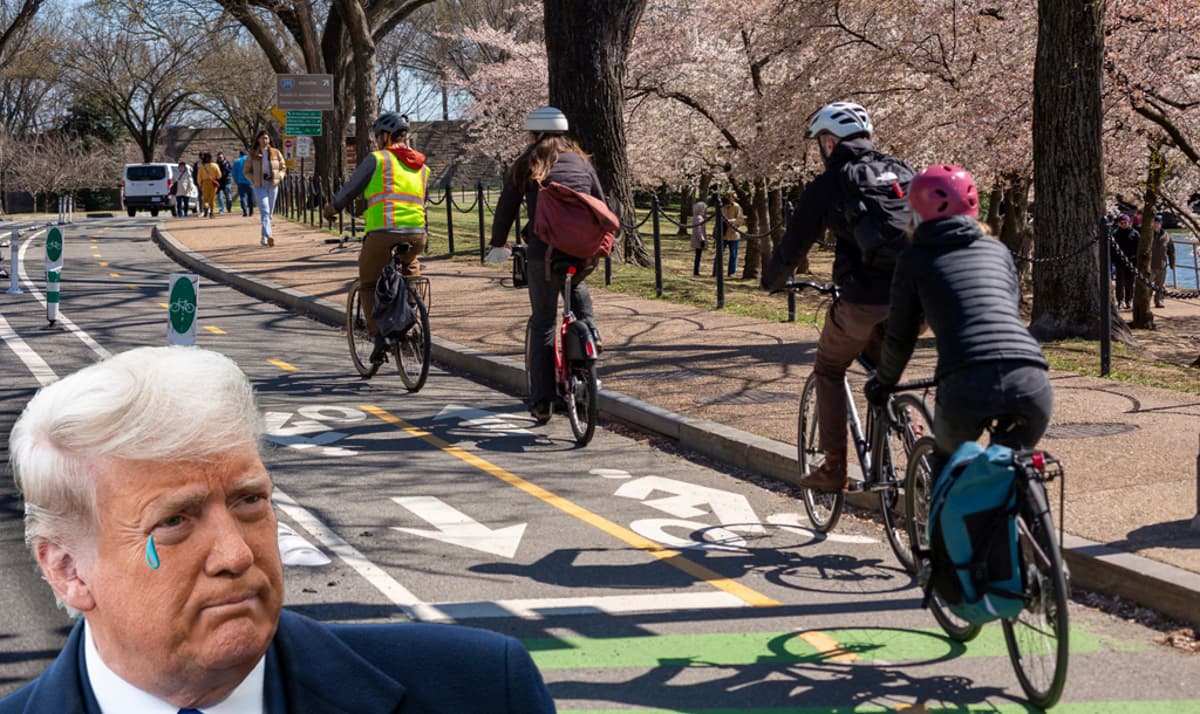
Judge Blocks Trump Admin’s Attempt to Demolish D.C. Bike Lane
Key Takeaways
- •Judge rules Trump admin lacked rational link to traffic congestion
- •DC study shows car speeds increased, bike crashes down 91% after lane
- •Over 100 locals rallied, celebrating the court’s decision
- •Advocacy groups in Denver, LA cite D.C. case as warning sign
- •Ruling does not guarantee lane’s permanent protection, future challenges remain
Pulse Analysis
The court’s intervention in Washington, D.C., underscores how local advocacy can curb top‑down transportation policies. By demanding a concrete, data‑driven justification, the judge highlighted the growing legal expectation that federal agencies must substantiate any removal of protected bike infrastructure with clear, evidence‑based benefits. This shift reflects a broader trend where municipalities are leveraging traffic‑flow analyses and safety metrics—like the 91% crash reduction reported by the District’s Department of Transportation—to defend multimodal projects against politically motivated rollbacks.
Beyond the capital, the decision reverberates across the nation’s bike‑friendly cities. Groups in Denver, Los Angeles, and Durham have already invoked the D.C. case to rally support and pre‑empt similar federal actions in their jurisdictions. Their coordinated rides and social‑media campaigns illustrate how a single legal victory can serve as a template for grassroots coalitions, reinforcing the narrative that sustainable streets are not merely local preferences but essential components of national mobility and climate goals.
Looking ahead, the ruling does not guarantee permanent protection for the 15th Street lane; it merely sets a precedent that any future attempts to dismantle it must meet a higher evidentiary standard. As the current administration reallocates funding toward sustainable transportation, the legal landscape will likely see more challenges that test the balance between federal oversight and local planning autonomy. Stakeholders—city planners, advocacy groups, and investors in green infrastructure—should monitor upcoming court filings, as they will shape the next wave of policy decisions affecting bike lanes, transit corridors, and the broader push for climate‑resilient urban design.
Judge Blocks Trump Admin’s Attempt to Demolish D.C. Bike Lane
Comments
Want to join the conversation?