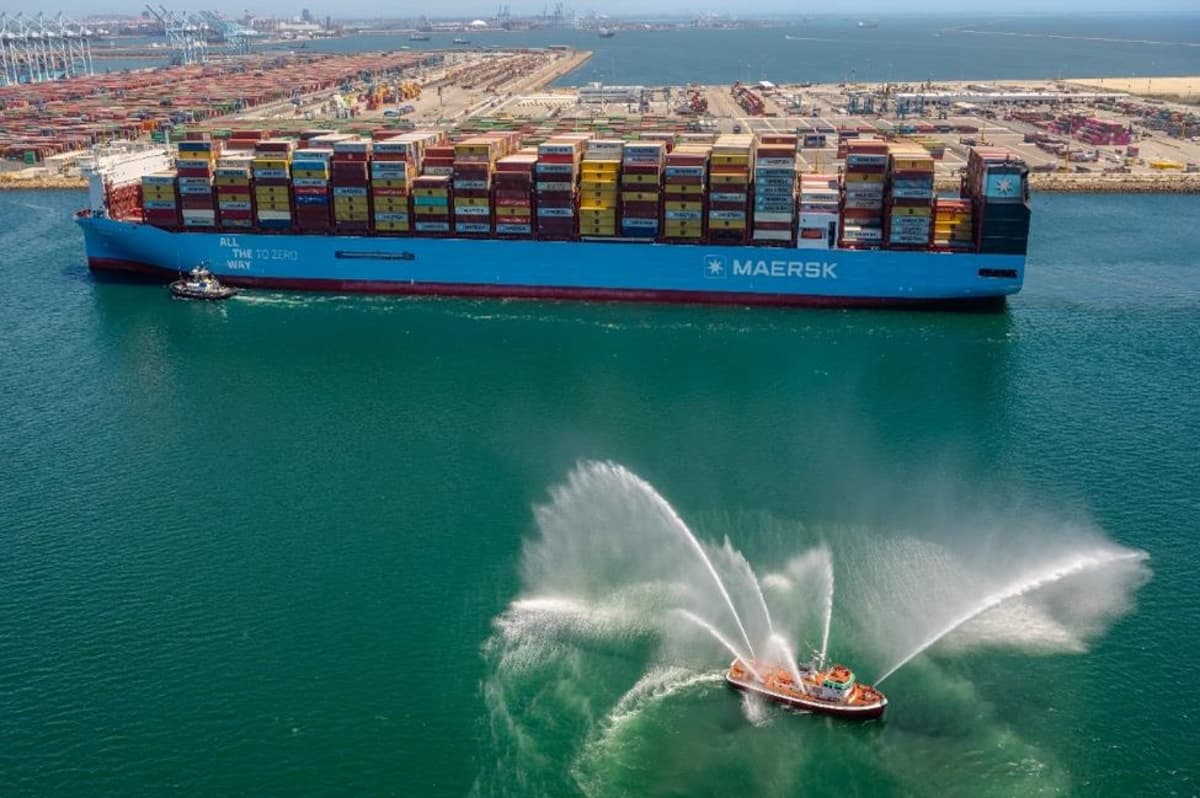
Maersk Revises PSS on China and Hong Kong to Kenya and Dar Es Salaam
Key Takeaways
- •Kenya surcharge: $2,000 for 40‑ft containers, $2,000 for 45‑ft HC.
- •Dar es Salaam surcharge: $1,400 for 40‑ft and 45‑ft HC containers.
- •PSS applies only to non‑spot bookings, collected with freight payment.
- •Additional local and contingency charges may still apply.
Pulse Analysis
Maersk’s adjustment of the peak season surcharge underscores how carriers manage seasonal demand spikes and capacity constraints on long‑haul routes. By setting distinct rates for 20‑foot, 40‑foot and 45‑foot high‑cube containers, the company aims to align pricing with the higher operational costs of larger vessels and the limited slot availability on the China‑to‑East Africa lanes. The surcharge, applied exclusively to non‑spot bookings, incentivizes shippers to commit cargo earlier, giving Maersk better visibility for vessel planning and reducing the risk of last‑minute imbalances.
For traders moving goods between Asia and East Africa, the revised PSS translates into a measurable cost increase—up to $2,000 per 40‑foot container bound for Kenya. While the absolute impact varies by cargo value, the added expense can erode profit margins, especially for bulk commodities and low‑value goods. Shippers may respond by renegotiating freight contracts, consolidating shipments to achieve economies of scale, or exploring alternative ports such as Mombasa or Lagos to mitigate surcharge exposure. Additionally, the possibility of ancillary local and contingency fees means total landed cost calculations must be revisited.
The move fits a broader industry pattern where major carriers recalibrate surcharges amid lingering post‑pandemic disruptions, tighter vessel schedules, and labor shortages at key transshipment hubs. Maersk’s decision signals a willingness to pass on higher operational costs to customers while preserving service reliability. Forward‑looking logistics managers should monitor future surcharge adjustments, assess the cost‑benefit of spot versus contract bookings, and consider multimodal options to maintain competitiveness in the evolving Asia‑Africa supply chain.
Maersk revises PSS on China and Hong Kong to Kenya and Dar es Salaam
Comments
Want to join the conversation?