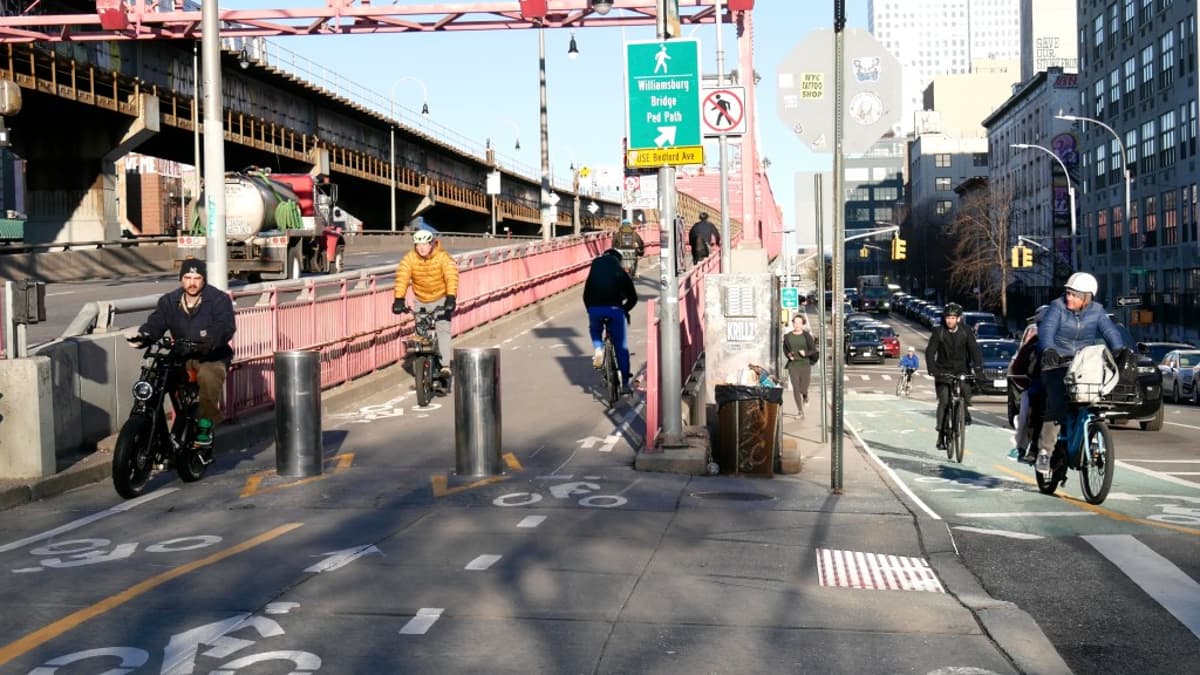
New E-Mobility Study Actually Reveals Need For Safer Streets, Not E-Bike Crackdowns
Key Takeaways
- •Study of 900 NYC ER visits (2018‑2023) links injuries to car collisions
- •Only 3% of Manhattan bike lanes are protected, 94% fatalities occur there
- •Helmet use cut brain‑injury risk from 37% to 23%
- •34% were self‑falls; 7% involved pedestrian‑rider collisions
- •Media mischaracterized findings, pushing e‑bike licensing despite study urging infrastructure upgrades
Pulse Analysis
The post‑pandemic surge in electric micromobility has reshaped urban travel, with New York City seeing roughly 32 million e‑bike rides in 2025—about 90,000 trips per day. Yet the rapid mileage increase outpaced safety upgrades, prompting researchers at Bellevue Hospital to examine emergency‑room data for a clearer injury picture. By focusing on 914 cases over six years, the study sidestepped police reports that often miss unreported crashes, revealing that nearly half of the injuries stemmed from collisions with motor vehicles, while self‑inflicted falls accounted for a third. This granular approach underscores how infrastructure, not vehicle regulation, drives risk.
The findings paint a stark infrastructure gap: just 3 percent of Manhattan’s bike lanes are physically protected, and 94 percent of cycling fatalities occurred on streets lacking such lanes. Protected corridors have been shown to slash severe crashes by up to 39 percent for seniors and 24 percent for other adults, according to DOT data. Moreover, helmet adoption dramatically reduced brain‑injury rates—from 37 percent among unhelmeted riders to 23 percent for those wearing protection—while roughly one‑fifth of tested riders were intoxicated. These metrics highlight low‑cost interventions—helmet promotion, alcohol education, and dedicated lanes—that can immediately ease emergency‑room burdens.
Despite the study’s nuanced conclusions, several media outlets framed the data as a call for stricter e‑bike licensing, feeding an anti‑mobility narrative. For e‑mobility firms and city officials, the misrepresentation risks stalling essential infrastructure projects that align with Vision Zero objectives and could erode public trust. Accurate reporting reinforces the business case for investing in protected lanes, road diets, and intersection redesigns, which not only safeguard riders and pedestrians but also sustain the growing demand for electric micromobility as a low‑carbon transport alternative. Continued research, like the Columbia University project dissecting injury types by e‑bike class, will further inform policy and help balance safety with mobility innovation.
New E-Mobility Study Actually Reveals Need For Safer Streets, Not E-Bike Crackdowns
Comments
Want to join the conversation?